|
Thursday, October 1, 2026 · Week of September 24 to September 30 · Strictly nonpartisan
A Laramie interim committee advanced Wyoming’s next moves on digital money and speech, while a first-in-the-nation data ownership bill and a government AI bill both went back for more work.
This week: the Joint Select Committee on Blockchain, Financial Technology and Digital Innovation Technology met two days in Laramie and voted to reorganize Wyoming’s stable-token program into a new Digital Asset Authority; debated, but did not vote on, a first-in-the-nation bill making personal data a resident’s own property; passed a bill barring Wyoming courts from enforcing foreign censorship judgments against protected speech; and reached no agreement on requiring a human to review AI decisions that affect a Wyoming resident’s rights or benefits.
01 · Digital Assets
Committee votes to reorganize Wyoming’s stable-token program into a new Digital Asset Authority
The Joint Select Committee on Blockchain, Financial Technology and Digital Innovation Technology voted 5-0 on Sept. 28 to advance a bill draft (27LSO0010) that would reconstitute the state’s Wyoming Stable Token Commission as a new seven-member Wyoming Digital Asset Authority, replacing the two-body structure the committee had considered at its July meeting. The Authority’s first four members would be the commission’s current subject-matter experts, serving without Senate confirmation; those four would select three additional members by October 2027, who would need Senate confirmation. By amendment, the committee added two non-voting legislative liaisons, one from the House and one from the Senate, and gave the Authority the option to custody digital assets itself rather than always using an outside custodian.
The Stable Token Commission’s director, Anthony Apollo, told the committee its Frontier stable token (FRNT) is now available for public purchase on Kraken and trades across eight blockchain networks, and that the commission is pursuing agreements to issue branded stable tokens on behalf of other states. Apollo also told the committee the commission already posts daily, on-chain proof-of-reserve attestations for the token, and described a longer-term ambition for the new Authority:
“That would also allow us to do things like put our agency budget into a SPDI [special purpose depository institution, a Wyoming bank charter with no federal deposit insurance] and be the first government agency in the world with its entire budget on a blockchain that is attestable in real time as well.”
Anthony Apollo, director, Wyoming Stable Token Commission, Sept. 28.
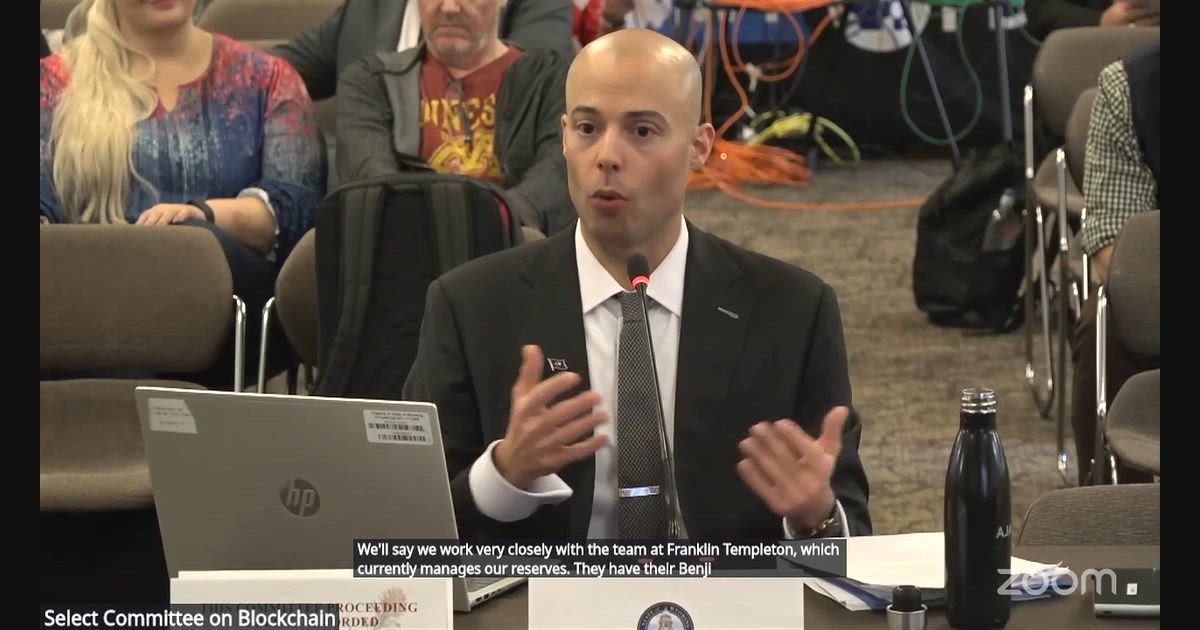
▶ Watch this moment on USLege
“It’s important to note that Wyoming stable token is unique in that it isn’t the entity of value itself. It is a digital representation of a US dollar held in trust by the state of Wyoming on behalf of the token holder.”
Sen. Chris Rothfuss, committee chairman, Sept. 28.
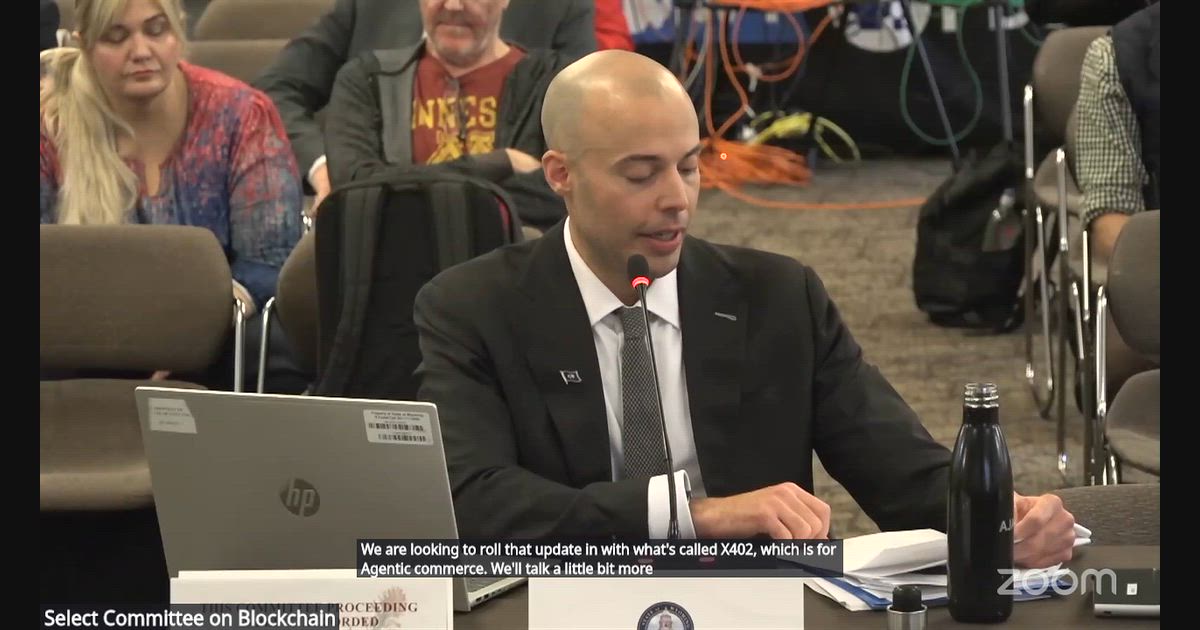
▶ Watch this moment on USLege
“I do think that it would be more consistent to have a liaison from each chamber. I don’t know that there’s any state created quasi governmental agency similar to this that doesn’t have one.”
Sen. Tara Nethercott, Senate Republican Floor Leader, Sept. 28.
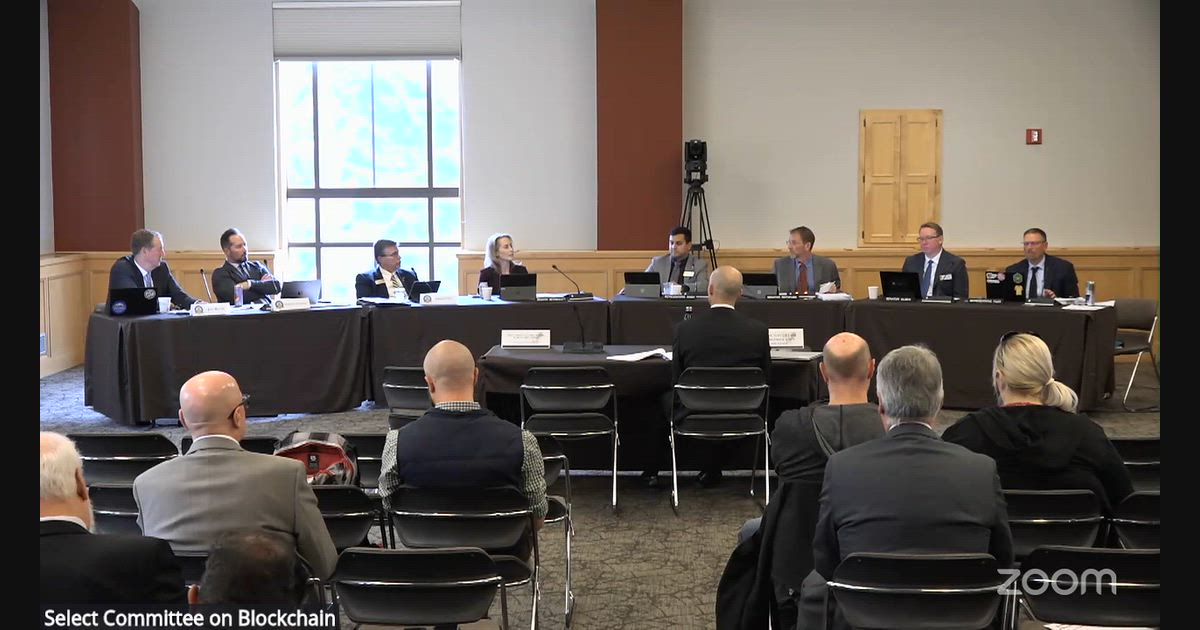
▶ Watch this moment on USLege
Why it matters: This is the first structural overhaul of Wyoming’s stable-token program since it launched, and it is built to let the same infrastructure issue tokens for other states and hold digital assets for other Wyoming agencies.
02 · Data Privacy
A bill to make your data your property draws praise and pushback, no vote yet
The committee spent its Sept. 28 afternoon session on the Wyoming Personal Data Ownership Act (27LSO0140), an 80-plus-page draft (Chairman Rothfuss put it at roughly 94 pages by the end of the day’s discussion) that would declare a Wyoming resident’s personal data to be that resident’s own intangible personal property, sorted into four sensitivity tiers, that can be licensed for a defined period but not permanently sold, with a right to revoke access and compel deletion. No vote was taken; the committee will work from a revised draft, including a proposed four-year statute of limitations, at its November meeting. Committee chairman Sen. Chris Rothfuss told the committee the bill would be “the first of its kind in the country and in the world” in treating personal data as an individual’s intangible property, and said the approach is a deliberate departure from the consumer-protection model roughly 20 other states have adopted, arguing property law gives Wyoming firmer legal standing to act on its own.
“This bill recognizes that the record of your life, your data, your location history, your purchases, your health information, your words, your ideas, they’re yours, too. It’s generated by you, about you, and it should be owned by you.”
Brittney Kaiser, president, Own Your Data Foundation, Sept. 28.
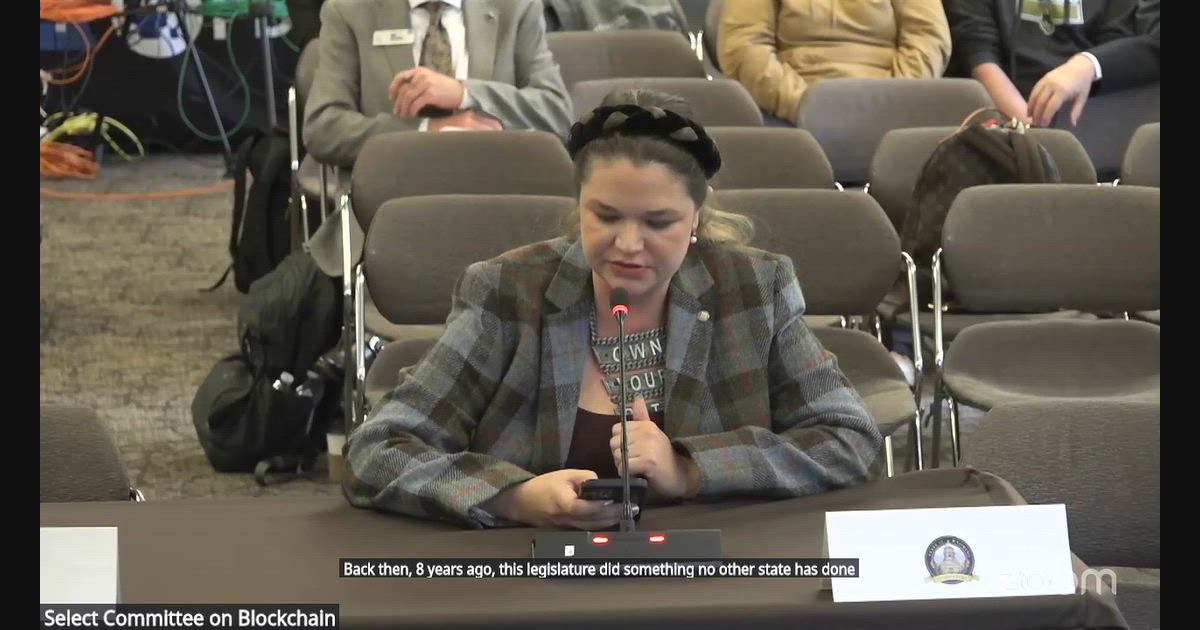
▶ Watch this moment on USLege
Opposition came from multiple sectors. The State Privacy and Security Coalition, which represents about 35 companies, argued the bill's property-rights framework is legally untested and would leave open questions on jurisdiction, mergers, divorce and bankruptcy that a consumer-protection model does not raise:
“We do have concerns with the approach that this draft takes…we believe that a complex approach with this many unresolved questions is not necessary to provide Wyoming residents with strong protections…the comprehensive framework…has been adopted by 23 states, covers over 110,000,000 consumers.”
Andrew Kingman, counsel, State Privacy and Security Coalition, Sept. 28.
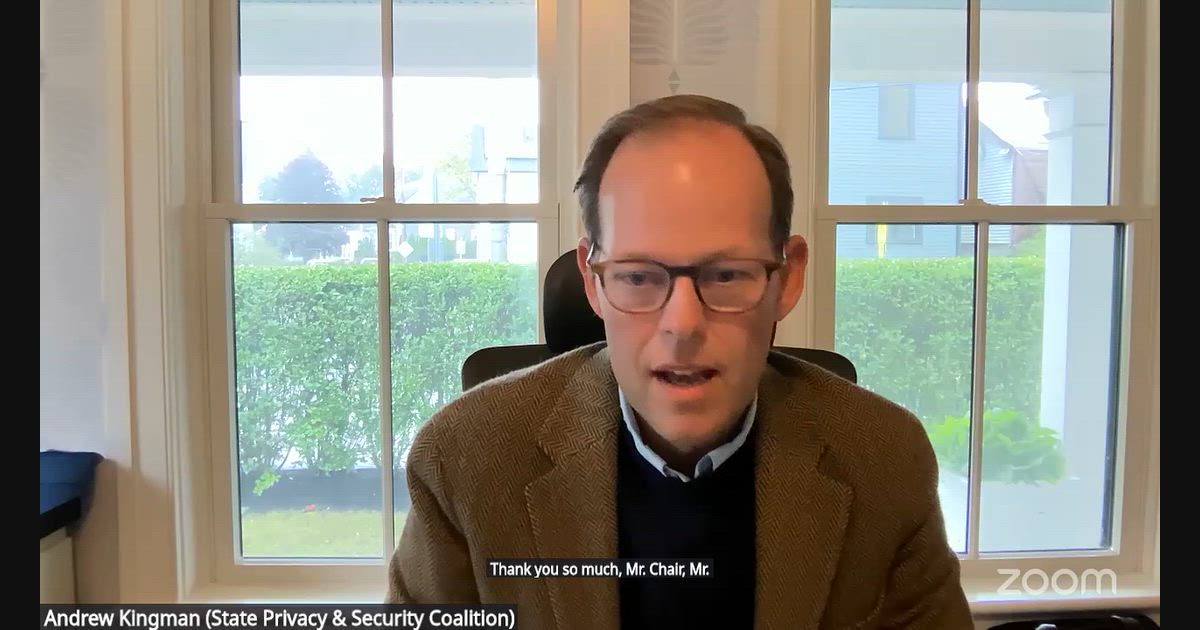
▶ Watch this moment on USLege
The Wyoming Hospital Association and Wyoming Long Term Care Association said the draft’s HIPAA (the federal Health Insurance Portability and Accountability Act) carve-out does not work as written; the Wyoming Association of Sheriffs and Chiefs of Police raised concerns about law-enforcement access to data during investigations; and Wyoming’s Credit Unions raised concerns about the bill’s private right of action. Inside the committee, Sen. Nethercott repeatedly challenged the bill’s use of real-property terms for an intangible concept:
“Some of the terminology in the bill draft, I do not like as a lawyer, primarily because it’s conflating a number of legal concepts associated with the terminology property.”
Sen. Tara Nethercott, Sept. 28.
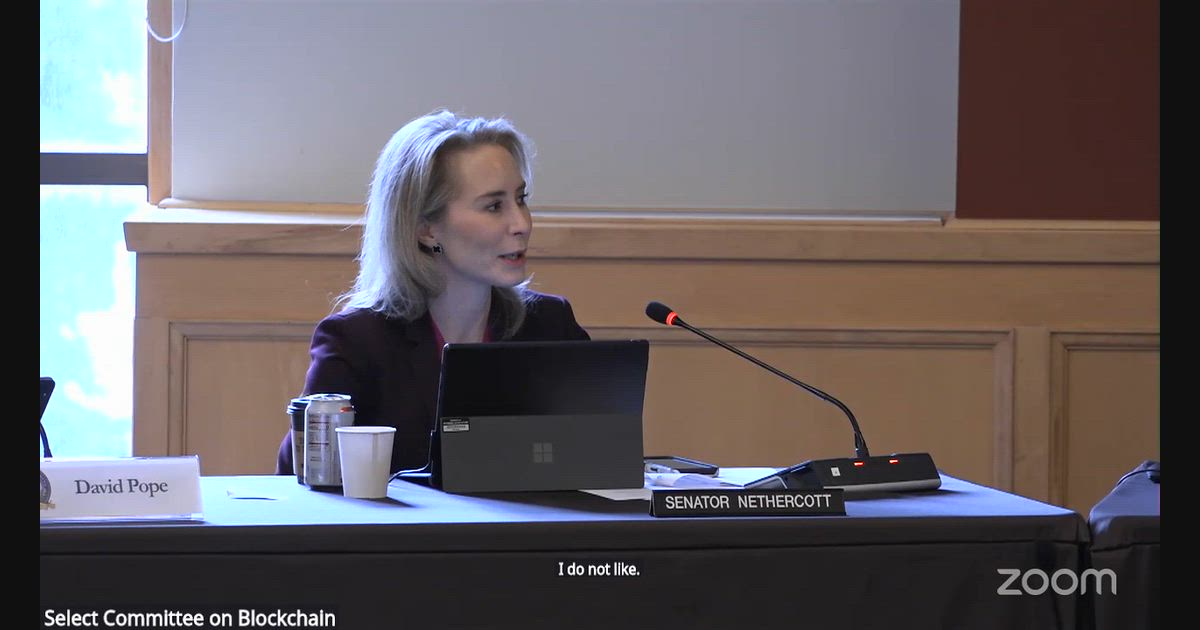
▶ Watch this moment on USLege
A separate committee member, identified in the meeting only as Mr. Kaufman, raised a jurisdiction concern that echoed a similar theme in Wednesday’s free-speech debate: Wyoming courts already struggle to establish jurisdiction over an out-of-state member of a Wyoming LLC, he said, so enforcing a Wyoming data-property right against a data custodian that has never operated in Wyoming may prove just as hard. Chairman Rothfuss acknowledged the concern but said property law is still the state’s strongest available legal footing, pointing to Wyoming’s 2019 law defining digital assets as property, which he said other states and the Uniform Law Commission ultimately followed.
Why it matters: If enacted, Wyoming would be the first state to treat personal data as a resident’s own property rather than regulate it through a consumer-protection statute, a more novel and legally untested approach than the model most other states have used.
03 · Free Speech
Committee passes bill blocking Wyoming courts from enforcing foreign censorship judgments
On Sept. 29, the committee voted 4-1 (Sen. Crago excused, Rep. Wasserburger absent, Sen. Nethercott casting the lone no vote) to pass a bill draft (27LSO0009) that would bar Wyoming courts from enforcing a foreign country’s civil judgment against a Wyoming resident or business over speech protected by the First Amendment. Two amendments were adopted first: one struck the bill’s working title and its references to “novel international tyranny and extortion”; a second replaced “foreign judgment” with “international judgment” so the bill is not read as affecting the ordinary interstate meaning of a foreign judgment, meaning one from another U.S. state, which it does not touch. Attorney Preston Byrne, who said he represents four of roughly 200 Americans targeted by foreign online-speech enforcement orders over the past 18 months, testified that a version of the bill passed the Wyoming House last session, has since been copied in West Virginia and New Hampshire, was adopted by the American Legislative Exchange Council as model policy, and is the basis for two bills now introduced in the U.S. House.
“Your phone buzzes, you open your inbox, and inside your inbox is a letter from the British government threatening you with prison and $25,000,000 in fines for exercising your First Amendment rights online…This scene is not imaginary. It has played out at least 200 times across The United States in the last eighteen months.”
Preston Byrne, attorney, Sept. 29.
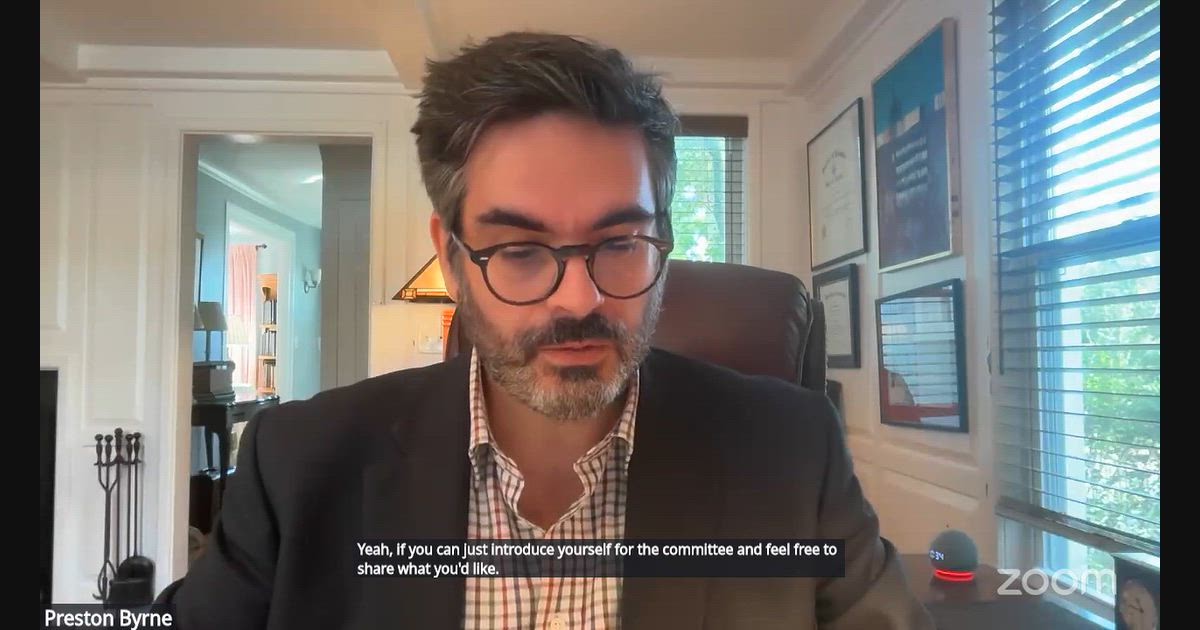
▶ Watch this moment on USLege
Sen. Nethercott, the lone no vote, questioned removing the bill’s original framing:
“We just heard testimony from the expert on the issue of 197 novel examples who explained that the issue is tyranny. So why would we want to eliminate novel tyranny from the bill now that we know from the expert that that’s what it is?”
Sen. Tara Nethercott, Sept. 29.
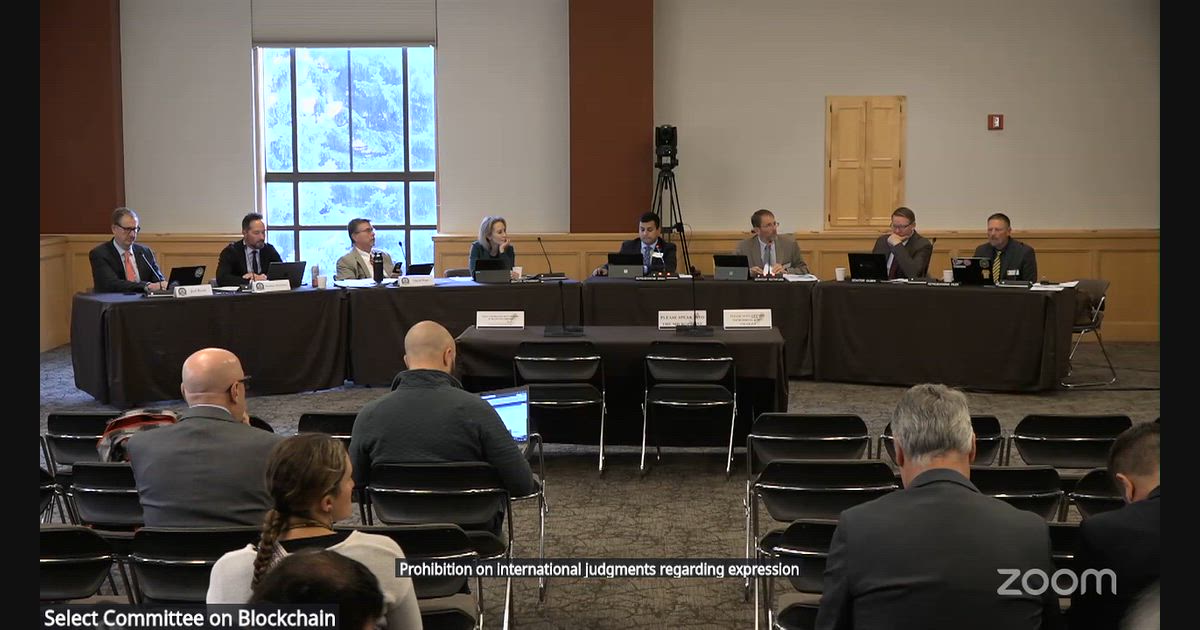
▶ Watch this moment on USLege
Why it matters: The bill’s sponsor and supporting witness say it has already become a template cited in pending federal legislation, giving Wyoming an outsized role in a fast-moving national debate over foreign enforcement of online-speech rules.
04 · Artificial Intelligence
No deal yet on requiring a human to review AI decisions in Wyoming government
The committee spent roughly ninety minutes on Sept. 29 on a bill draft (27LSO0034) that would bar a Wyoming government entity from using an automated decision-making system to make a “consequential decision,” including denial or suspension of a right or benefit, without “meaningful human review” by a named, accountable person. No vote was taken and no path forward was agreed; the bill remains on the agenda without a clear next step. Committee chairman Sen. Chris Rothfuss argued current law only assigns responsibility for AI-driven harm after the fact, through litigation, and cited a Michigan state unemployment-fraud algorithm and an Arkansas Medicaid home-care algorithm as examples of harm a human reviewer likely would have caught before it happened:
“I mentioned the Michigan case that related to unemployment fraud where they declared 22,000 Michiganders fraudulent. And, upon examination, ninety three percent of them were found to just be error, automated decision making error.”
Sen. Chris Rothfuss, Sept. 29.
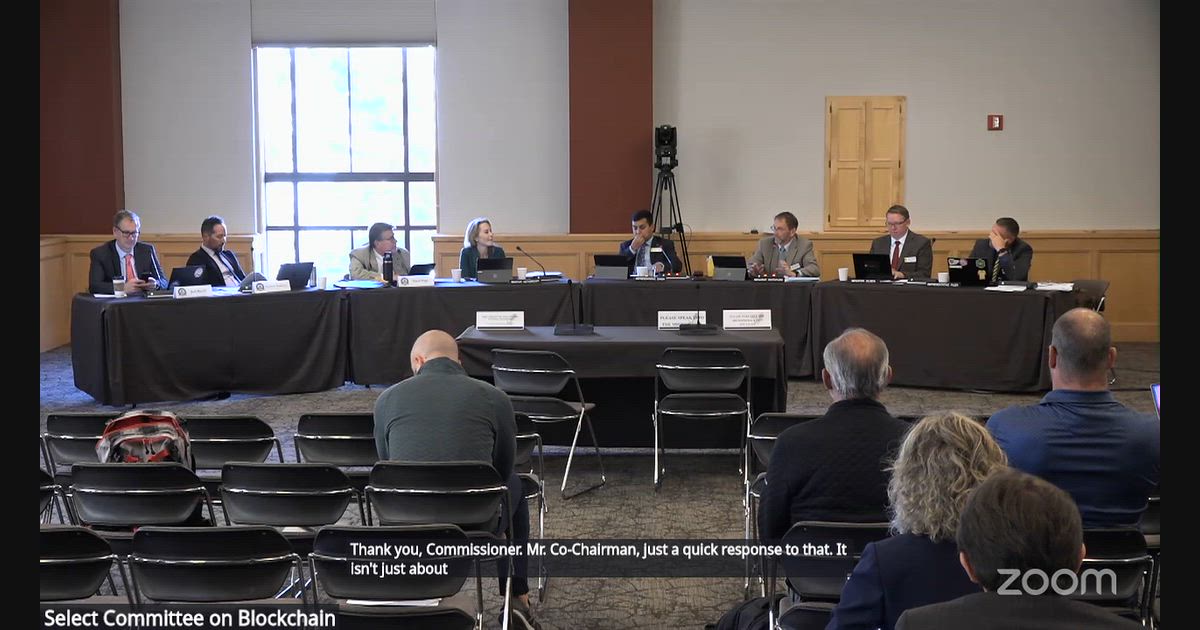
▶ Watch this moment on USLege
Sen. Nethercott and outside witness Tyler Lindholm, deputy state director of Americans for Prosperity-Wyoming, argued existing liability law already holds a government entity responsible for harm regardless of what tool produced a bad decision, and that the bill’s definition of “consequential decision” is broad enough to sweep in beneficial uses. Lindholm cited an AI clinical-documentation tool his wife, a nurse practitioner at a rural Wyoming clinic, uses in patient visits:
“I do think, unequivocally, that artificial intelligence and its use, it is and can be as transformative as electricity was to humankind…I do have a real fear of accidentally putting something in place with unintended consequences that we don’t know could happen and thereby put Wyoming behind an eight ball that we don’t wanna be behind.”
Tyler Lindholm, deputy state director, Americans for Prosperity-Wyoming, Sept. 29.
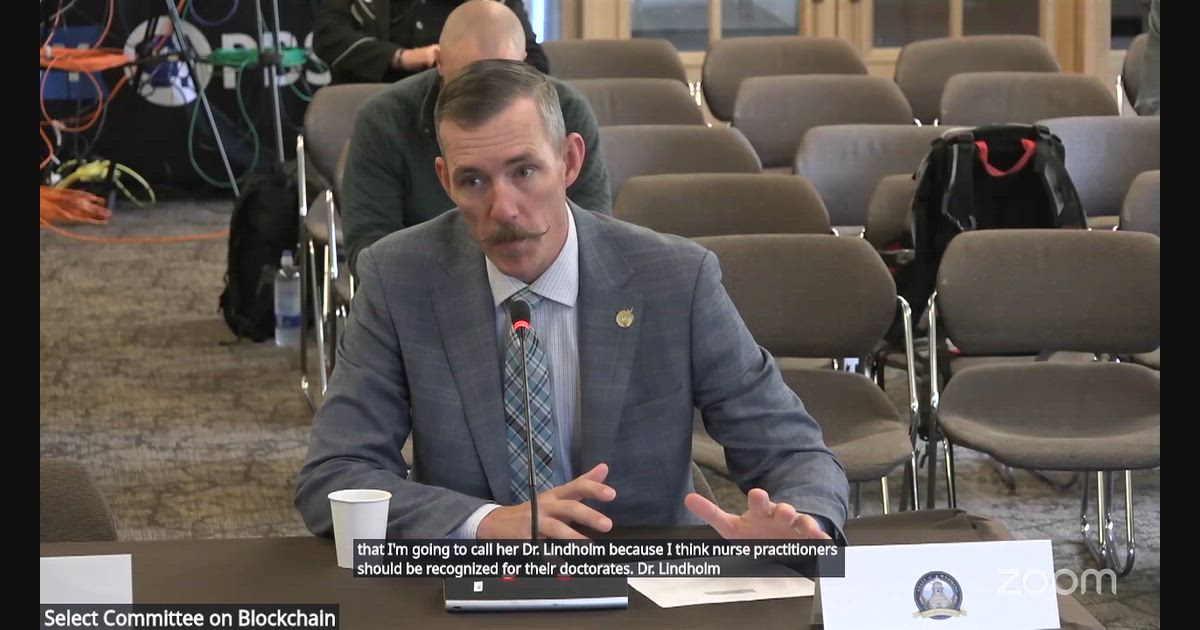
▶ Watch this moment on USLege
“The requirements currently in law do not obviate responsibility of anyone using any form of technology from the consequences of that technology. Therefore, the law currently provides those protections, and that does not require a lawsuit.”
Sen. Tara Nethercott, Sept. 29.
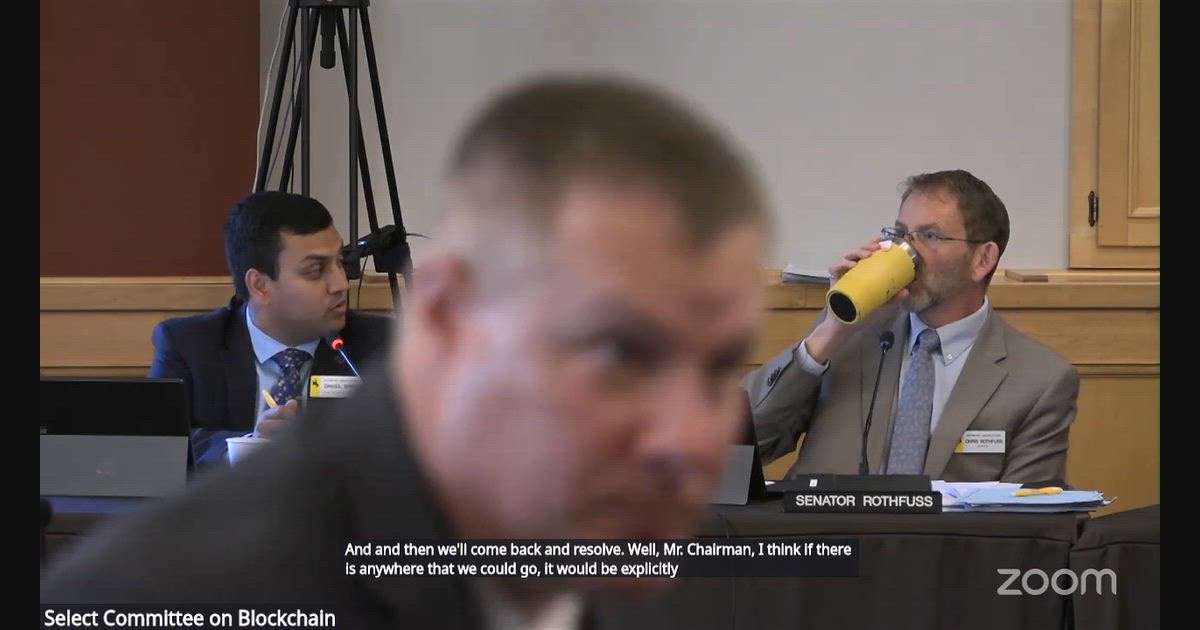
▶ Watch this moment on USLege
Testifying remotely, University of Wyoming law professor Eric Alston said he generally agrees with a human-in-the-loop requirement but flagged two gaps in the current draft: it does not say whether it covers autonomous AI agents that act without a person entering a prompt, as opposed to a single chatbot query, and it does not define a clear line for when a human reviewing an AI-generated score or recommendation has actually made the decision, versus simply rubber-stamping the algorithm’s output.
Why it matters: This unresolved debate previews how, or whether, Wyoming will set rules for government use of AI in decisions that affect a resident’s rights or benefits.
|
Also moving this week
Banking, wildlife and a school AI policy
The same committee also passed, 4-1, civil penalties the Wyoming Banking Commissioner can assess against unlicensed virtual currency kiosk operators (27LSO0138), and held over to November a broader rewrite of the state’s money-transmitter licensing law (27LSO0137, the Model Money Transmission Modernization Act) after Banking Commissioner Jeremiah Bishop flagged language that could unintentionally require Wyoming’s own special purpose depository institutions to get money-transmitter licenses in other states.
The Wyoming Game and Fish Department asked hunters in specific Big Horn Basin hunt areas to submit mule deer and elk samples this fall for chronic wasting disease testing (Sept. 25).
The Natrona County School District’s Board Policy Committee opened public comment on a policy governing artificial intelligence use in district classrooms (Sept. 28); no policy has been adopted yet.
The Wyoming Business Council opened applications for its Main Street Advisory Board, which advises the state’s downtown-revitalization program (Sept. 24).
|
What we are watching
The committee’s November meeting is shaping up as a decision point on three of this week’s open items: a revised Personal Data Ownership Act draft, banking-commissioner language changes to the Model Money Transmission Modernization Act, and a comment-period deadline (Nov. 19) on a proposed federal accounting rule the Stable Token Commission says could affect whether Wyoming’s stable token counts as a cash equivalent on a holder’s balance sheet. A separate working group on digital identifiers and registered agents, discussed but not voted on this week, is expected to bring a narrower bill draft to that same meeting.
|
Join us live
Upcoming webinars: next week and into October
Can’t make one live? Register anyway and we’ll send you the recording.
|
|
Get your state’s weekly read
USLege publishes a Political Spotlight for Texas, DC, Alabama, Utah, Georgia, Montana, Oregon, Kansas, Kentucky, Indiana, Arizona, Arkansas, Tennessee, North Carolina and Wyoming, with more states rolling out.
|
| 