Saturday, October 3, 2026 · Week of September 22 to October 2 · Strictly nonpartisan The Transportation Commission hears an e-bike warning, the state settles a land dispute for $60 million for the Great Salt Lake, Salt Lake City and County take on flood aid, trees and transit, and a council member presses back on a nearly $900 million jail expansion. The Utah Transportation Commission heard UDOT’s safety staff say an e-bike going 45 miles an hour or more is likely an electric motorcycle under the law, added $10.5 million to rebuild three I-215 bridge decks, and heard UDOT’s plan for up to $11 million in rural active-transportation money; Gov. Spencer Cox announced a $60 million settlement for the Great Salt Lake and recommended 37 census tracts as federal Opportunity Zones; Salt Lake City backed up to $50,000 in grants for Poplar Grove flood victims and heard how it is replacing roughly 200 North Temple trees the city poisoned by mistake; and UTA’s executive director told the Salt Lake County Council fares have not risen since 2013; separately, a Salt Lake County Council member pushed back hard on a consultant’s nearly $900 million price tag for expanding the county jail. 01 · Transportation Transportation Commission hears that e-bikes going well above the 28 mph legal cap — the kind of machine UDOT staff say is likely an electric motorcycle — need a motorcycle endorsement The Utah Transportation Commission met Sept. 25 in Kamas, in Summit County, and spent part of its meeting on a safety problem Patrick Kelly, UDOT’s traffic-and-safety presenter, described seeing days earlier: teenagers riding electric bikes at motorcycle speeds. Kelly told the commission Utah’s overall fatality rate is still falling even as miles driven rise, and that motorcycle deaths, which hit a record last year, are well below that pace three quarters of the way through 2026. Pedestrian deaths, which had eased after a deadly start to the year, spiked again in the last month, he said. Kelly described a 14- or 15-year-old on an electric bicycle doing 45 to 50 miles an hour and asked whether that was a bicycle or a motorcycle. Kelly said Utah law caps all three classes of electric bicycles at 28 miles an hour, that some riders remove the speed limiter, and that a machine going 45 to 90 miles an hour is more likely an electric motorcycle, which requires a motorcycle endorsement. He said a certification program created by recent legislation lets younger riders be certified for electric bikes, that enforcement remains an issue, and that UDOT’s Zero Fatalities parent nights will warn families that a vehicle that looks like a bicycle may not be one. Another speaker said Rep. Cutler tried last session to create a third, speed-based e-bike class. Kelly said deaths in the “100 deadliest days” between Memorial Day and Labor Day ran lower this year until eight and then ten a week in late August, and that September is trending lower. On money, the commission unanimously added $10.5 million from UDOT’s structures program to its I-215 project from SR-201 to North Temple, which rebuilds pavement and repairs 22 bridges. Staff said that when the contractor stripped the asphalt overlay from three of those bridges, the concrete decks underneath needed full replacement rather than patching. Region 2 Director Robert Stewart said the work will still finish on the current schedule, next June or July. The commission also cut $3.5 million from a St. George widening of SR-18 after the city asked to drop a west-side multiuse trail it had agreed to split 50-50 with the state, and freed another $4.2 million from the same project after favorable bids. It approved four corridor-preservation purchases from willing sellers totaling about $4.56 million: a Moab parcel on U.S. 191 that road widening would leave landlocked, two homes on 4000 South in West Haven, and a home in Hooper in the path of the future SR-177. The commission also received, as an information item, the first year of UDOT’s share of the federal Rural Health Transformation Program, a $50 billion Centers for Medicare and Medicaid Services initiative. The Legislature’s budget bill directed up to $11 million of Utah’s award to UDOT for active transportation in rural areas: sidewalk gaps, trail repairs, bike racks and wayfinding signs, plus $335,000 for non-emergency medical transportation vouchers through UDOT’s rural transit program. Josh Van Jura, who directs UDOT’s trails and transit group, said the money cannot be used in Davis, Salt Lake, Weber or Utah counties or for what the program deems major construction, and that UDOT is working with the state health department to confirm projects qualify. Late in the meeting, Commissioner Kevin Van Tassel said the state is building trails without knowing who will maintain them, and UDOT Executive Director Carlos Braceras said every active-transportation project the commission approves now names who is responsible for upkeep. Staff also presented a rewrite of UDOT’s rule dividing road maintenance with cities and counties, which heads to a 30-day comment period. “According to Utah law, the the three classifications of electric bicycles, the fastest that they are allowed to go is 28 miles an hour. ... More than likely, it is an electric motorcycle, which is a completely different classification than an electric bicycle.” Patrick Kelly, traffic and safety, Utah Department of Transportation, Sept. 25. 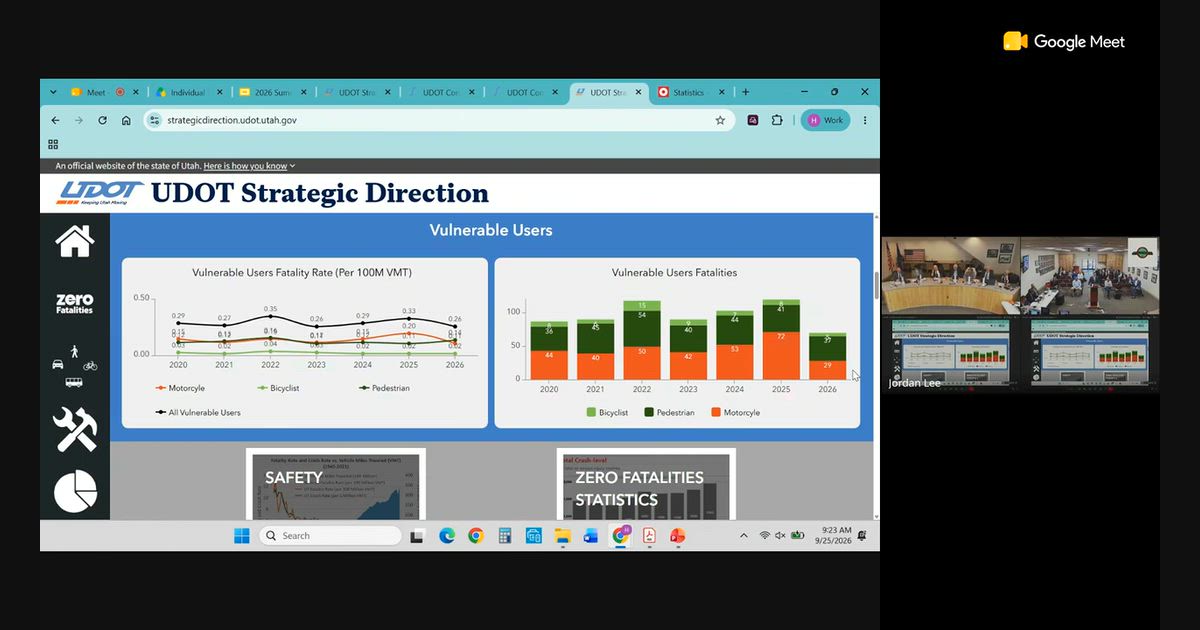 ▶ Watch this moment on USLege “We've got 13 and 14 year olds riding these very high powered vehicles on roadways, and they're not schooled in the rules of the road, as much as they will be later when they try to get their driver's license.” Patrick Kelly, traffic and safety, Utah Department of Transportation, Sept. 25. 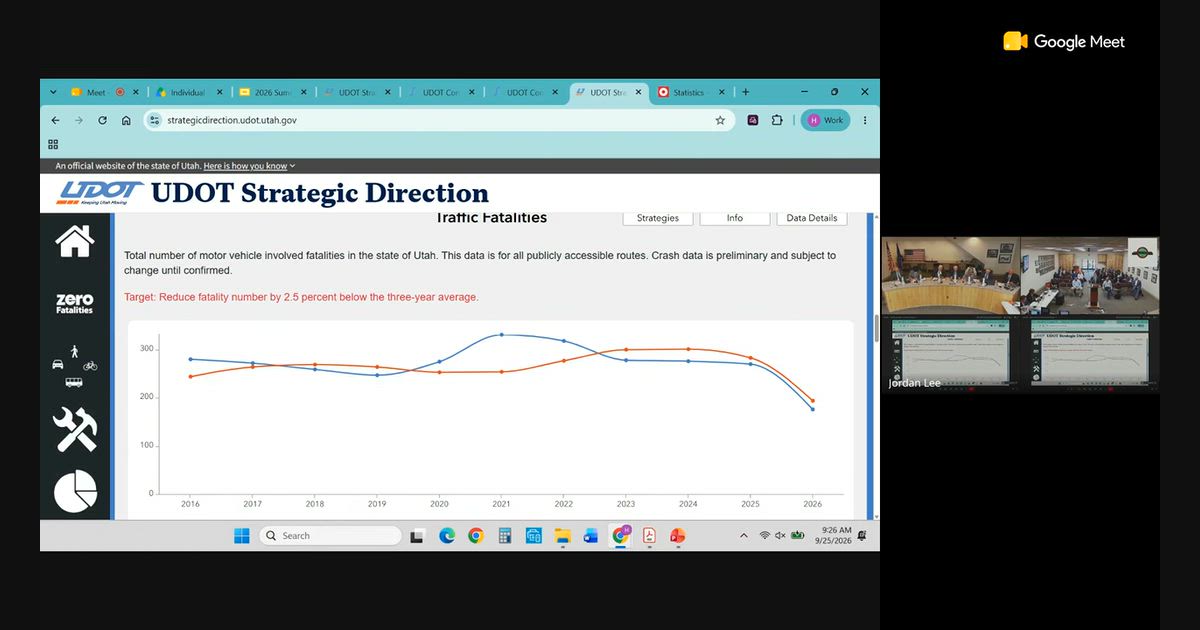 ▶ Watch this moment on USLege “It will be all completed within the current schedule of the existing project. And it's really critical that that happens because when the I 15 project goes under construction, obviously, 215 becomes the detour route for that.” Robert Stewart, Region 2 director, UDOT, Sept. 25. 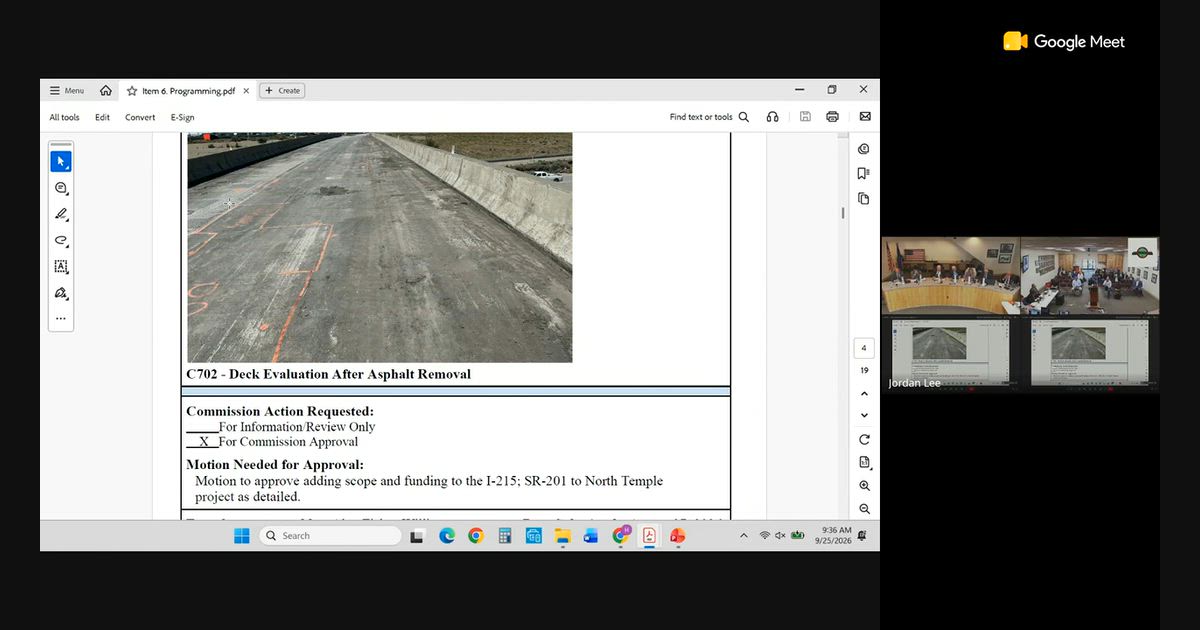 ▶ Watch this moment on USLege “For us, we're looking at sidewalk gaps less than a quarter mile, way finding signs, and trail maintenance.” Josh Van Jura, director, UDOT Trails and Transit Group, Sept. 25. 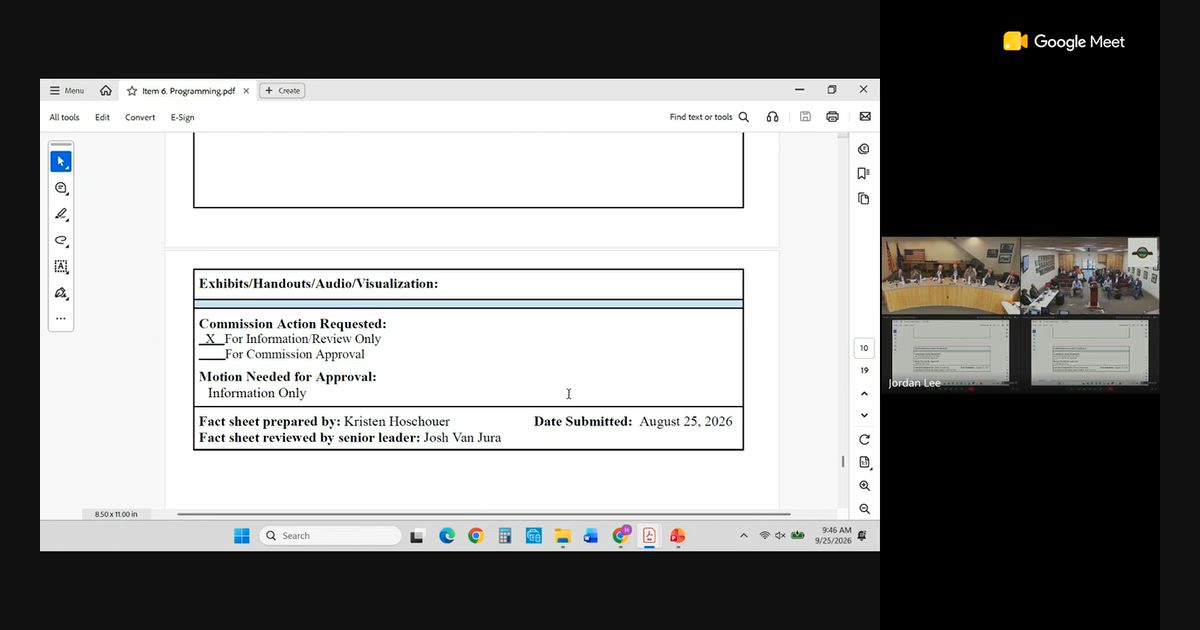 ▶ Watch this moment on USLege “We're gonna spend a lot of money on trails and active transportation that could just go away without proper maintenance.” Commissioner Kevin Van Tassel, Utah Transportation Commission, Sept. 25.  ▶ Watch this moment on USLege “As part of every project, every active transportation project that you approve, we are making sure that maintenance is addressed and clearly identified who has that responsibility.” Carlos Braceras, executive director, UDOT, Sept. 25.  ▶ Watch this moment on USLege Why it matters: One commissioner said the e-bike question is worth raising with legislators. The I-215 deck work has to finish before the I-15 rebuild pushes traffic onto it, and the rural health money comes with a five-year federal clock and rules UDOT says are still being defined. 02 · Great Salt Lake & Economic Development Utah will receive $60 million for the Great Salt Lake in a federal land settlement and nominates 37 Opportunity Zones Gov. Spencer Cox’s administration announced on Sept. 24 that Utah will receive $60 million for the Great Salt Lake under a settlement with the federal government that resolves a legal dispute of more than two decades over land near the Bear River Migratory Bird Refuge. According to the Department of Natural Resources, the agreement transfers 22,311 surface acres along the lake to the federal government for inclusion in the refuge, which the U.S. Fish and Wildlife Service will manage with public use and access guaranteed by federal refuge rules. The state will receive the money in four payments over 26 months, and the proceeds are dedicated exclusively to projects that benefit the lake. The settlement follows the Legislature’s approval earlier this year of H.J.R. 30, sponsored by Rep. Casey Snider and Sen. Scott Sandall, which authorized the land transfer and directed that any proceeds go to the lake; the resolution’s enrolled text sets no specific dollar floor, and the $60 million figure comes from the Department of Natural Resources’ characterization of the settlement. In the release, Cox called the agreement a big win for the lake’s health and thanked President Trump and his administration, legislative partners and state and federal staff. The release did not say which projects the money will fund first. The same day, the governor’s economic development office announced that Cox has recommended 37 census tracts to the U.S. Treasury for designation under the federal Opportunity Zone 2.0 program, which gives federal tax incentives for investments made through qualified funds. Utah had 147 eligible tracts, and federal law lets a state nominate 25% of them. The office said it weighed economic data and local input, gave extra weight to tracts cities and counties named as priorities, and balanced the list geographically: of the 147 eligible tracts, 117 were urban and 30 rural, and the recommendations include 27 urban and 10 rural tracts. By county, the list includes 11 tracts in Salt Lake County, seven in Utah County, three each in Cache and Weber counties, two each in Davis and Iron counties, and one each in Box Elder, Carbon, Duchesne, Grand, Piute, Sanpete, Tooele, Uintah and Washington counties. Treasury is expected to certify final designations in December, and the new designations and investment rules take effect Jan. 1, 2027. “This is a big win for the health of the Great Salt Lake. We took a decades-old dispute and turned it into $60 million or more that will go right back into the lake.” Gov. Spencer Cox, in a Department of Natural Resources release, Sept. 24. “There is still a lot of work ahead, but Utah is making real progress.” Gov. Spencer Cox, in a Department of Natural Resources release, Sept. 24. “Opportunity Zones give us another tool to encourage investment in communities that can benefit from new capital, new businesses and new jobs.” Gov. Spencer Cox, in a release from the governor’s economic development office, Sept. 24. “We wanted the process to be grounded in evidence while still reflecting what communities and economic development partners told us about their areas.” Jefferson Moss, commissioner, governor’s economic development office, Sept. 24. Why it matters: The land deal trades 22,311 acres along the lake to the federal refuge for money dedicated to the lake over the next 26 months, with H.J.R. 30 directing that it go to the lake, though the $60 million figure itself comes from DNR’s characterization of the deal, not the resolution’s text. The Opportunity Zone list decides which Utah neighborhoods can offer investors the federal tax break once Treasury certifies it in December. 03 · Salt Lake City Salt Lake City backs grants for Poplar Grove flood victims, replants poisoned North Temple trees and weighs a parking trade-off The Salt Lake City Council held its Sept. 22 work session at the Utah State Fair Park and opened with Budget Amendment No. 1 for fiscal 2026-27, which staff said includes 26 changes totaling $26 million in revenue and $39 million in spending. Among them are $11.5 million in grants for the Fleet Block and 9 Line, $1 million in grants for a pump track, adaptive pump track and skate park at Glendale Park, and $700,000 for the old library building, with no new full-time positions. The council gave straw-poll support to a council-added item of up to $50,000, one time, from the city’s tenant and homeowner loan fund for households hit by an Aug. 16 water main break that flooded homes in the Poplar Grove neighborhood. Staff said the administration had found that the fund’s usual rules could exclude some of the households the council meant to help, so the council backed four changes: income limits are waived, both renters and owner-occupants qualify, the money can be used until a home is habitable or the funds run out, and aid will be paid as grants, with relocation help calculated under the federal housing department’s temporary relocation formula. Mike Akerlow, deputy director of Community and Neighborhoods, said the city would pay property owners directly rather than ask families for receipts, and that some displaced households are staying in hotels or with relatives while the city works with UDOT to find housing in the neighborhood. The full amendment is set for a possible vote Oct. 6. Public Lands Deputy Director Tyler Murdock then updated the council on North Temple, where the city maintains nearly everything but the UTA-run median. A council member recalled the city’s mistake that poisoned trees there; Murdock said just over 200 were lost. Murdock said crews have planted 88 new trees since August, 12 more were going in that week, and 100 trees the city had been growing in boxes since 2024 while contaminated soil was cleaned up would be planted by the end of the year, for about 200 on the corridor. He said the city is keeping a separate promise to plant 400 trees in the area, including 30 to 40 along 1000 West at the Fair Park, 30 at Madsen Park and 140 along the Folsom Trail — a partial list that, by Murdock’s own itemized count, does not add up to 400 — and is planting about 550 roses. Volunteers from the Latter-day Saint program My Hometown will begin cleanup Oct. 10, ahead of a temple open house next March that Murdock said could bring 6 million to 7 million visitors. Council Member Victoria Petro asked whether plantings can survive conditions on the street; Murdock said daily trash pickup and urban services staff are on site, and that only one of the 100 boxed trees was lost in two years. Later, city engineering and transportation staff briefed the council on the 600/700 North rebuild from 800 West to Redwood Road, which adds the city’s first fully protected, above-curb bike lanes running in each direction, about 210 trees and city-owned irrigation, with substantial completion due Nov. 13. The city’s transportation director said the project removed about 74 on-street parking spaces, 66 of them beside Riverside Park, after residents asked to keep two travel lanes each way and said parking on the park’s curve felt unsafe. Staff listed three possible fixes: weekend parking at Backman Elementary, which the school allows informally; angled parking on 1400 West that could net about 40 spaces but has no funding; and a Saturday parking lane that would need UDOT approval under S.B. 242. Council members praised the project but raised construction delays near Redwood Road and unfinished-looking landscaping; staff tied the delays to UDOT’s bridge replacement and said the contractor must fix work below city standards. The council also forwarded Nick Stiles, who has defended tenants and debtors, worked as a prosecutor and most recently served as Administrator of the Utah Supreme Court and Utah Court of Appeals, to its consent agenda for a Salt Lake City Justice Court judgeship. “Some of the homeowners are in they are in situations like hotels or living with other family members. Those are not ideal, and they're also very temporary. So we are working with UDOT right now on trying to find locations in their neighborhoods for them to live.” Mike Akerlow, deputy director, Community and Neighborhoods, Sept. 22.  ▶ Watch this moment on USLege “We have completed planting of 88 new trees since August 2026. So we have 12 more left that will be going in the ground this week.” Tyler Murdock, deputy director, Salt Lake City Public Lands, Sept. 22. 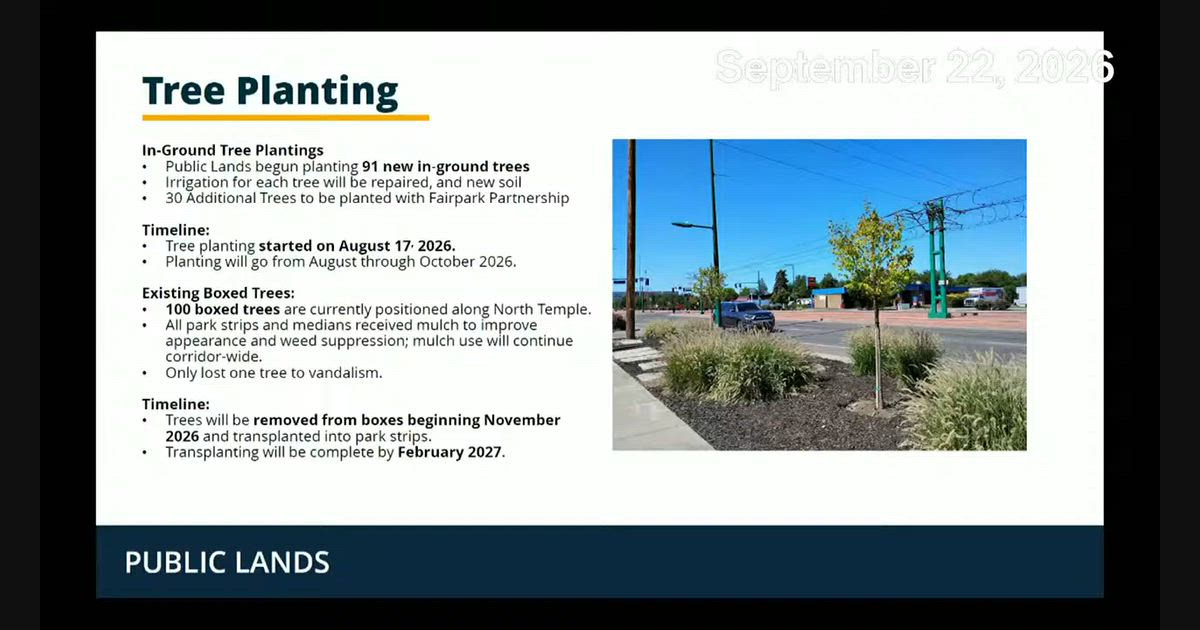 ▶ Watch this moment on USLege “I love this, want this, believe that we should have this, but I think it's limited in the investment has limited value when we're putting lipstick on a pig.” Council Member Victoria Petro, Sept. 22. 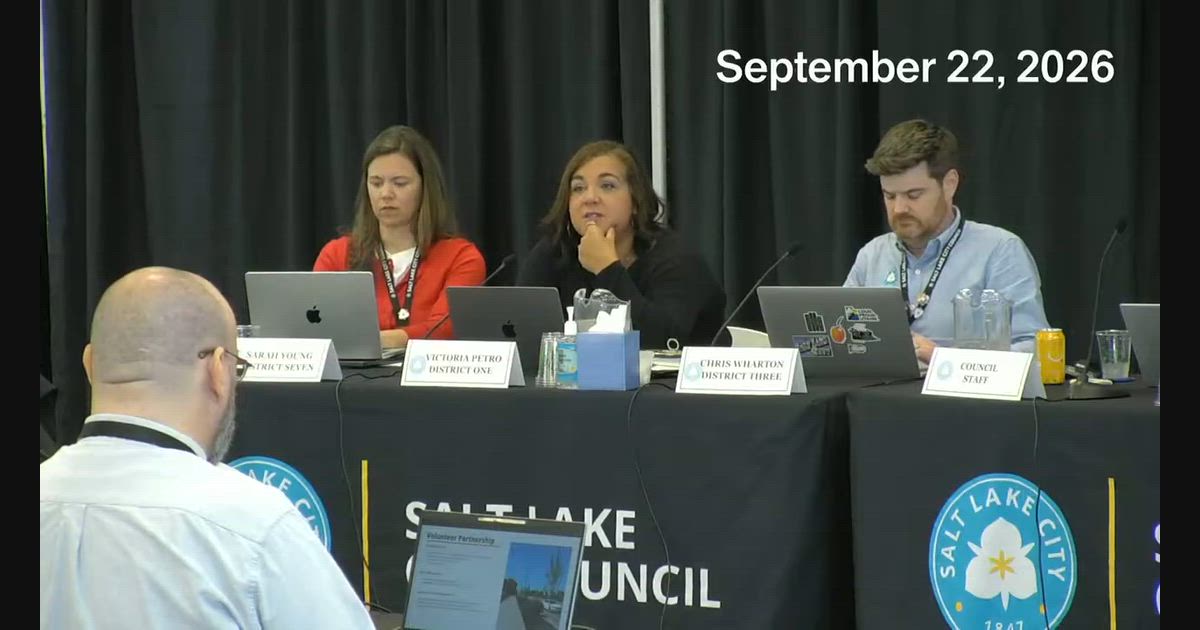 ▶ Watch this moment on USLege “In two years, we lost one of those 100 trees. So I think that has been a surprise and a positive sign for how those conditions are impacting the corridor.” Tyler Murdock, deputy director, Salt Lake City Public Lands, Sept. 22. 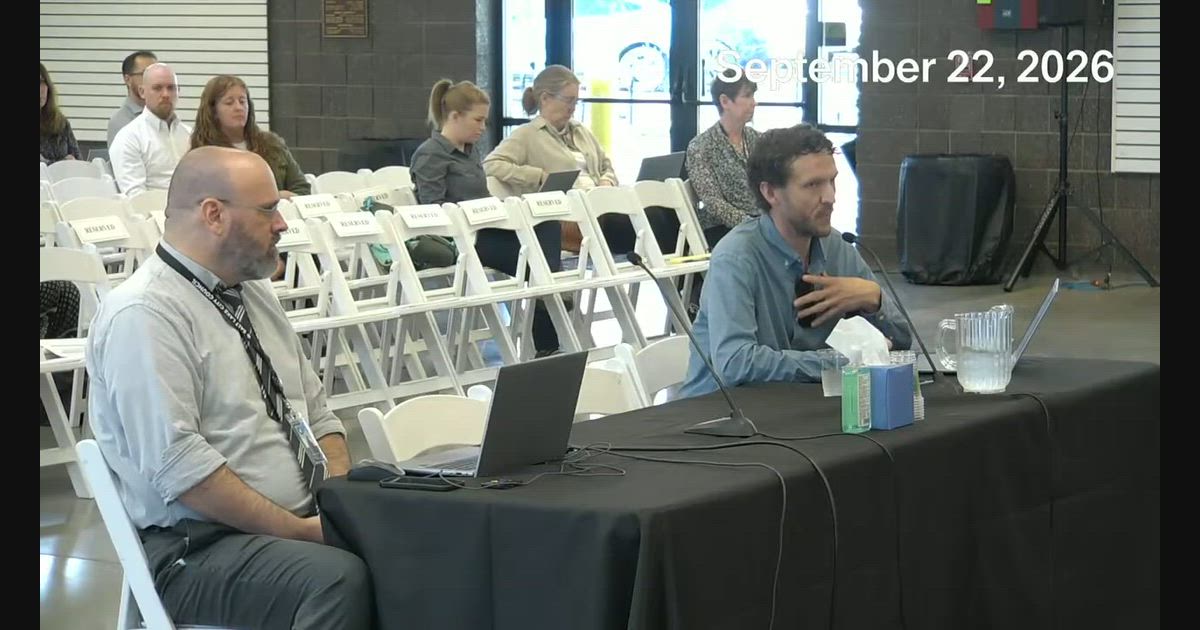 ▶ Watch this moment on USLege “I think it's really fair to say that losing this parking is an impact to the community that we can't ignore.” Salt Lake City transportation director, on the 600/700 North project, Sept. 22. 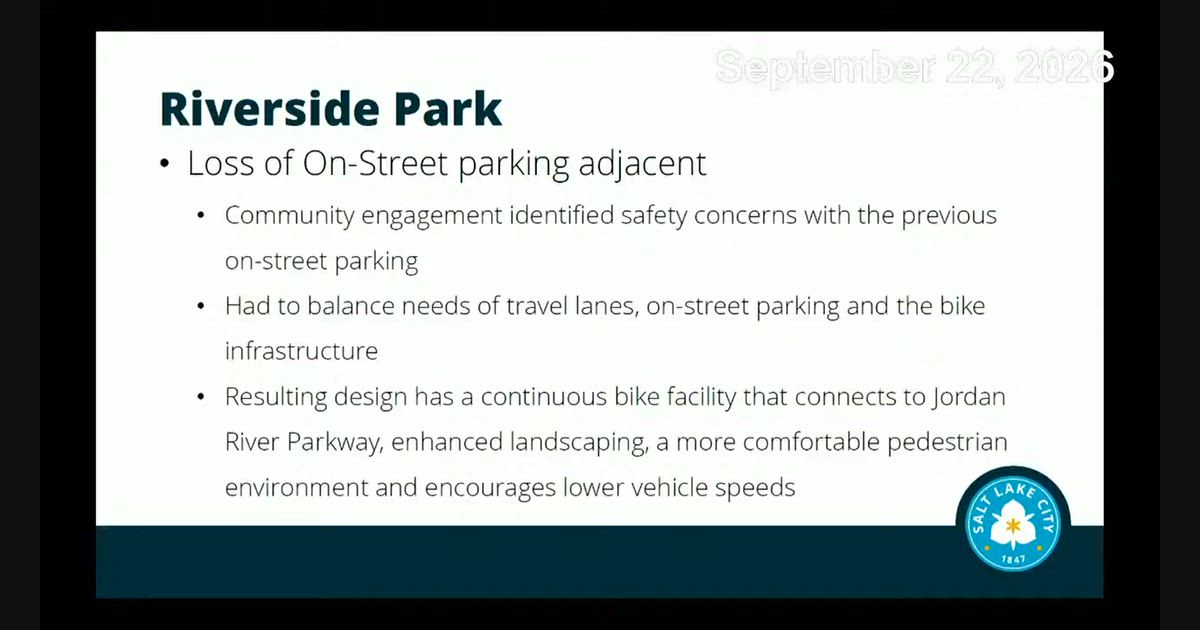 ▶ Watch this moment on USLege “92% of people sued for eviction in our states don't have an attorney. 97% people sued for a debt don't have an attorney.” Nick Stiles, Salt Lake City Justice Court nominee, Sept. 22. 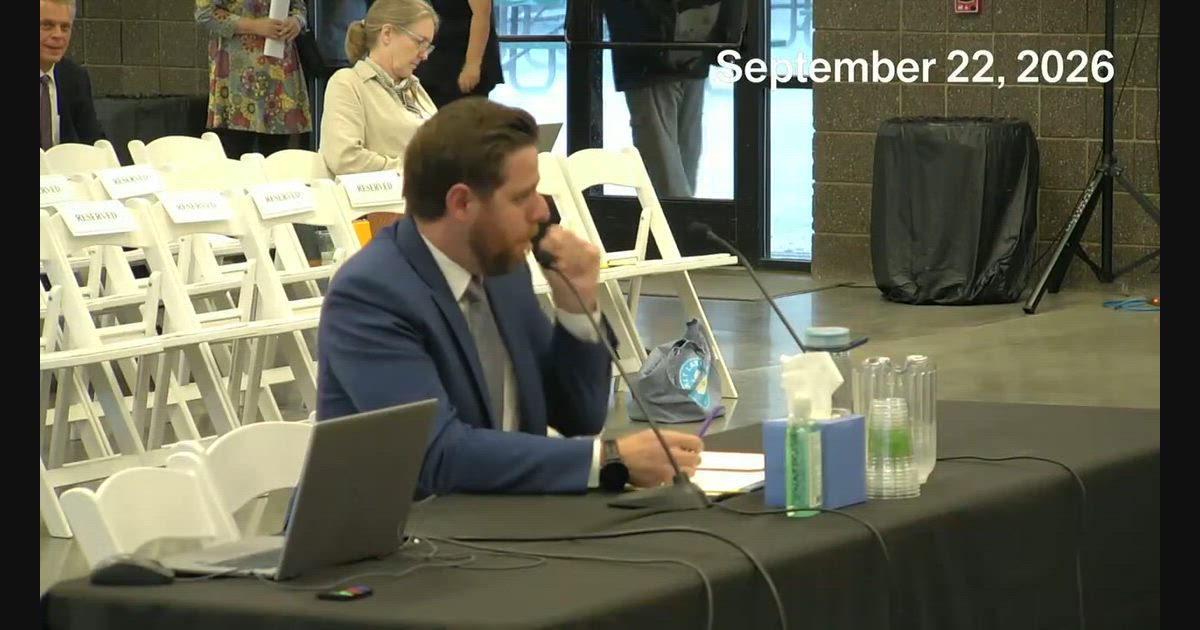 ▶ Watch this moment on USLege Why it matters: The Poplar Grove grants are small, but the administration and council eased eligibility so aid reaches renters and families above the fund’s income limits, and the whole budget amendment comes back Oct. 6. The North Temple replanting is the city’s fix for its own mistake, on a corridor expecting millions of visitors next spring, and two of the three parking fixes on 600/700 North would need money the city has not budgeted or UDOT approval. 04 · Transit & Housing UTA’s director tells Salt Lake County fares have not risen since 2013; council hears the case for supportive-housing money UTA Executive Director Jay Fox briefed the Salt Lake County Council at its Sept. 22 meeting on how the transit agency is run since the Legislature’s governance change took effect July 1, replacing full-time trustees with a seven-member, part-time transit commission. Former Millcreek Mayor Jeff Silvestrini is Salt Lake County’s appointee, chosen by the county’s council of governments. Fox said he is now appointed by the governor, that UTA runs 131 miles of rail in a service area of about 3 million people, that on-time performance stood at 91%, and that about 70% of next year’s capital budget will go to keeping the system in good repair. He cited FrontRunner 2X, a UDOT partnership to bring 15-minute peak service to the 83-mile line. Council Member Suzanne Harrison asked what is being done to restore canyon bus service cut a couple of years ago and whether driver wages are part of the answer. Fox said the cuts grew out of post-pandemic staffing shortages, forced overtime and the strain of layering a four-month ski season on top of year-round routes, and that UTA and UDOT have moved resort employees onto vanpools and added seasonal contract service for two straight winters, with more service expected this winter. When a council member mentioned UTA is looking at a fare increase and called it “probably very appropriate,” Fox said fares have not gone up since 2013 while costs such as diesel have risen, and that a new fare system will let riders tap a credit card or phone before next year’s temple open house, with a daily cap of about $10 for fare-card users. The council then heard from Housing Connect, the county’s housing authority, and Catholic Community Services about $550,000 in yearly county contributions that do not go through competitive bidding. Catholic Community Services receives $100,000 for the Bishop Weigand Resource Center, a day center that it said logged 40,760 visits in 2025-26 after a $7 million remodel expanded it by 52%. Housing Connect receives $450,000: $300,000 for rent assistance for 60 households at Palmer Court and the rest for service coordination at two other permanent supportive housing sites. County staff said these are among the oldest such projects in Utah, built before Medicaid could pay for on-site services, so county money covers case management, and that 70% of the $18.7 million the county’s regional development office has given Housing Connect over 12 years went through competitive processes. Chair Aimee Winder Newton asked how the spending relates to the county’s criminal justice costs; Council Member Jiro Johnson, a public defender, said clients who get supportive housing often stop cycling back through court. Before adjourning, the council unanimously adopted a resolution setting procedures for the Nov. 3 special bond election, approved a revised planning and engineering fee schedule, advanced on first reading an ordinance replacing the 2006 Utah wildland-urban interface code with the newer international version, as a staff member said the Legislature requires, and gave final approval to an ordinance clarifying conflict-of-interest disclosure rules for county officers and employees. Johnson said repealing the related county policy, No. 1430, does not relieve council members of disclosure duties set by ordinance and state law. “On July 1, we transitioned to a new governance model. We now have a seven member part time transit commission.” Jay Fox, executive director, Utah Transit Authority, Sept. 22.  ▶ Watch this moment on USLege “What is being done to increase service to our canyons both in the summer and during the ski season? And is the issue of perhaps raising wages for for those drivers to make sure we're getting qualified folks at a living wage, are are those two factors being addressed?” Council Member Suzanne Harrison, Salt Lake County Council, Sept. 22.  ▶ Watch this moment on USLege “We haven't raised fares since 2013, and I you know, you only have to look at what the price of diesel is currently to realize that our costs have gone up significantly since then.” Jay Fox, executive director, Utah Transit Authority, Sept. 22.  ▶ Watch this moment on USLege “One, they end up stopping my client, which is excellent, and then that means we've stopped the recidivism issue and broken that cycle.” Council Member Johnson, Salt Lake County Council, Sept. 22.  ▶ Watch this moment on USLege Why it matters: UTA’s executive director now answers to a part-time commission and the governor rather than full-time trustees. Fox tied a possible fare increase to costs that have risen since 2013 but gave no amount or date. The chair asked for data linking supportive housing to lower jail use, and county staff offered to bring some back before budget season. 05 · Public Safety Salt Lake County weighs a nearly $900 million jail expansion, and a council member who is also a public defender pushes back The Salt Lake County Council heard a jail-expansion feasibility study at its Sept. 29 meeting, presented by Babcock Design lead architect Rob Caudle, Arrington Watkins architect Mike Condor, Falcon behavioral-health and custody consultant Dr. Joe Landre, and facilities planner Meg Bauer. The county hired the team through an RFP about three and a half months ago to build on a 2024 jail master plan from CGL that was updated in May. Caudle said the county’s Oxbow Jail, once mothballed and later reopened, still houses 552 inmates who belong at the newer Metro Jail, which is therefore already 552 beds below its intended capacity; closing Oxbow would end roughly 18 trips a day, about 6,500 a year, moving inmates and laundry between the two facilities. He said the existing mental health unit was designed nearly 30 years ago and can no longer provide the range of care inmates need, and that booking and intake are undersized. Condor outlined two main options: a new general-population dorm building holding 760 to 900 beds that would let the county close Oxbow and absorb population growth, requiring warehouse and laundry expansions, and a separate medical, geriatric and mental-health facility. He said the estimates are full project costs — construction, design, permitting and furnishings — projected to the midpoint of construction, which the team put at early 2029 if design begins in 2027 or 2028. The full build-out, which also adds a new booking-and-intake area and vehicle sally port, comes to just under $900 million. Council Member Jiro Johnson, a public defender whose clients are held at the jail, argued the study assumed the county would only add beds rather than change policy to reduce the population. He said the Legislature criticized the county in February for not doing more to relieve pressure on the jail before it asks to expand it, and cited the CGL study in laying out who is actually in it: at least 75 beds held for federal detainees, roughly 450 people who cannot afford bail, including 250 with bail set at $5,500 or below for what he said are largely drug-possession cases, and about 500 more serving sentences or held on probation and show-cause violations. Johnson said the full build-out’s cost is close to double what the county spent on capital projects last year, and that the county should pursue diversion and treatment funding rather than “just adding beds.” Bauer said the team’s own modeling of admissions and length of stay, broken out by demographic group and offense type, went further than CGL’s master-plan-level numbers, and cautioned that Johnson’s policy assumptions are not yet reflected in any adopted county or judicial policy. Council members asked whether the south-end housing pods could be built as “core and shell” — constructed now but finished out only as beds are actually needed — and the architects said that is feasible. The council has a self-imposed late-November deadline to recommend a financing model, and asked the consultants to return with revised numbers reflecting specific policy scenarios, such as ending the federal detainee contract or releasing people held only on low bail or nearly served sentences. “It houses 552 inmates, for the Metro Jail. So, technically, the Metro Jail is already 552 beds below capacity.” Rob Caudle, lead architect, Babcock Design, Sept. 29. 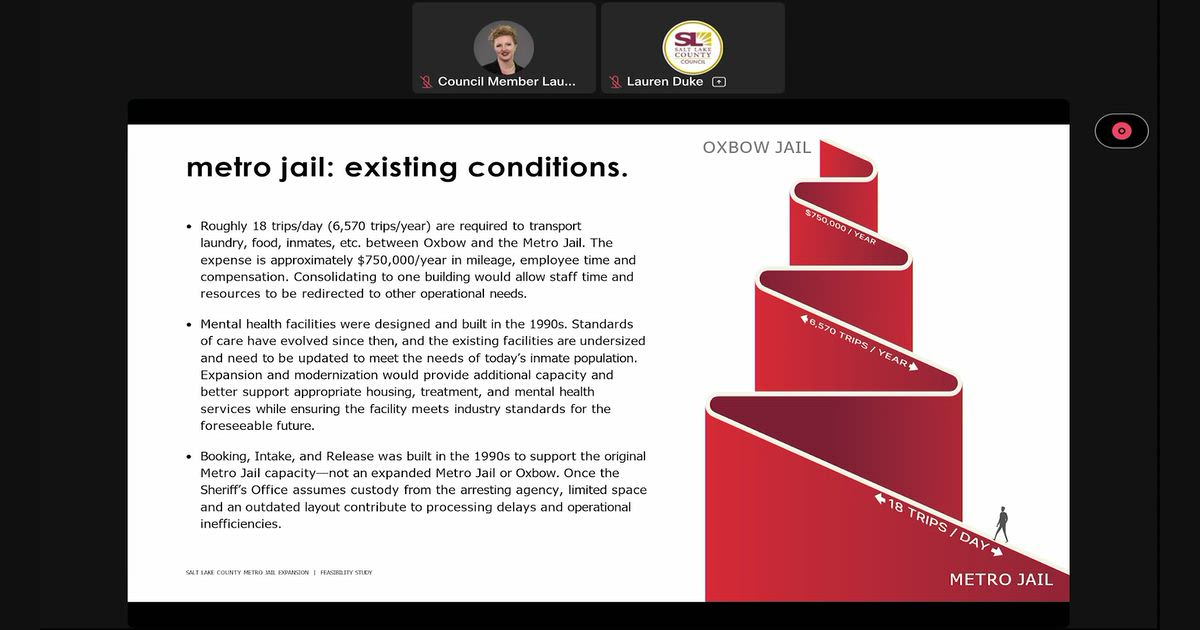 ▶ Watch this moment on USLege “They’re not wrong at least on this point, which is that we are trying to stuff a lot into the jail, and we are not meeting the need. ... we do not have to spend, from what I’m seeing here, a full build out of this is nearly $900,000,000.” Council Member Jiro Johnson, Salt Lake County Council, Sept. 29.  ▶ Watch this moment on USLege “If you were to look at the people who only have bail set around $5,500 and below, that’s 250 beds right there. And if the bail’s that low, it’s not because they were robbing people. It’s not because they were out there burglarizing homes. That’s because they were possessing drugs.” Council Member Jiro Johnson, Salt Lake County Council, Sept. 29.  ▶ Watch this moment on USLege “I think that the questions you’re asking are really good ones, but the danger of taking the Carter Global numbers is that those are big picture numbers from a master plan ... How many of those beds are for females? How many of those beds are for minimum custody and maximum custody and so forth?” Meg Bauer, facilities planner, Sept. 29.  ▶ Watch this moment on USLege Why it matters: The council is being asked to commit to a financing model before design even begins, for a facility that under the current timeline would not open until roughly 2031. Johnson’s numbers, if county and judicial leaders acted on them, could shrink the bed count taxpayers have to build for — but the architects said none of those policy changes exist yet, leaving the council to decide how much to bank on changes that have not been made. Utah in Washington Curtis signs on to an AI whistleblower bill; Lee urges clearer military rules on supplements • Sen. John Curtis (R-UT) cosponsored the bipartisan AI Whistleblower Protection Act, which his office said would protect workers who report legal violations and public safety risks, per a Sept. 25 release.
• Curtis asked Senate Judiciary Chairman Chuck Grassley (R-IA) and Ranking Member Dick Durbin (D-IL) to investigate presidential families’ business dealings and to subpoena Donald Trump Jr. and Hunter Biden, per a Sept. 22 release from his office.
• In a Sept. 23 release, Curtis said he called at an Environment and Public Works hearing for clear federal rules and a state role as Utah explores nuclear energy.
• Sen. Mike Lee (R-UT) and Rep. Warren Davidson (R-OH) wrote to Secretary of War Pete Hegseth on Sept. 22 urging clear standards for substances and supplements banned for service members. |
Also moving this week Minerals, liquor and a bond vote • Oil, Gas and Mining: The Board of Oil, Gas and Mining voted Sept. 23 to begin formal rulemaking on its mining rules, R647-2 and R647-3, with filing planned Oct. 1 and comment from Oct. 15 to Nov. 15; the acting director told the board letters on new bonding requirements are going out to operators. • Alcohol: The Alcoholic Beverage Services Commission heard Sept. 24 that state store retail sales were down about 5% in August, approved two restaurant licenses under a new variance for sites near parks, playgrounds or libraries, and confirmed Matt McKay as interim deputy commissioner. • Salt Lake County: The county’s $128 million recreation bond goes to voters Nov. 3; the council set election procedures Sept. 22. • Transportation: The Transportation Commission’s next meeting dates were not confirmed as of this issue. |
What we are watching • Whether legislators take up a speed-based e-bike class in the 2027 session.
• Salt Lake City’s Oct. 6 vote on Budget Amendment No. 1, including the Poplar Grove grants.
• Which projects get the first Great Salt Lake settlement payment.
• Treasury’s December certification of Utah’s 37 Opportunity Zone tracts.
• The size and timing of any UTA fare change, and the Nov. 3 Salt Lake County recreation bond vote.
• Whether the council moves toward a financing model for the jail expansion ahead of its late-November deadline. |
Join us live Upcoming webinars: next week and into October Tue, Oct 6 · 1:00 PM ET · For USLege customers AI summaries and impact analysis so you can understand a bill without reading the whole thing. Save my seat →Wed, Oct 7 · 1:00 PM ET · Government affairs A framework for planning your 2027 session now: where to focus across the states, what to watch, and how to plan resources before session starts. Save my seat →Tue, Oct 13 · 1:00 PM ET · For USLege customers Portals and reports for sharing outward, plus automating recurring reports to save hours a week. Save my seat →Wed, Oct 14 · 12:00 PM ET · Think tanks and small nonprofit teams Track more issues and brief leadership faster, without adding staff. Save my seat →Wed, Oct 21 · 1:00 PM ET · Associations and chambers Turn legislative activity into a clear ROI story that shows your board what your policy work protected and won for members. Save my seat →Can’t make one live? Register anyway and we’ll send you the recording. |
Coming up See every hearing, meeting, and deadline, live USLege’s legislative calendar tracks hearings, meetings, and filing deadlines across every jurisdiction we cover. |
Get your state's weekly read Texas, DC, Alabama, Utah, Georgia, Indiana, Kansas, Montana, Oregon, Kentucky, Wyoming, Arizona, Tennessee, Arkansas, North Carolina, and more editions rolling out every week. |
|
