
|
|
Issue 27 · Tuesday, June 30, 2026 · Week of June 22 to June 29 · Strictly nonpartisan
Several interim committees took up the issues headed for the 2027 session: a $174 billion water bill, data centers Texas cannot measure, and an insurance squeeze with no easy fix.
|
|
If you read nothing else
With the Legislature out of session, five interim committees built the 2027 agenda. The House priced Texas water at $174 billion and pressed a data-center industry it cannot measure; the Senate confronted a 79 percent jump in homeowner premiums and put the state broadband office on notice over a possible audit; Senate State Affairs revisited the proxy-adviser law and the machinery of elections; and an interim House panel put a $3.2 billion price on the Texans cycling through jails and emergency rooms. The throughline is data and dollars, both running short.
Water
Data centers
Insurance
Broadband
Proxy advisers
Mental health
|
|
|
|
01 · Biggest story · Water
A $174 billion water bill, and a fund that ran out of room
The Texas Water Development Board (TWDB) walked the House Natural Resources Committee through the draft 2027 State Water Plan during its June 23 hearing, and the headline number landed hard: about $174 billion in total capital cost through 2080, more than double the 2022 plan. Planning director Temple McKinnon said the plan projects roughly 3.6 million acre-feet of shortage in the first decade under a repeat of the drought of record, with a Toledo Bend reservoir conveyance the single costliest project at about $9.8 billion. The strain already shows in financing. Witnesses said the State Water Implementation Fund for Texas (SWIFT), the state’s flagship low-interest water-loan fund created in 2013, hit a funding line for the first time, turning away $2.2 billion in eligible projects (13 of 23). Proposition 4, approved by voters in November 2025, will dedicate up to $1 billion a year to the Texas Water Fund, about $20 billion over two decades, beginning in fiscal 2028, though the money is not expected to flow until around summer 2028. A stakeholder panel told the committee that even that stream trails the roughly $4 billion a year already coming in as applications, and urged the Legislature to recapitalize SWIFT now.
“The total nominal cost to implement recommended projects in this plan are $174 billion, which is more than double the cost of the 2022 state water plan.”
Temple McKinnon, Water Supply Planning Director, Texas Water Development Board, June 23.
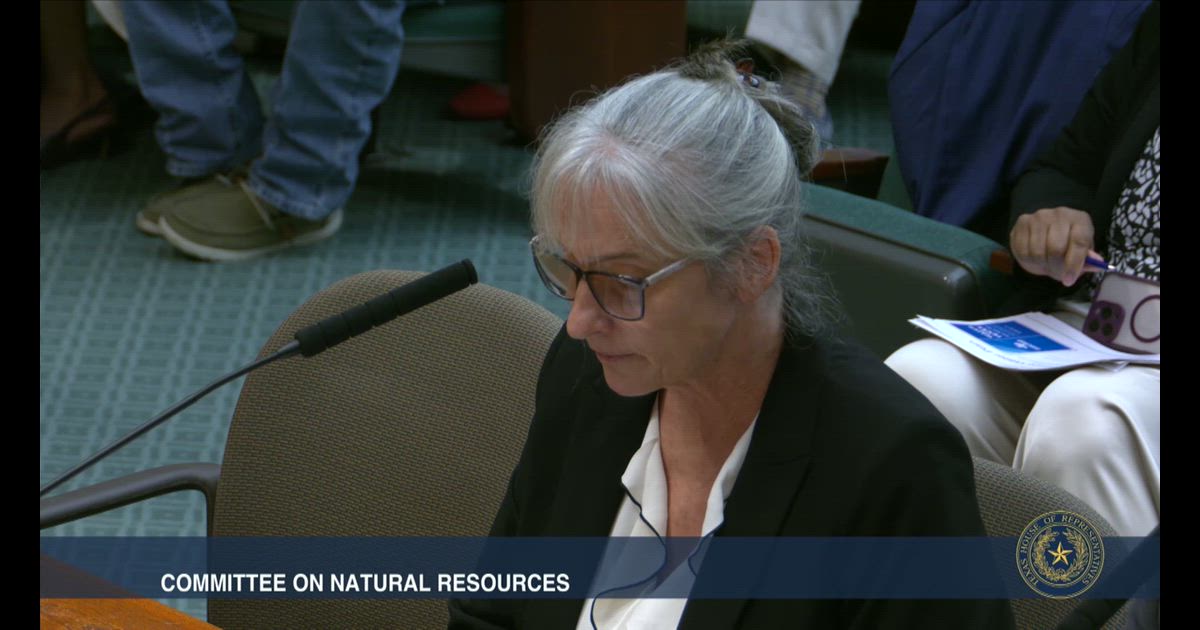
▶ Watch this moment on USLege
Why it matters The 2027 session opens with a water plan that has outgrown its funding model. For anyone tracking infrastructure dollars, the question is no longer whether Texas needs to spend on water, but how it finances a number that more than doubled since 2022.
|
|
02 · Data centers
341 data centers, and a 17 percent answer rate
The marquee charge of the same House Natural Resources hearing drew about eight hours of testimony. TWDB’s Temple McKinnon reported that data centers in the state water-use survey grew from 22 in 2023 to 341 in 2025, while the response rate from those centers fell to roughly 17 percent. A separate Public Utility Commission (PUC) survey on the energy-water nexus drew responses covering about 8 percent of facilities. Reporting is required under the Texas Water Code, but TWDB is not a regulatory agency and has no power to enforce it.
The room split. County officials and residents from Navarro, Caldwell, Tom Green, Parker, and Hill counties pressed for local authority over siting and water, and many demanded a moratorium, citing drought and non-disclosure agreements that hide water deals. Witnesses from the Data Center Coalition, Amazon Web Services, Google, and Vantage opposed one-size-fits-all closed-loop mandates and argued that forcing air cooling can raise total water use through added power generation. Several, including Google, confirmed they completed the survey. Members were explicit that nothing changes until 2027.
“So we’re building the state water plan off of a 17 percent response rate.”
Rep. Brad Buckley, R-Salado, Natural Resources Committee, June 23.
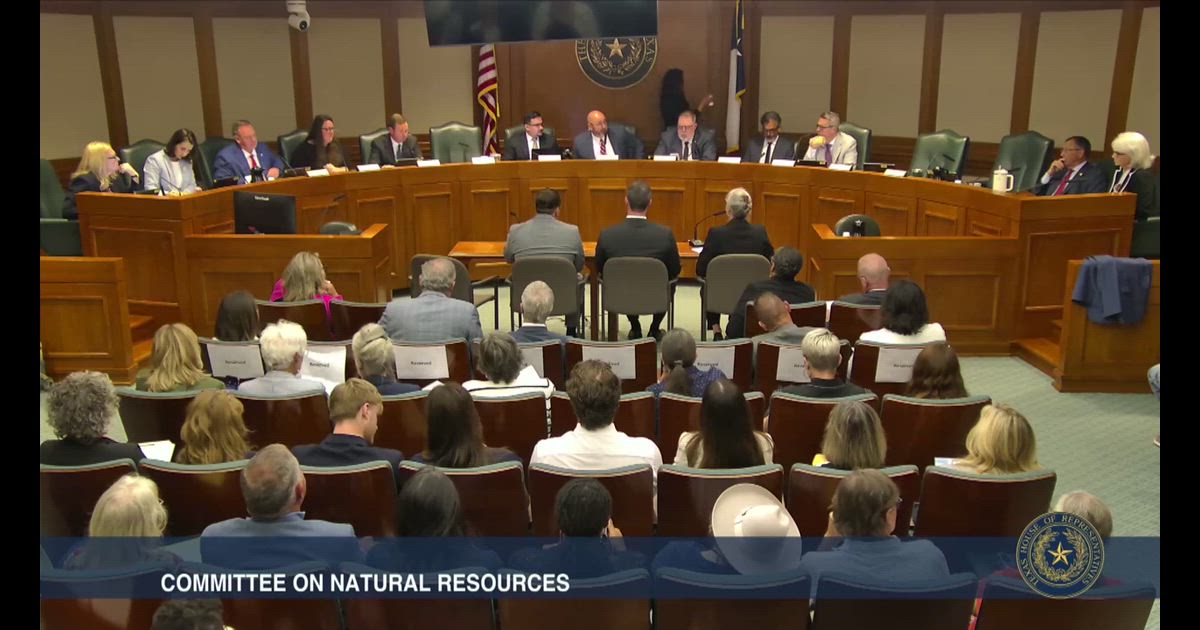
▶ Watch this moment on USLege
Why it matters Texas is trying to write water policy for its fastest-growing industrial water user without reliable data on what that user consumes. The reporting gap, not the technology, is what lawmakers will have to close first.
|
|
03 · Insurance
Homeowner premiums up 79 percent, and no single fix
Texas Department of Insurance (TDI) Commissioner Amanda Crawford told the Senate Business and Commerce Committee at its June 24 hearing that the average annual homeowner premium rose from under $2,000 in 2020 to over $3,500 today, a 79 percent increase, while the average amount of coverage, the dollar value insured on a home, rose 51 percent as rebuild costs climbed. She tied the premium jump to weather and claim costs: the National Weather Service recorded 902 hailstorms in Texas last year against 375 in Kansas, and wind and hail have driven about 62 percent of homeowner losses since 2019. She also noted softening signals, including a 2025 average rate increase of 4.3 percent after three double-digit years. Senators pressed on what the state can do. Sens. Donna Campbell, R-New Braunfels, and Nathan Johnson, D-Dallas, questioned whether advertising should be built into rates and raised price optimization, the practice of pricing on a customer’s willingness to stay rather than on risk; Crawford said TDI lacks the statutory tools to monitor it. University of Alabama economist Lars Powell made building codes his top recommendation, citing fortified-roof programs that studies link to roughly 75 percent lower losses. Builders and mortgage bankers testified that some coastal premiums have roughly doubled over the past seven years.
“The average annual homeowner premium in Texas has increased from under $2,000 in 2020 to over $3,500 today. It’s a 79 percent increase in six years.”
Amanda Crawford, Commissioner, Texas Department of Insurance, June 24.
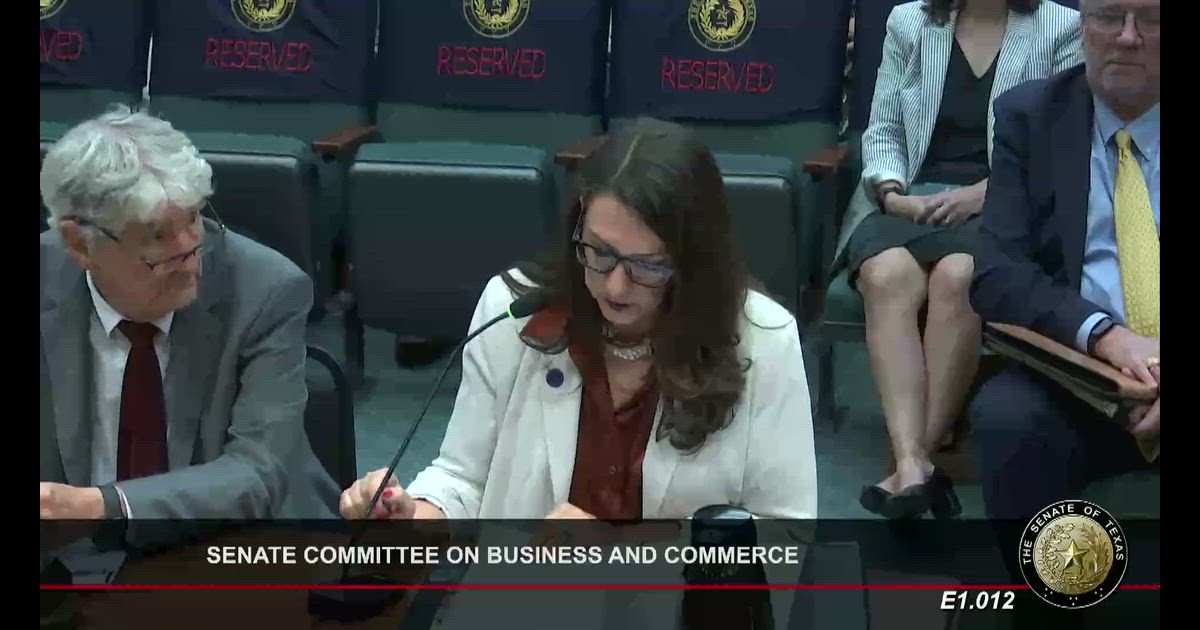
▶ Watch this moment on USLege
Why it matters Insurance is now a top-line affordability issue for Texas homeowners and buyers, and the 2027 session inherits a debate with no consensus fix. Code reforms, transparency mandates, and pricing oversight all have backers and skeptics on the dais.
|
|
04 · Broadband
Senators float an audit of the state broadband office
The same Senate Business and Commerce hearing put the Comptroller’s Broadband Development Office (BDO) on the defensive over how it is steering more than $5 billion in state and federal money. Chair Charles Schwertner, R-Georgetown, told director Bryant Clayton that favoritism and transparency were real concerns brought to his office. Members questioned a late change to the disbursement schedule for low-earth-orbit (LEO) satellite awards, made around the time grant agreements were executed; other applicants who sought similar reconsideration were declined. Sen. Nathan Johnson, D-Dallas, alleged most LEO grants went to a provider pricing roughly triple a competitor’s per-location cost, which Clayton attributed to uncured application deficiencies.
Rural telephone and cable witnesses argued the office leans on satellite as an “easy button” over fiber and asked for a public plan for roughly $600 million in unobligated state Broadband Infrastructure Fund dollars. Sen. Phil King, R-Weatherford, questioned whether the Comptroller’s office is the right home for the BDO and floated a State Auditor review; Schwertner and Sen. José Menéndez, D-San Antonio, signaled support.
“Favoritism and transparency are real big concerns that have been brought to my office relative to how your office is administering the grant programs of taxpayer money.”
Sen. Charles Schwertner, R-Georgetown, Business and Commerce chair, June 24.
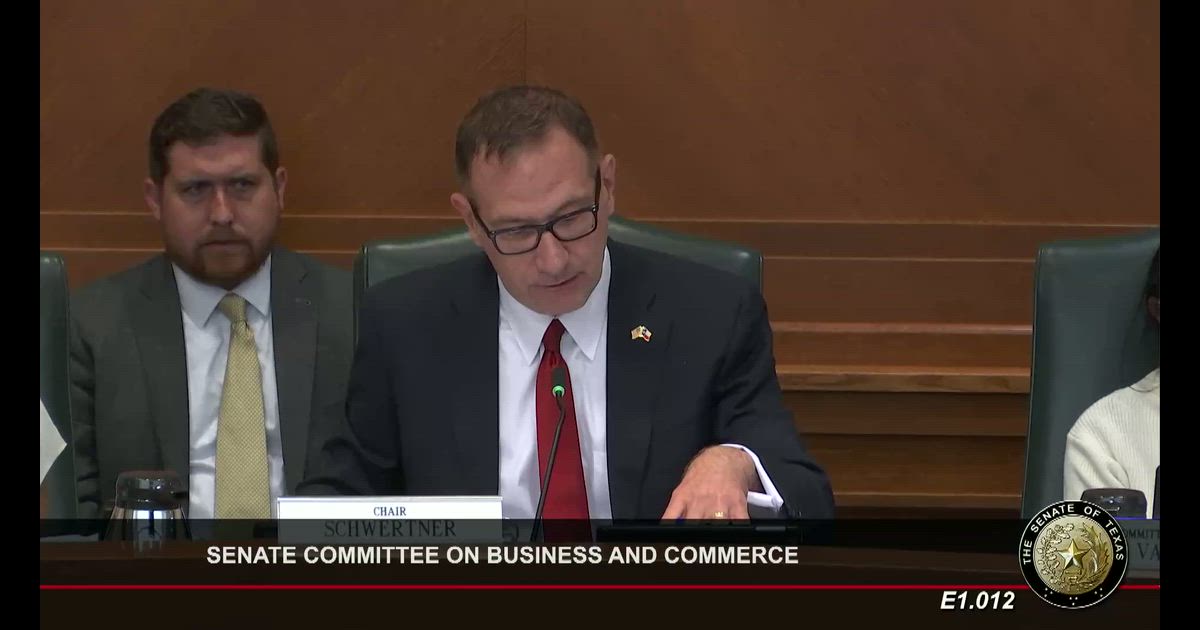
▶ Watch this moment on USLege
Why it matters More than $5 billion in broadband money is mid-deployment, and a bipartisan group of senators is openly discussing an audit. Providers and local governments waiting on awards have a direct stake in whether the rules get reopened.
|
|
05 · Markets
The proxy-adviser fight, and two no-shows
The Senate State Affairs Committee took up implementation of SB 2337, the 2025 law (effective September 1, 2025) requiring proxy advisory firms to disclose when voting recommendations rest on factors other than financial interest, at its June 23 hearing. Chair Bryan Hughes, R-Mineola, described the two dominant firms, Institutional Shareholder Services (ISS) and Glass Lewis, which together hold about 90 percent of the market and are both foreign-owned, as advising the institutional investors who control large blocks of shareholder votes. Both firms were invited; ISS declined and Glass Lewis did not respond. Both have sued the state, and a federal court has blocked the Attorney General from enforcing the law while the litigation proceeds. Sen. Paul Bettencourt, R-Houston, listed about 11 companies, from Texas Capital Bank to ExxonMobil, whose proposals to move their legal home to Texas the advisers recommended against, a total he put at nearly a trillion dollars in combined capital expenditure. Attorneys from Foley & Lardner and Gibson Dunn testified that the firms sell policy advice as financial analysis to fiduciaries, while a Manhattan Institute fellow argued the field sits largely outside federal regulation, leaving room for state action.
“So nearly, mister chairman, a trillion dollars of total effective wealth. They’ve advised not to come to Texas. And for what I believe is purely political activism.”
Sen. Paul Bettencourt, R-Houston, State Affairs Committee, June 23.
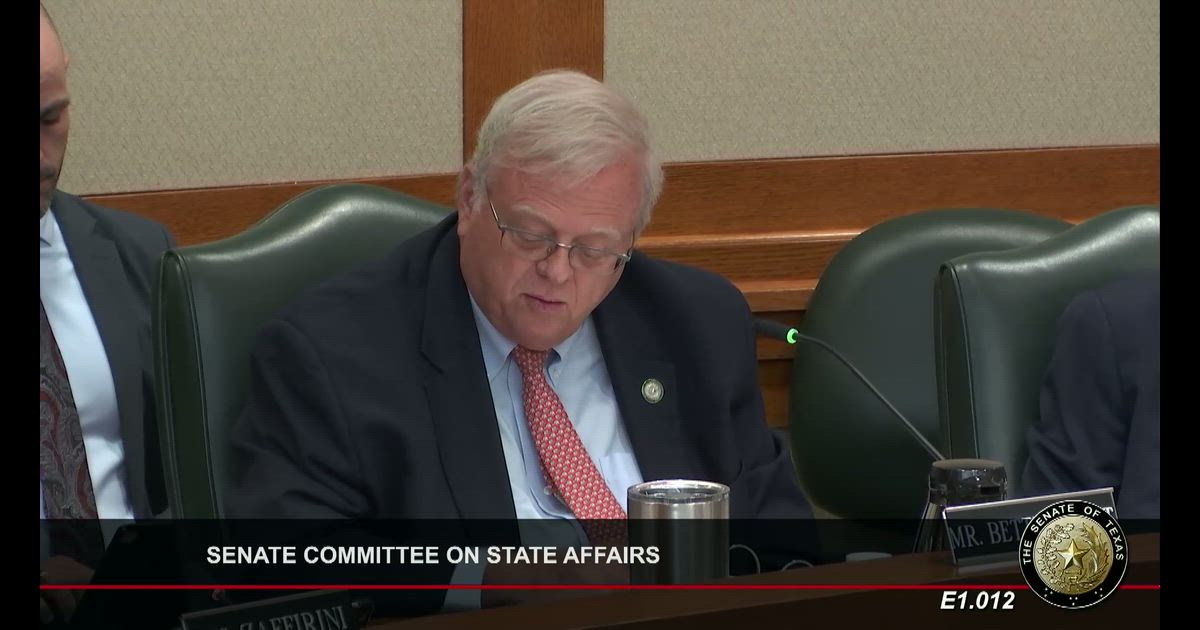
▶ Watch this moment on USLege
Why it matters Texas is testing whether a state can police how proxy advisers operate. The outcome touches every public company weighing a move to Texas and every institutional investor that relies on these recommendations.
|
|
06 · Mental health
A $3.2 billion problem, cycling through jails and ERs
The House Intergovernmental Affairs Committee took up Speaker Dustin Burrows’s charge on the intersection of severe mental illness, homelessness, and the justice system at its June 24 hearing. BJ Wagner of the Meadows Mental Health Policy Institute gave an updated estimate: about $3.2 billion a year borne by local governments for roughly 18,500 high-need people also at high risk of justice involvement, an average of roughly $175,000 each. Dallas County’s Steven Autry quantified the cost downstream, saying the county jail held 7,018 people at $96 a day, a daily cost he put at more than $681,000, with a majority of recent bookings flagged for behavioral-health needs. City and county officials from Houston, Austin, Bexar, and Tarrant converged on one ask: a place to bring the severely mentally ill for involuntary holds longer than 72 hours, and authority for more first responders to start emergency detentions. The sharpest disagreement came from Rep. Carl Tepper, R-Lubbock, who argued diversion has largely failed and jail is the only enforceable tool; Autry countered that jail is “a termination of the problem,” and Wagner argued Texas does not need a Florida-style civil-commitment statute, only the resources to use the emergency-detention laws it already has.
“We now see $3.2 billion per year borne by local governments for approximately 18,500 people with high needs who are also at high risk of justice involvement.”
BJ Wagner, Meadows Mental Health Policy Institute, June 24.
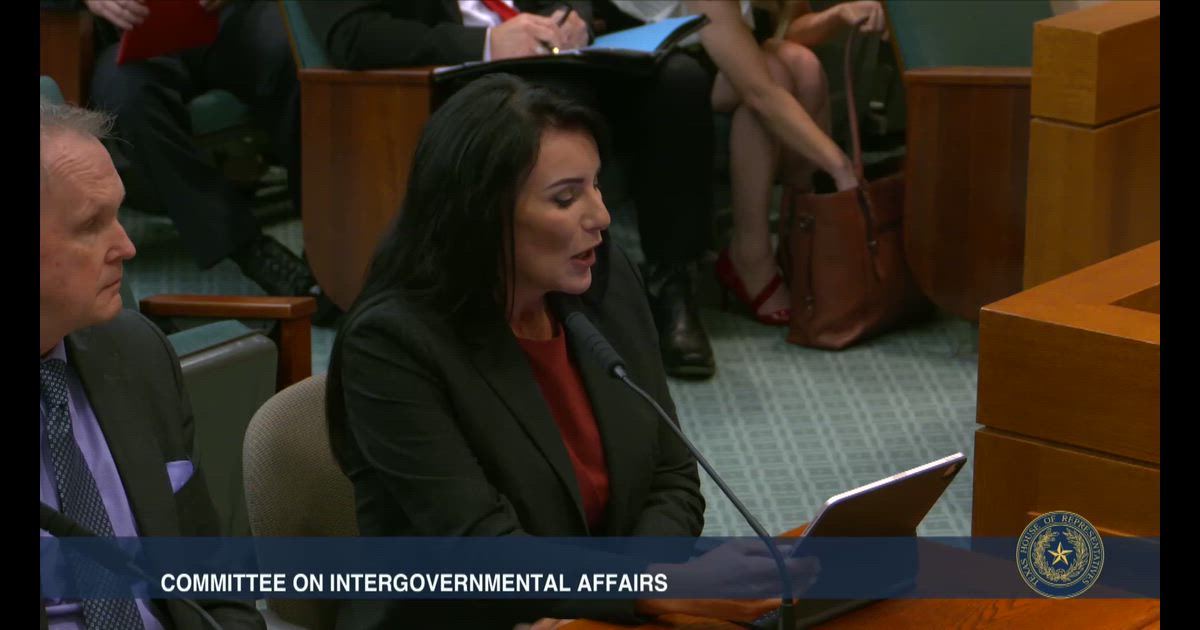
▶ Watch this moment on USLege
Why it matters This is a county-budget and public-safety problem as much as a health one, and the committee is drafting 2027 legislation on involuntary holds and who can sign emergency detentions. The fault line, treatment capacity versus jail, will define the debate.
|
|
|
Texas in Washington
Federal threads running through the week’s hearings
Two of the week’s state hearings turned on Washington. In Senate Business and Commerce, the Texas Department of Banking said the federal GENIUS Act will let non-bank firms issue stablecoins in Texas only if the state enacts a “substantially similar” framework before the federal rules take effect in 2028, work Texas has not done. In House Intergovernmental Affairs, a HUD regional administrator described the foster-youth housing voucher program now tied to First Lady Melania Trump’s “Fostering the Future” initiative, which Gov. Greg Abbott has pledged Texas will join. And the proxy-adviser law in story five remains paused by a federal court.
|
|
|
Also moving this week
Election machinery. Senate State Affairs pressed the Secretary of State on the troubled rollout of TEAM (Texas Election Administration Management, the statewide voter-registration database), where a vendor’s collapse cost the state $600,000 to $700,000; about 2,700 potential non-citizens flagged through the federal SAVE (Systematic Alien Verification for Entitlements) system; Val Verde County becoming the first under administrative oversight; and SB 2753, which sets a single early-voting period.
HB 7 and its critics. The same committee heard hours of testimony on HB 7, last year’s law aimed at abortion-inducing drugs shipped into Texas, with Texas Right to Life and OB-GYNs urging tighter enforcement and Planned Parenthood witnesses countering that medication abortion is safe care. The day before, an advocacy coalition held an “Our Bodies, Our Democracy” press conference at the Capitol.
Crypto and seniors. Business and Commerce heard that community banks fear stablecoins could pull deposits, and that the Texas Financial Crimes Intelligence Center found about 70 percent of crypto-kiosk depositors are over 60.
|
|
|
By the numbers
$174B draft 2027 State Water Plan, double the 2022 plan |
341 data centers in the state survey; ~17% reported water use |
79% rise in the average homeowner premium since 2020 |
$3.2B yearly local cost for ~18,500 high-need Texans |
82,592 MW unofficial June grid peak, June 18 (per Sen. Schwertner) |
$5B+ broadband funds the state is steering, now facing audit calls |
|
|
What we are watching · The docket
Tue, July 7, 10:00 a.m. CT · Senate Health and Human Services · Capitol Extension E1.012. Add to calendar
Wed, July 8, 8:30 a.m. CT · Senate Health and Human Services · Capitol Extension E1.012. Add to calendar
Wed, July 8, 11:00 a.m. CT · House Subcommittee on Defense and Veterans’ Affairs · San Antonio. Add to calendar
Formal hearing notices post on Texas Legislature Online (capitol.texas.gov) as agendas are filed. Times are Central.
|
|
What we are tracking
The week’s real story was a data problem
One theme runs through all five hearings: nobody has the full picture. The state is planning $174 billion in water projects while regulating data centers whose water-use survey came back at 17 percent. The insurance regulator can describe the premium spike but says it lacks the tools to monitor how prices are set. The broadband office is steering billions with records that take public-information requests to pry loose. USLege read all five hearings in full and resolved every speaker, because the answer to fragmented government data is a record that is searchable, traceable, and fast to question.
|
|

USLege Hackathon 2026
Build the future of legislative intelligence
Join policy and engineering folks for a day of building on the USLege platform.
|
|
|
|
|
Get your state’s weekly read
Texas, DC, New York, and California are live, with more states rolling out.
|
|
|
|
|
|
Political Spotlight by USLege · Strictly nonpartisan
Editions: Texas · DC · New York · California
uslege.ai · Subscribe
Methodology. This edition is built from the full transcripts of five Texas House and Senate interim hearings recorded June 22 to 28, 2026, read start to finish, with speakers resolved against the USLege legislator directory and every figure traced to the record or an authoritative public source. Monday, June 29 had no scheduled meetings.
On AI. USLege uses AI to help read and organize the legislative record. Every quote, number, and name in this newsletter is checked against the source before it ships.
|
|