|
|
Issue 29 · Tuesday, July 14, 2026 · Week of July 6 to July 13 · Strictly nonpartisan
|
|
With the Legislature out, the Senate's health panel and the state's agencies did the governing, from a revived THC ban to the coast's storm-surge barrier.
|
|
This week, in one line
A two-day Senate Health and Human Services hearing rebuilt the case for a consumable-hemp ban and probed a strained mental-health system; the same committee opened a surrogacy and birth-tourism inquiry; the Public Utility Commission weighed Permian power lines; the Gulf Coast Protection District banked federal dollars for the storm-surge barrier; and the state windstorm insurer debated how to grade its manager, while Congress was in recess.
|
|
|
01 · Biggest story
The Senate rebuilds its case for a THC ban
On July 7 the Texas Senate Committee on Health and Human Services opened two days of interim hearings, the first on the societal impacts of THC (tetrahydrocannabinol, the intoxicating compound in cannabis and hemp), a charge from Lieutenant Governor Dan Patrick. Chair Lois Kolkhorst (R-18) and Vice Chair Charles Perry (R-28) walked through a decade of law, from the 2015 Texas Compassionate Use Program (TCUP, the state's limited medical-cannabis registry) to House Bill 46 in 2025. Perry, whose Senate Bill 3 ban on consumable hemp was vetoed in 2025 by Governor Greg Abbott over litigation risk, said he will file it again. Witnesses built the health case in the July 7 hearing: the Texas Medical Association's Dr. Dominic Lucia said cannabis-overdose visits at his Baylor Scott and White pediatric hospital rose from 348 in 2021 to more than 900 in 2025, and the Department of State Health Services (DSHS) logged 10,515 THC exposure calls and 19 THC-related deaths since 2021. The Texas Police Chiefs Association's Chief Steve Dye estimated roughly 9,000 retail stores now sell the products.
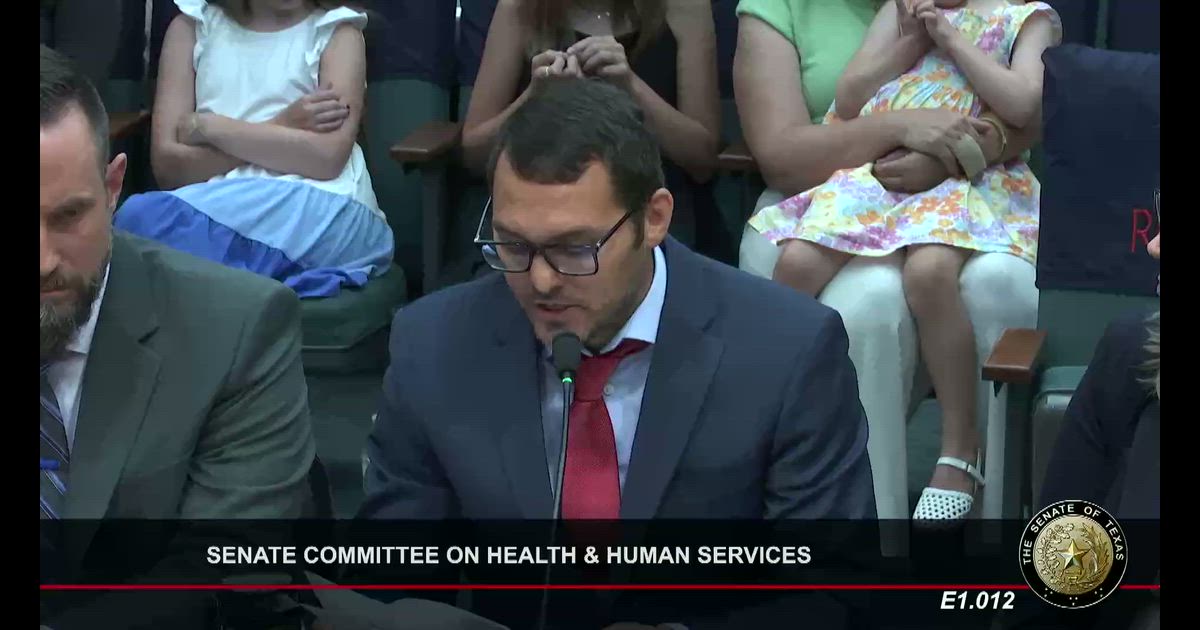
“Whether THC comes from marijuana or hemp, it can cause psychosis and has the highest transition rate to schizophrenia among all drugs, including meth. You can't regulate away psychosis. You cannot tax away schizophrenia.”
Aubrey Adams, founder of Citizens for a Safe and Healthy Texas, July 7.
▶ Watch this moment on USLege
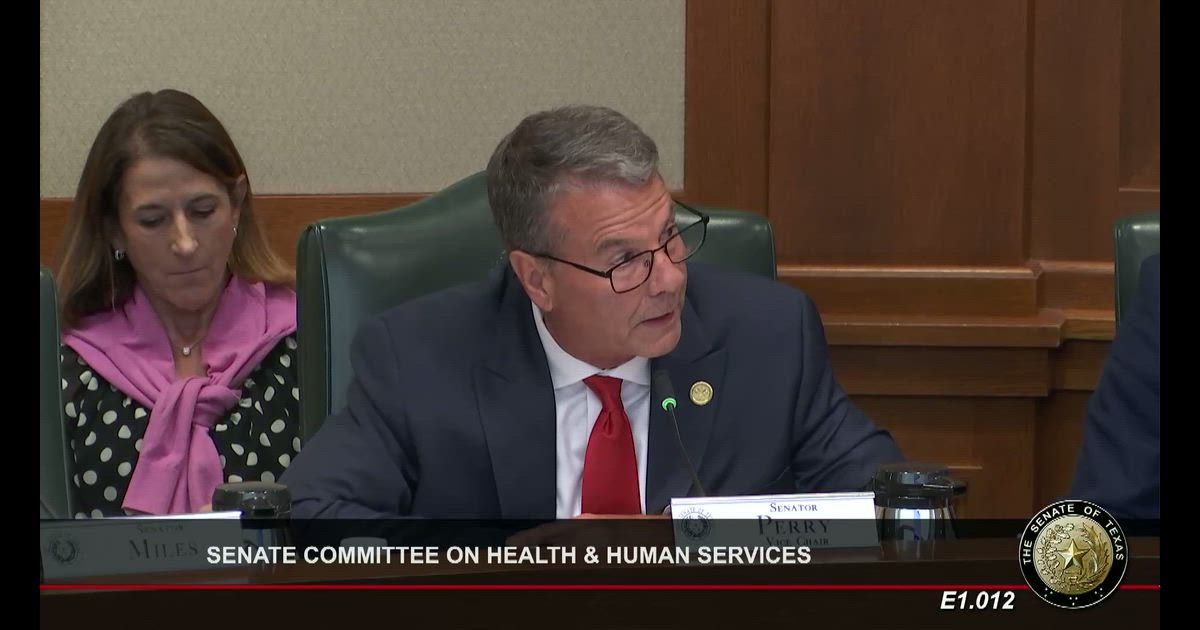
“But what we have is the bastardization by an industry for profit and pure profit with no consideration to those people that get addicted on it over the last, I'd say roughly ten years.”
Sen. Charles Perry, R-28, vice chair, July 7.
▶ Watch this moment on USLege
Why it matters. The committee is assembling the record for a renewed ban and a tighter licensing regime. What comes next is whether its interim recommendations back the vetoed ban or the executive order's regulatory path, with a new federal hemp standard set to take effect in November 2026.
|
|
02 · Mental health
Behind the THC fight, a strained mental-health system
The committee's second charge examined crisis mental health, homelessness, and competency restoration (court-ordered treatment to make a criminal defendant fit for trial). Officials from the Texas Health and Human Services Commission (HHSC) and a witness from the Texas Council of Community Centers described about 1,500 people on the forensic waitlist for state-hospital beds, with roughly 496 new forensic beds arriving over two years. The council witness said a membership survey found 87 percent of local mental-health authorities struggle to recruit and retain staff and 72 percent report unusually high turnover. Senators pressed for solutions during the hearing: Sen. Borris Miles (D-13) returned repeatedly to housing, Sen. Cesar Blanco (D-29) to rural and veteran workforce gaps, and Sen. Molly Cook (D-15) to first-episode psychosis programs and thin commercial-insurance networks. Perry pressed on how "step down" supportive housing works and where the state's responsibility ends.
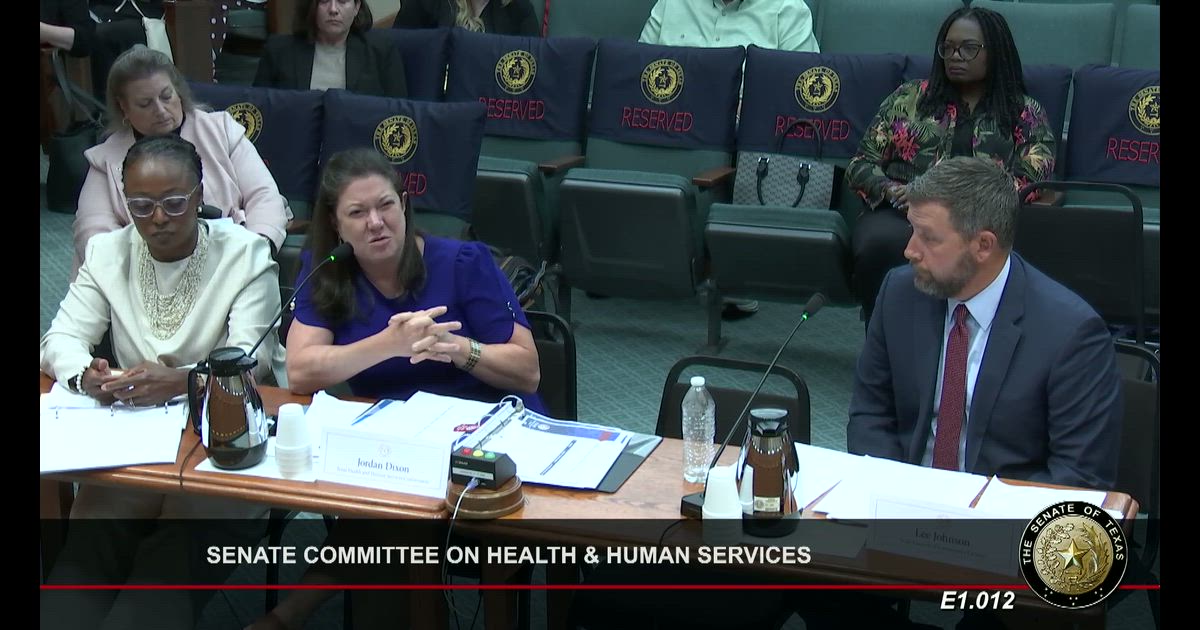
“500 new forensic beds coming online in the next two years is huge for us and for all of the communities we work with.”
Texas Health and Human Services Commission, Senate hearing, July 7.
▶ Watch this moment on USLege
Why it matters. The interim record points toward next session's asks on outpatient capacity, forensic beds, and supportive housing. What we are watching is whether the committee's recommendations fund the outpatient-treatment gap officials flagged as the system's weakest point.
|
|
03 · Surrogacy
Texas opens a surrogacy and birth-tourism inquiry
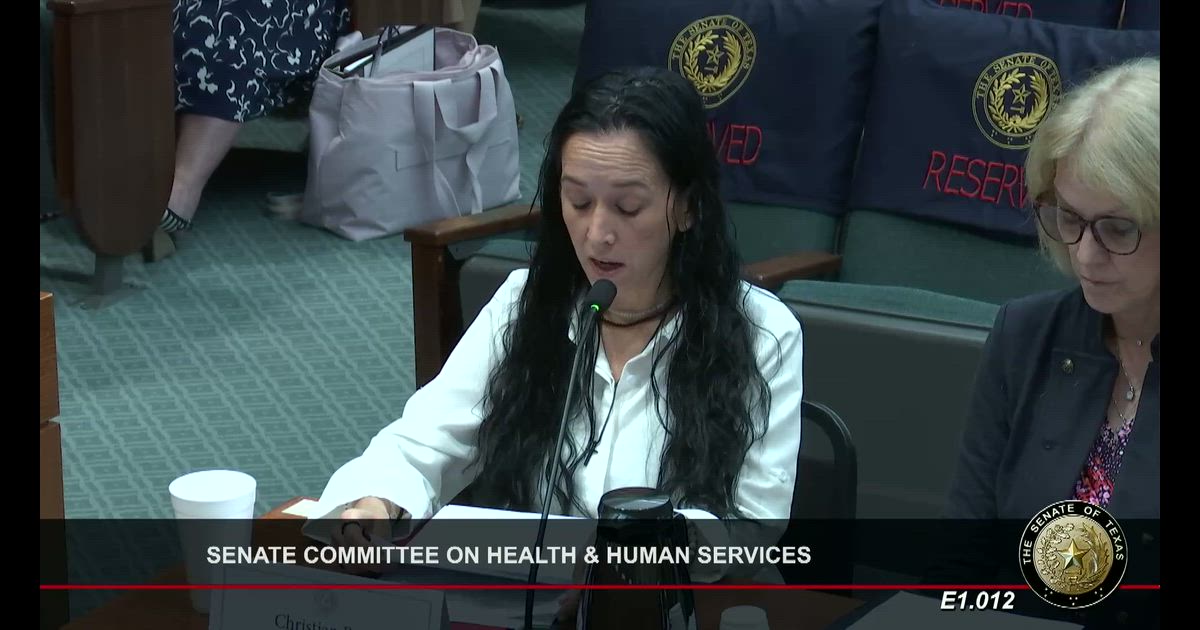
The hearing's second day, July 8, took up an interim charge on the exploitation of the surrogacy and fertility industries. Chair Kolkhorst tied it to the recent US Supreme Court ruling on birthright citizenship and to reports of foreign nationals paying US agencies for surrogacy and birth. She read a July 7 letter in which Governor Abbott directed Health and Human Services to investigate Mission Regional Medical Center over advertising "birth packages" to foreign nationals, and noted that a havemybabyintexas.com site had been taken down. Witnesses in the July 8 hearing included Christian Ross, a former gestational surrogate who described an international custody battle after the child she carried was taken to England, and Jennifer Law of the Center for Bioethics and Culture Network, who said more than 40 percent of California surrogate pregnancies are for foreign clients and that agencies target military spouses. Kolkhorst cited Florida's 2026 FIRE Act, which restricts surrogacy contracts involving citizens of countries of concern.
“If I could go back and redo this all over again, I never would have done this. It ruined my life and likely that baby's life as well.”
Christian Ross, former gestational surrogate, July 8.
▶ Watch this moment on USLege
Why it matters. The committee signaled interest in legislation modeled on Florida and on the countries-of-concern framework in Senate Bill 17. What comes next is the investigation Abbott ordered and any interim recommendation to restrict commercial surrogacy.
|
|
04 · Grid
The utility commission weighs Permian power lines
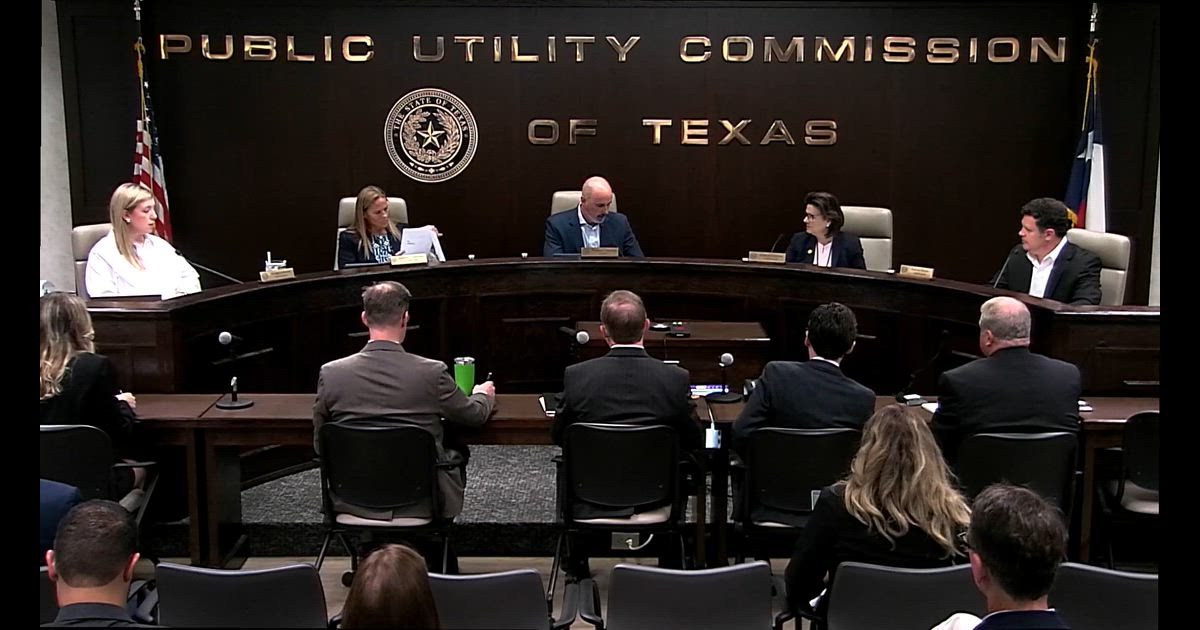
The Public Utility Commission of Texas (PUCT), which regulates electric and water utilities and oversees the grid operator ERCOT (Electric Reliability Council of Texas), met July 9. In public comment, Judy Gracie argued against proposed 765-kilovolt import transmission lines to the Permian Basin, saying the reliability goals of the 2023 grid plan (House Bill 5066) are already being met by Oncor's 565 miles of local transmission lines, a roughly $5 billion buildout due by 2030, plus new gas plants and large data-center load. On the docket at the open meeting, Chairman Gleeson said Texas Water Utilities (TW) had not met its burden for higher initial rates, and the commission adopted his revised decision; it also took up El Paso Electric's system-resiliency plan and a Texas-New Mexico Power transmission-cost update.
“I don't think TW has met its burden to show that the approval of the requested initial rates would serve the public interest.”
PUCT Chairman Gleeson, July 9. TW is Texas Water Utilities.
▶ Watch this moment on USLege
Why it matters. The import-transmission question is the live fight over how to power the Permian Basin's oil-and-gas and data-center growth. What we are watching is the commission's direction on the import lines as Senate Bill 6 load rules move forward.
|
|
05 · Coast
Coastal barrier district banks federal dollars
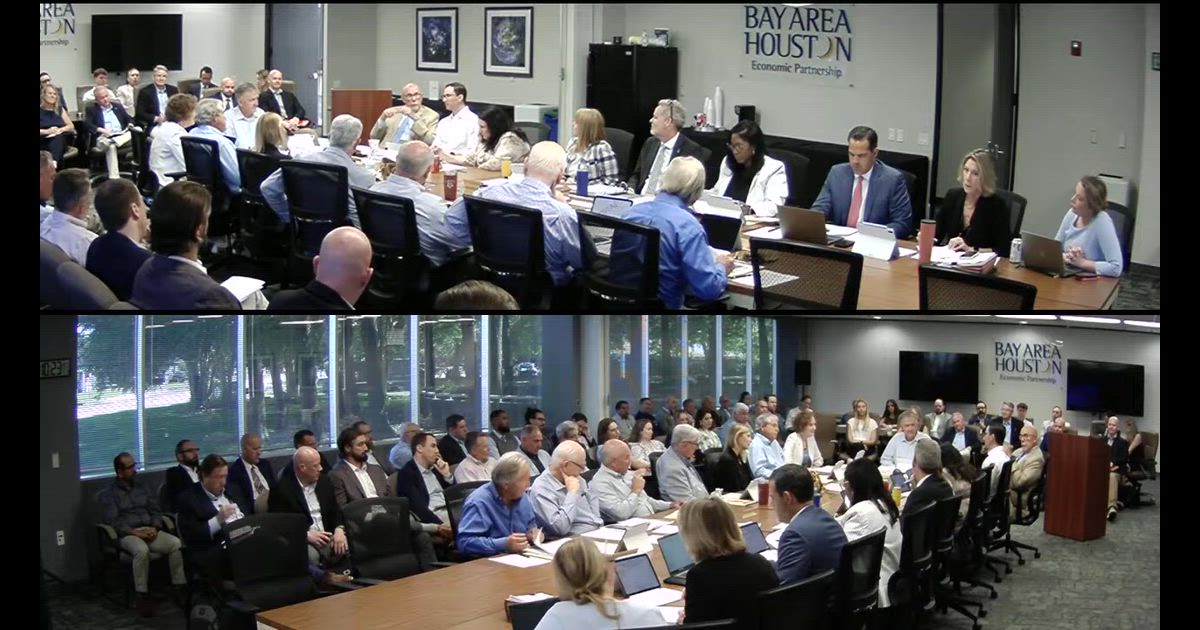
The Gulf Coast Protection District (GCPD), the local sponsor of the Coastal Texas storm-surge barrier known as the "Ike Dike," met July 8. Staff reported the district received about $10.6 million in the draft House energy-and-water appropriations bill, out of roughly $100 million nationwide, and transferred $99 million to the General Land Office (GLO) in June to meet a US Army Corps of Engineers cash call for fiscal 2027. The board approved a budget amendment trimming fiscal 2026 spending by about $2 million and heard, in its July 8 meeting, that the Orange County segment's federal review documents (the "packer" and its supplemental environmental impact statement) target December 2027, with work underway to accelerate the Sabine Pass to Galveston Bay project.
“Obviously, $10,600,000 in the house version of this bill in the investigations count is a big deal. I kinda undersold that. There's about a 100,000,000 nationwide, so getting more than a tenth of that is a really big deal for Coastal Texas.”
Gulf Coast Protection District board meeting, July 8.
▶ Watch this moment on USLege
Why it matters. Federal appropriations are the pacing item for the multibillion-dollar barrier. What comes next is the Senate version of the energy-and-water bill and the December 2027 review milestone for the Orange County segment.
|
|
06 · Insurance
Windstorm insurer debates how to grade its manager
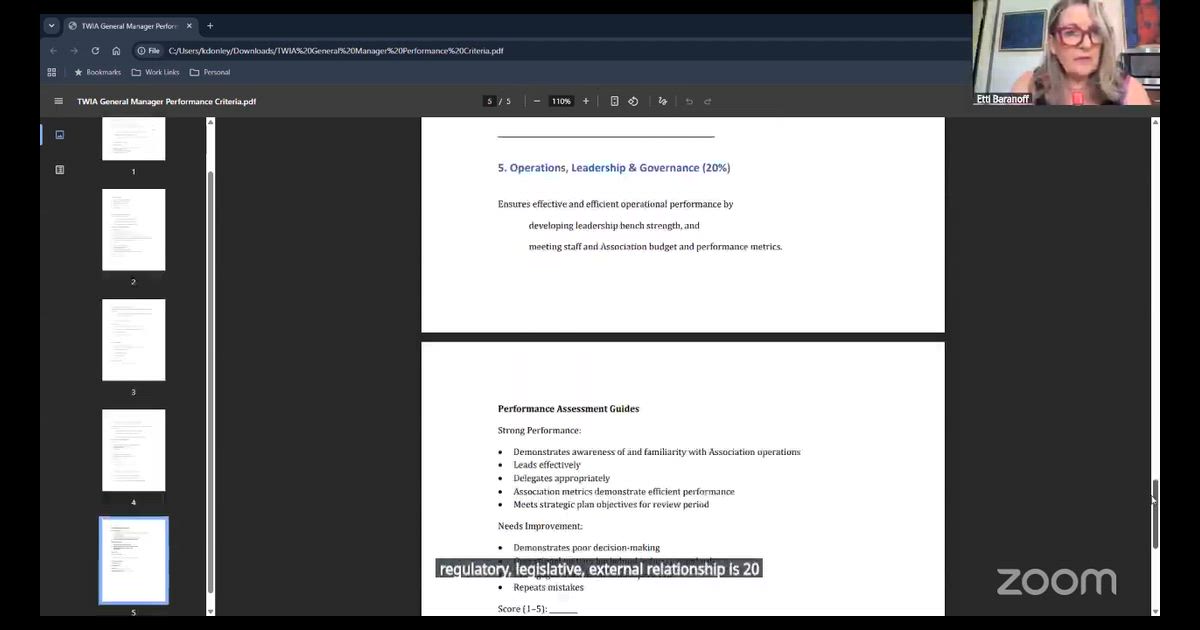
The Texas Windstorm Insurance Association (TWIA), the state-chartered insurer of last resort for wind and hail on the Texas coast, convened its General Manager Performance Criteria Committee on July 7 to design how the board evaluates its general manager. Members debated whether "catastrophe readiness," which includes securing reinsurance and storm-season funding of roughly $4 billion to $5 billion, should sit on the same pass-or-fail scale as other duties. One member, who described a background in solvency, argued that failing to secure catastrophe funding is not a "needs improvement" item but a reason the manager "cannot continue," and pushed to make financial performance the single heaviest category in the committee meeting. The committee agreed to bring a reworked framework to the full board.
“I regard the financial part as absolutely number one, maybe even more than 30%. It's basically the heart of the organization.”
TWIA General Manager Performance Criteria Committee, July 7.
▶ Watch this moment on USLege
Why it matters. How TWIA grades its manager shapes how aggressively the coastal insurer funds for a major hurricane. What we are watching is the framework the committee sends to the full board.
|
|
By the numbers
| 9,000 · retail stores estimated to sell consumable THC, per the Texas Police Chiefs Association |
| 900+ · pediatric cannabis-overdose visits at one hospital system in 2025 (348 in 2021), per Dr. Dominic Lucia |
| 1,500 · people on the state forensic competency-restoration waitlist, per HHSC |
| $99M · transferred by the Gulf Coast Protection District to the GLO for the Corps' fiscal 2027 cash call |
| $10.6M · the district's share in the draft House energy-and-water bill |
| 40% · California surrogate pregnancies for foreign clients, per witness Jennifer Law |
|
|
Texas in Washington
| Congress was in a district work period for most of the week, so the federal action touching Texas ran through appropriations: the draft House energy-and-water bill carries about $10.6 million for the Gulf Coast Protection District's storm-surge work (story 05). The Senate has not yet acted on its version. |
|
|
Also moving this week
| The Texas Council on Alzheimer's Disease and Related Disorders and the Health Professions Workforce Coordinating Council both met at Health and Human Services. Three Texas Department of Licensing and Regulation (TDLR) advisory boards convened, covering air conditioning and refrigeration contractors, speech-language pathologists, and process servers. The Texas Register published its latest issue. No new Texas executive orders were filed in the window. |
|
|
What we are watching
The Senate Health and Human Services Committee's interim recommendations on THC, mental health, and surrogacy; the HHS investigation of Mission Regional Medical Center that Governor Abbott ordered; the PUCT's direction on Permian import transmission; and the Senate's energy-and-water appropriations number for the coastal barrier.
|
|
What we are tracking
|
Two days, thirteen hours, one searchable record
This week's lead ran across two days and more than a dozen witness panels, the kind of proceeding whose substance sits well below the headline. Reading every minute against the recording, so a single quote can be trusted, is the discipline behind this brief. Every quote in this issue is drawn from the recording, timestamped to a clip, and checked against it before publication.
|
|
|
On the road
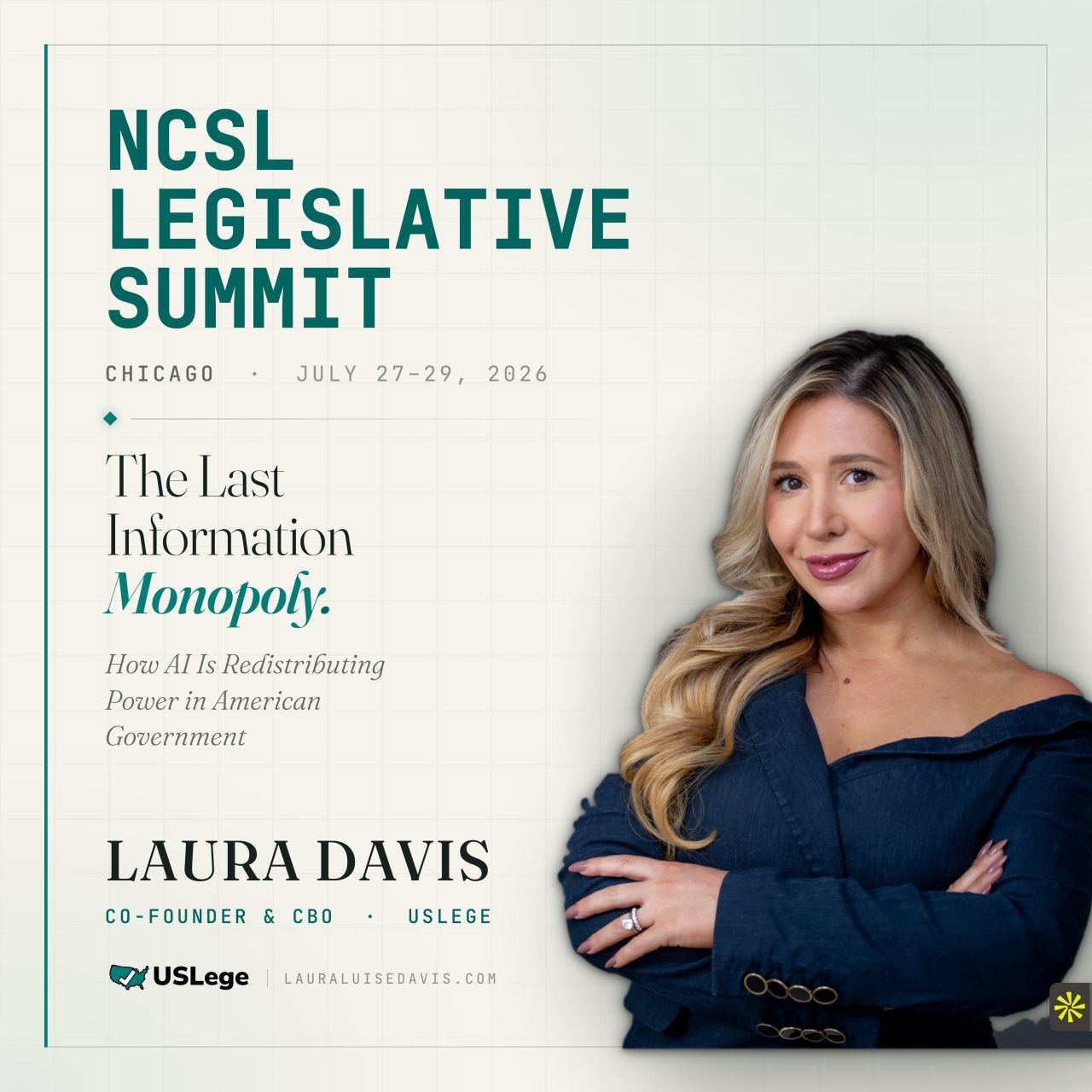
Find USLege on the summer tour
The membership organizations that convene state legislators hold their summer meetings this month: ALEC (American Legislative Exchange Council), July 22 to 24 in Orlando, and the NCSL (National Conference of State Legislatures) Legislative Summit, July 27 to 29 in Chicago.
|
|
|
Get your state's weekly read
Texas, DC, New York, and California are live, with more editions rolling out.
|
|
|
|
Methodology. Every story is built from a read of the cited USLege recording, cross-checked against official notices and public records. Vote tallies are as announced from the chair. AI note. AI drafts from primary-source transcripts and public records; a person reviews quotes, figures, and links against the record before send. Automated transcripts can contain errors; bracketed words in quotes mark corrections.
© 2026 USLege, Inc. · Reply to [email protected]
|
|