 | | Tuesday, August 25, 2026 · Week of August 17 to August 24 · Strictly nonpartisan | | With the Legislature out, Texas's agencies and interim panels did the governing this week. | | Landowners told regulators the accelerated 765-kilovolt transmission process denied them a real chance to be heard, from two directions in the same week; Texas Cyber Command detailed its first year absorbing DIR's cybersecurity role after a data breach hit a state lawmaker personally; the House Public Health Committee edged toward a full ban on minors' social media use; the Texas Juvenile Justice Department's governing board pressed its director on a five-facility safety lockdown ordered after an assault on a corrections officer; and the Water Development Board approved a $7 million grant advancing a major seawater desalination project, three months after a separate leadership controversy at the grantee agency was resolved. | | | 01 · Transmission & Land Rights Landowners Say the 765kV Approval Process Left Them No Real Chance to Be Heard The House State Affairs Committee's Aug. 19 interim hearing on Permian Basin 765-kilovolt transmission lines produced repeated, on-the-record confirmation that the accelerated approval process created by House Bill 5066 has not given affected landowners adequate notice or a meaningful chance to be heard. State Office of Administrative Hearings (SOAH) Chief Administrative Law Judge Kristofer Monson told the committee that Public Utility Commission of Texas (PUC) staff itself acknowledged in the record that it is "infeasible to read all the testimony, filings, and protests" the cases generated. Erath County Judge Brandon Huckabee testified that a proposal for decision confirms one contested Encore route segment, Docket segment C-8, was added after the public meeting required before affected landowners along it had received notice, and that no additional meeting or mailed notice occurred before administrative law judges recommended approving it anyway. Landowner witnesses and attorneys said more than 1,300 people intervened in some dockets, and hundreds to more than a thousand were later dismissed on procedural grounds inside the 180-day statutory clock, a compression from the previous 365-day timeline for certificate-of-convenience-and-necessity (CCN) cases. Monson also confirmed that a Comanche Nation request to raise concerns about burial sites and cultural resources came after the intervention deadline had closed, making it "too late to participate in the procedural process." Utilities, ERCOT, and industry witnesses countered that the lines are needed independent of data-center growth and that delay would force the Electric Reliability Council of Texas (ERCOT) to restudy roughly 600 interconnection cases and 58 transmission projects built on the same planning assumptions, risking rotating outages in Far West Texas as soon as next summer. PUC Chairman Thomas J. Gleeson said complaints have concentrated specifically on the 765kV lines, not on the many 345kV lines built previously without comparable opposition. The committee took no vote; the public comment portal closed Friday, Aug. 21, 2026. “No, I would say we don't hear that at our open meeting… everything we've heard, all of the discontent has been around the seven sixty five plan.”
Thomas J. Gleeson, Chairman, Public Utility Commission of Texas · Aug. 19 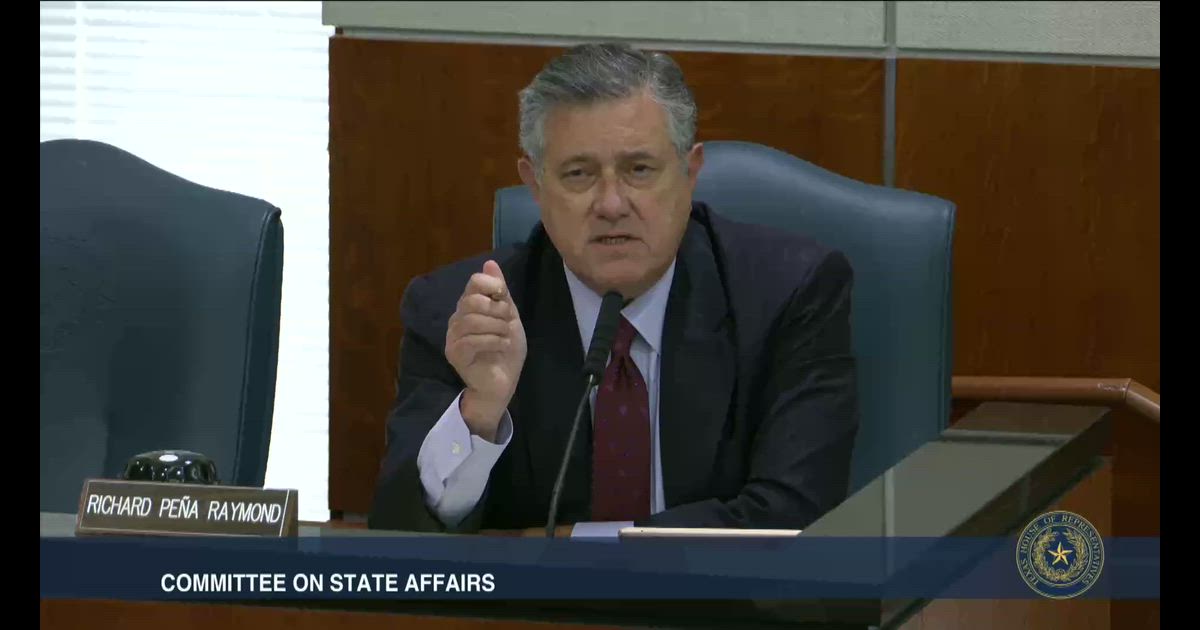 ▶ Watch this moment on USLege Why it matters: The compressed 180-day timeline is producing the same objections across multiple dockets: routes added after public notice closed, more than a thousand interveners dismissed on procedural grounds, and a tribal consultation request that arrived after the deadline. Utilities and ERCOT counter that reopening the timeline risks the reliability planning underneath dozens of other approved projects. The committee took no vote, leaving that tradeoff unresolved. | | 02 · Transmission & Land Rights The Same 765kV Line Reaches the Commission That Will Actually Decide It At its August 21 open meeting, the Public Utility Commission of Texas heard oral argument on two consolidated dockets, Docket No. 59029 and Docket No. 59315, covering the western and eastern legs of "Import Path One," a 765-kilovolt transmission line through more than twenty West and Central Texas counties under the Permian Basin Reliability Plan authorized by House Bill 5066. The commission limited argument to need and route selection, following an administrative law judge proposal for decision (PFD) recommending Route 559. More than thirty landowners, ranch families, school representatives, groundwater district counsel, and the Office of Public Utility Counsel argued for denial, deferral, or an alternate route, citing insufficient notice, outdated maps, proximity to a school and a state park, endangered mussel habitat, and disputed need calculations; some supported Route 559 as the least damaging alternative, others urged Route 552 or opposed the costlier Route 713. Encore Electric Delivery, the applicant, argued ERCOT's studies are entitled to "great weight," the legal standard under which the commission defers heavily to ERCOT's own reliability findings, and show the line is needed to prevent load shed in a fast-growing region. Earlier, during public comment, Erath County Judge Brandon Huckabee urged commissioners to weigh individual property rights against institutional momentum, remarks intervenors echoed throughout the day's argument. The commission took no vote on need or route; Chairman Gleeson said it would take time to reconcile testimony with the record and revisit the matter at a future open meeting. “The maps being used did not show our new $4,700,000 school building that was built this last year.”
Vanessa Halford, Executive Director, White Horse Christian Academy · Aug. 21 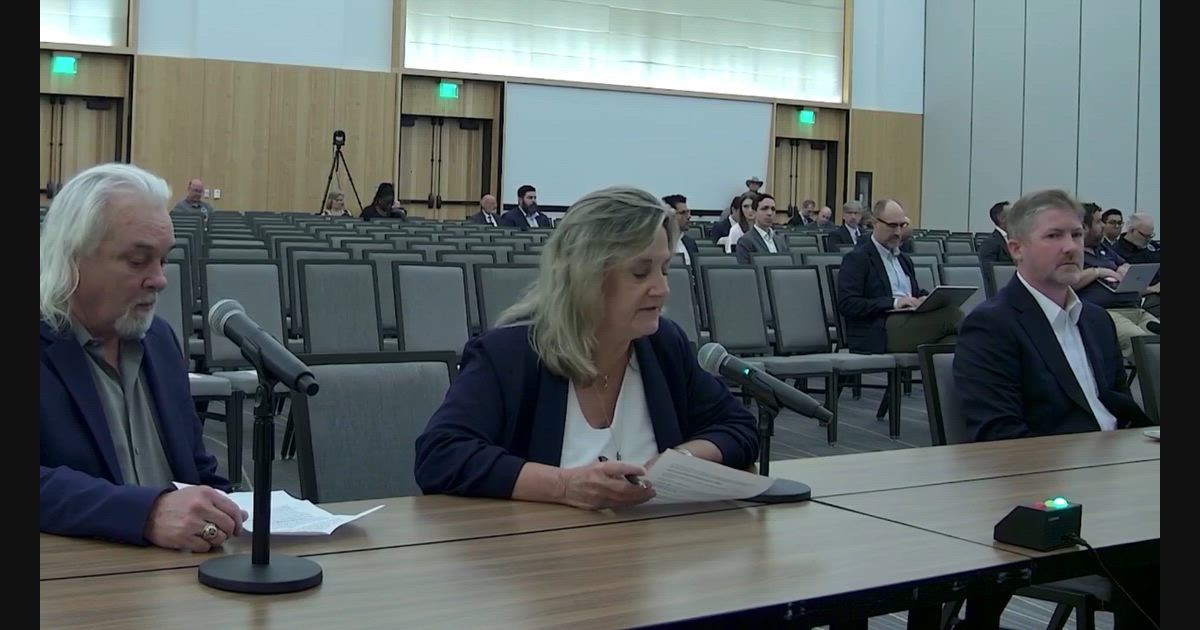 ▶ Watch this moment on USLege Why it matters: The same tension aired one level up, at the commission that will actually decide the route: a school found its new building missing from Encore's maps, and roughly 700 of the approximately 1,300 interveners across the two dockets were dismissed by SOAH before this argument even began. Encore counters that ERCOT's underlying need case deserves great weight regardless of routing objections. Commissioners took no vote, saying they need time to reconcile the record. | | 03 · Cybersecurity Texas Cyber Command Details Its First Year Absorbing DIR's Security Role Nearly a year after House Bill 150 created the Texas Cyber Command (TXCC) and shifted the state's centralized cybersecurity role out of the Department of Information Resources (DIR), the House Delivery of Government Efficiency (DOGE) interim committee heard the command's first detailed progress report on Aug. 19. TXCC Chief TJ White told the committee the agency activated March 1, 2026, and is "completing the transfer of specified cyber security and network security functions, personnel, contracts, property, records, and appropriated funds" from DIR. White said DIR "have been superb mission partners" during the handoff and credited DIR Executive Director Tony Sauerhoff with pushing TXCC to close gaps DIR itself had flagged, including limited real-time visibility into state-network traffic; a survey found Texas government traffic reaching North Korea, Iran, Russia and China. White also disclosed that the recent Texas Parks and Wildlife Department data breach, which a later witness said exposed millions of records, is under active TXCC/DIR investigation, and that Rep. Pat Curry described being personally victimized by that breach, including fraudulent credit cards and an attempted federal tax filing in his name. White said TXCC has no authority to compel removal of leaked data already posted to the dark web, and that breach-reporting requirements for state data are not clearly codified in statute. No Parks and Wildlife official testified at this hearing to explain the breach directly. “My identity was stolen about two weeks ago… several credit cards have been issued. There was actually a somebody tried to file a income tax return on me with federal government… it appears that the breach came from the Parks and Wildlife Department.”
Rep. Pat Curry (R-HD56) · Aug. 19 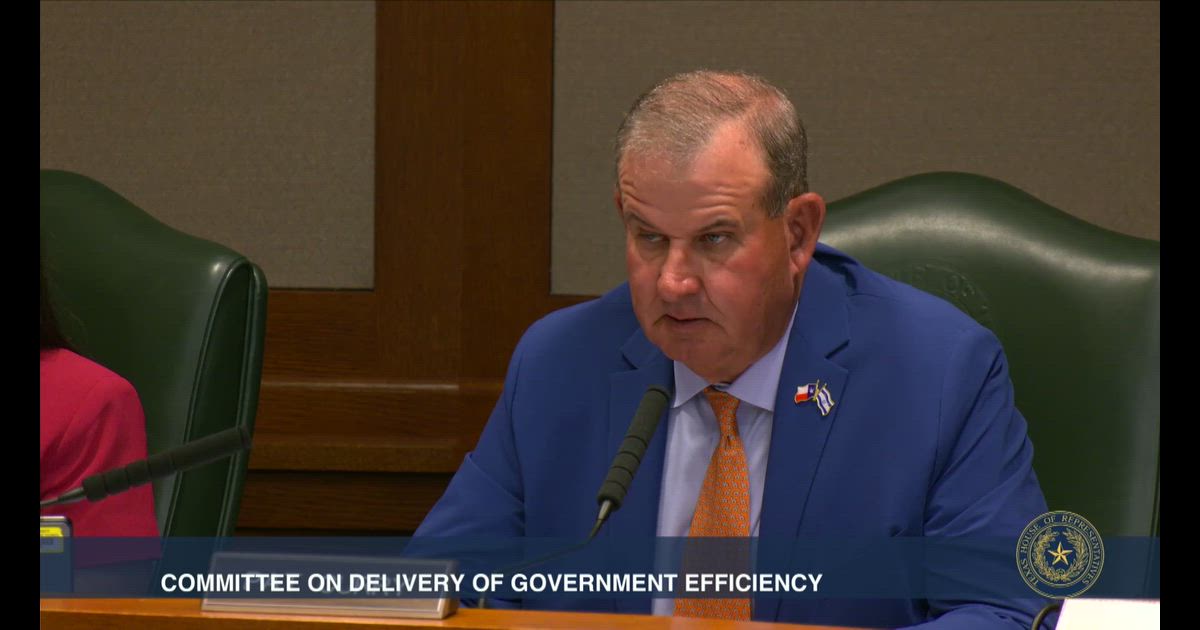 ▶ Watch this moment on USLege Why it matters: TXCC's own account shows the handoff from DIR is still in progress: a sitting state representative was personally victimized by a breach the agency is still investigating, and traffic surveys found state network activity reaching four foreign adversary countries. TXCC says it cannot compel removal of leaked data already on the dark web, and that state breach-reporting requirements are not clearly codified in statute. No Parks and Wildlife official testified to explain the breach directly. | | 04 · Child Safety House Panel Edges Toward a Full Ban on Minors' Social Media Use The House Public Health Committee's Aug. 20 interim hearing on social media's impact on youth health and well-being showed a legislature warming to a full ban on minors' social media use after a narrower measure died last session. Rep. John Bucy III told the panel he personally converted from opposing to supporting Rep. Patterson's minors social-media ban after the House passed it 116-25 last session, only to see it stall short of the Senate and governor; he asked witnesses what message would get it enacted this time. Pediatric psychologist Dr. Daniel Flint of Baylor College of Medicine told the committee "you simply cannot out-parent an algorithm," arguing adolescent brain development makes parental controls structurally insufficient against optimized platform design. Texas Public Policy Foundation's David Dunmoyer said TPPF "fully supports social media prohibition for minors" and is working with Rep. Patterson on a constitutionally durable version, citing Meta's own reporting data and Wall Street Journal reporting on internal research linking Instagram use to a rise in eating-disorder ER visits. Rep. Jolanda Jones had advocacy witness Maurine Molak read into the record an internal Meta email exhibit from ongoing New Mexico litigation discovery: "Instagram is a drug… we're basically pushers." Members split on remedy, some favoring outright prohibition and others favoring design mandates or parental-control defaults, but none disputed the underlying harm framing. No social-media company, app-store, or trade-association representative testified at this hearing. “But you simply cannot out parent an algorithm.”
Dr. Daniel Flint, pediatric psychologist, Baylor College of Medicine · Aug. 20 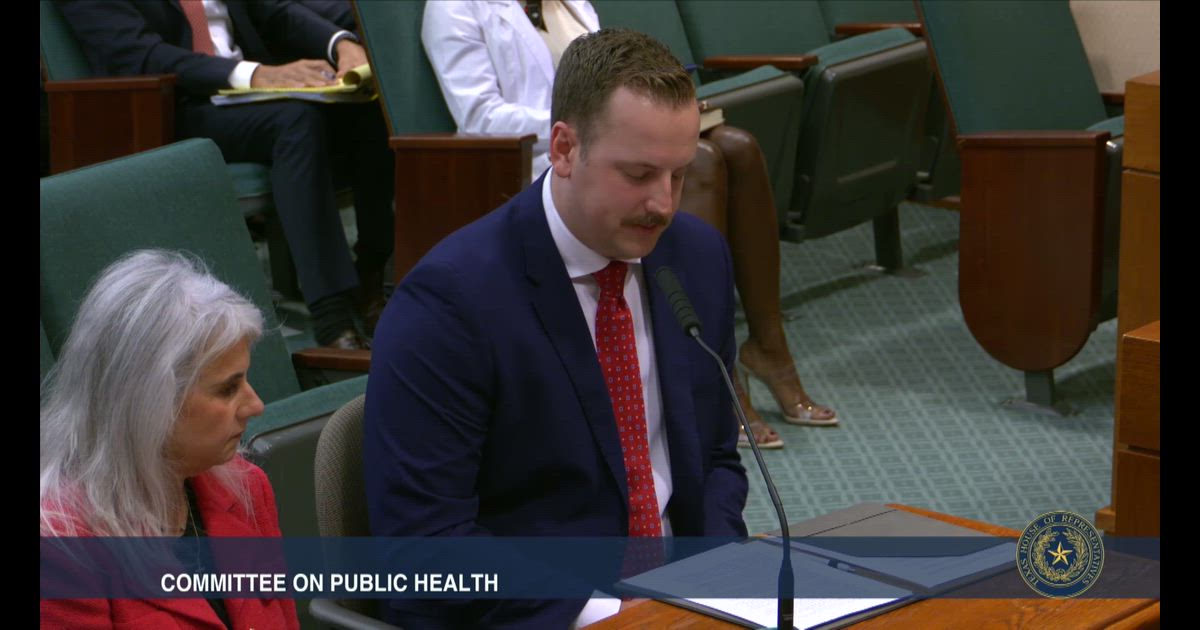 ▶ Watch this moment on USLege Why it matters: A bill that passed the House 116-25 last session died without a Senate vote or the governor's signature, and this hearing showed some members who once opposed it now open to a stronger version. No industry or platform witness testified to counter the harm claims made this week. Whether a rewritten bill can survive the same kind of legal challenge now facing Texas's app-store age-verification law remains an open question. | | 05 · Juvenile Justice TJJD's Board Presses Its Director on a Five-Facility Safety Lockdown The Texas Juvenile Justice Department's governing board on Aug. 21 questioned Executive Director Shandra Carter's decision to place all five secure state juvenile facilities under a coordinated "lockdown, shutdown, slowdown" operational reset, issued after an assault on a juvenile corrections officer at the Gainesville State Correctional Facility. Carter told the board an indeterminate-sentence youth, in custody roughly two weeks on a probation-violation charge, seriously injured the officer after overnight staff left a dorm door unlocked while alone, contrary to policy, a lapse compounded by a same-night camera-system outage covering the dorm. Board member Edeska Barnes asked what had taken the agency so long to act; Judge Cyndi Wheless asked why the reset covered all five facilities rather than only Gainesville and Mart, where problems had been previously flagged, and pressed for one concrete corrective measure. Carter said policy noncompliance is agency-wide, telling the board "it is every facility, every facility is struggling with this," and named enforcement of the existing two-staff rule before an overnight dorm door is unlocked as the one measure she could point to. Carter separately attributed part of the delay to an institutional "freeze," in her words, in which staff came to conflate enforcing safety policy with committing a youth-rights violation during a period of DOJ investigation and sunset review. “My staff have a right to not be beaten, to not be assaulted, to not be raped or murdered.”
Shandra Carter, Executive Director, Texas Juvenile Justice Department · Aug. 21 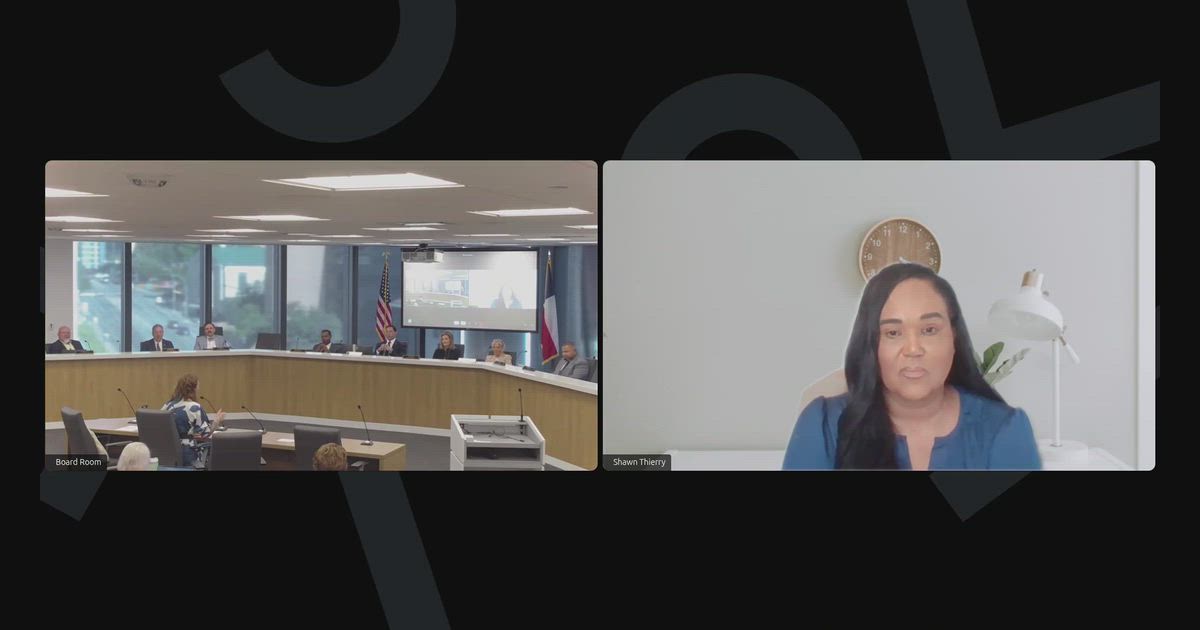 ▶ Watch this moment on USLege Why it matters: Carter's own account, an institutional freeze in which staff conflated enforcing safety rules with committing a rights violation, is a self-critical explanation rather than an outside excuse, and it is the kind of internal accountability the board says it wants documented. The agency's independent ombudsman found no red flags in the reset itself. Whether the two-staff-rule enforcement Carter named is sufficient on its own is the question the board did not resolve at this meeting. | | 06 · Water Infrastructure TWDB Approves $7 Million Nueces Desalination Grant, Months After a Resolved Leadership Controversy On Aug. 24, the Texas Water Development Board (TWDB) voted unanimously, on a single-item agenda, to approve a $7 million grant to the Nueces River Authority under House Bill 500, the state's two-year supplemental appropriations bill. The grant funds early planning and design work for a proposed 100-million-gallon-per-day seawater desalination plant on Harbor Island in Redfish Bay, northeast of Corpus Christi. A TWDB staff member told the board the funding request originated from a directive by the Governor's office instructing the agency's executive administrator to award it to the river authority. The $7 million covers preliminary design reports for a pump station and pipeline crossing, an alignment study for a connecting pipeline, 10 percent design work, and related land and easement acquisition; it does not fund construction. Nueces River Authority Executive Director John Byrum told the board the Coastal Bend region remains in a long-term drought despite recent rainfall and described the plant as a drought-resistant water source built and financed by IDE Technologies, the private partner the authority selected for the project, under a public-private partnership. TWDB Director Brady Franks noted the $7 million represents "a very small portion of the overall project cost," and Byrum said a not-to-exceed construction price is expected by the end of 2026. Separately, and not raised at this hearing: Nueces River Authority's own then-chief operating officer alleged in March 2026 that Byrum had misrepresented desalination sales capacity to the board and city council and had put a separate $30 million state grant at risk; the Governor's office called for swift board action, and on May 22, 2026 the board found no intentional wrongdoing by Byrum but cited "serious communication failures," after which the COO resigned in protest. That inquiry closed roughly three months before this vote. “It's a drought resistant supply, and we certainly appreciate you as the Texas Water Development Board considering this.”
John Byrum, Executive Director, Nueces River Authority · Aug. 24 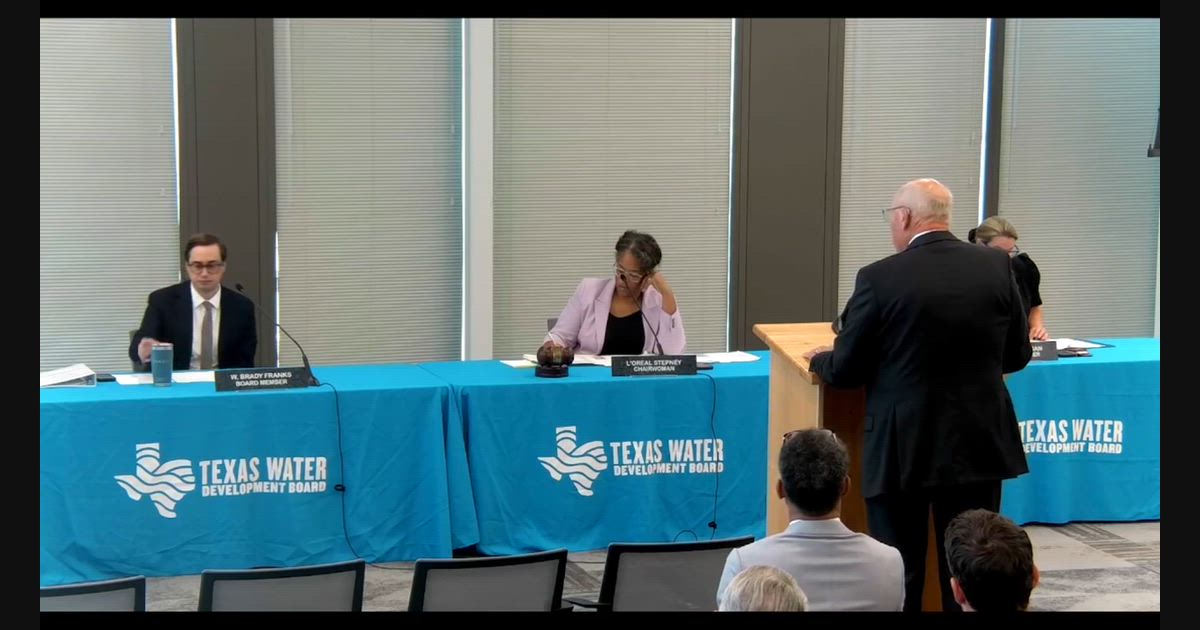 ▶ Watch this moment on USLege Why it matters: The vote was unanimous and drew no public opposition, but it lands three months after NRA's own board cleared Byrum of intentional wrongdoing while citing serious communication failures, a dispute triggered by a separate $30 million grant. Neither TWDB staff nor Byrum raised that history at this hearing. The board's own director noted the $7 million is a small share of a project whose full cost remains undetermined. | | | Texas in Washington | A Federal Appeals Court, Not the Supreme Court, Will Decide Texas's App-Store Law The U.S. Supreme Court denied emergency applications to block Texas's App Store Accountability Act, which requires app stores to verify user ages, leaving the law enforceable while the underlying constitutional challenge proceeds at the Fifth Circuit Court of Appeals, according to testimony at the House Public Health Committee's Aug. 20 hearing on minors' social media use. The Fifth Circuit's eventual ruling on the merits will shape how much room state lawmakers have to legislate app-store age verification directly, a question directly relevant to the stronger minors'-social-media bill members discussed this week. |
| | Also moving this week | The House Higher Education Committee held a two-day interim hearing on Texas Higher Education Coordinating Board (THECB) oversight; the House Transportation, Agriculture and Livestock, and Pensions, Investments, and Financial Services committees each held interim-charge hearings; House subcommittees on Telecommunications and Broadband and on State-Federal Relations also met; and the PUCT's Aug. 20 open meeting cleared a routine consent agenda. None produced a decision or exchange rising to this week's lead coverage. |
| | What we are watching The PUC says it will revisit the 765kV record at a future open meeting after reconciling this week's testimony. TWDB expects a not-to-exceed construction price for the Nueces desalination plant by the end of 2026. The public comment portal on the Permian Basin transmission dockets closed Aug. 21, 2026. | | What we are tracking | When the Legislature Is Out, the Record Still Runs to Thousands of Pages This week's coverage came from seven full committee and agency-meeting transcripts, several running more than a thousand paragraphs, in a year when the Legislature itself is not in session. USLege's platform is built for exactly this: surfacing the interim hearings, contested-case arguments, and board meetings where Texas policy keeps moving even when the Capitol is quiet. |
| | Join us live | This week's webinar: AI Strategy Planning for Lobbyists Wednesday, Aug. 26 at 1 p.m. ET, hosted by Laura Davis, USLege Founder & CBO: how to use AI to win back billable hours, win new clients, and win back time. Register even if you cannot attend and we will send you the recording. |
| | Get your state's weekly read Texas, DC, New York, California, and more editions rolling out every week. |
| | | | |
|