
Texas Political Spotlight
Issue 24 · Tuesday, June 9, 2026 · Week of June 1 to June 8 · Strictly nonpartisan
|
|
From Laura's desk
Nobody scheduled an AI hearing this week. AI showed up anyway. A physician told House Public Health about a woman who preferred ChatGPT to her counselor, and his warning stuck with me: a chatbot has no intention behind it. A stroke researcher described AI reading scans so rural ERs do not wait on a specialist, with humans kept in the loop. The state's $1.4 billion rural health plan includes a named AI initiative. The inspector general is running AI across billions in Medicaid claims. And vendors are tuning AI to help assign special-education service tiers, which means AI is getting close to funding decisions about kids. My read: Texas will regulate AI through its health, education, and oversight charges long before it passes a big AI bill. The committees just do not call it that yet. We watched all 31 hours this week so you can see it coming; click any quote to check us.
Laura Davis, Co-Founder, USLege
|
|
|
If you read nothing else
• The November ballot is set: Ken Paxton vs. James Talarico for U.S. Senate, with the Attorney General's office open behind it.
• A school-finance formula revision turned Dallas ISD's promised $134 million gain into $4 million; members called the estimates broken.
• Houston ISD has lost 21,901 employees since the state takeover, per records-request testimony.
• Anesthesiologists told the House that telehealth firms are mailing ketamine to Texans' homes; 10 states ban it, Texas does not.
• Texas' $1.4 billion federal rural-health award is the largest in the nation, and the application process is straining the hospitals it targets.
|
|
🗳️ The biggest story · Local · State · Federal
The November ballot is set, and the Senate race is a dead heat
The week after runoff night, the general-election field came into focus. Federal: Attorney General Ken Paxton and state Rep. James Talarico of Austin are the nominees for U.S. Senate, and most public polling describes the race as extremely close; Paxton spent the week campaigning on his office's lawsuits against Meta, WhatsApp and Discord, while Libertarian Ted Brown is openly courting voters reluctant to back the Republican nominee. State: The Attorney General's office Paxton is vacating drew runoffs in both parties on May 26: Sen. Mayes Middleton beat U.S. Rep. Chip Roy for the Republican nomination, and Sen. Nathan Johnson beat former Galveston mayor Joe Jaworski for the Democratic nomination. They meet in November for an open seat.
Why it matters. A competitive top-of-ticket race changes turnout math for every Texas House and Senate district below it, and for the first time in over a decade the Attorney General's race has no incumbent, so voters, not a sitting officeholder, will decide the direction of an office that drives the state's litigation posture, from federal challenges to consumer suits.
|
|
This week in the interim
Four House hearings, 31 hours, one refrain: the numbers don't hold.
The House dominated the week: Public Education on Monday, then Public Health, Insurance, and the Select Committee on Governmental Oversight all on Thursday. Across all four rooms the recurring theme was numbers that moved under people's feet: school-finance estimates, special-education deficits, premium trends, and grant rules. All four hearings worked interim charges issued by the Speaker, the homework assignments that set the table for the 90th session; each story below names its charge. Every quote links to the video.
|
“The one constant is that the runs are always wrong. They're always wrong.”
Rep. Jeff Leach, on seven sessions of school-finance estimates. House Public Education, June 1.
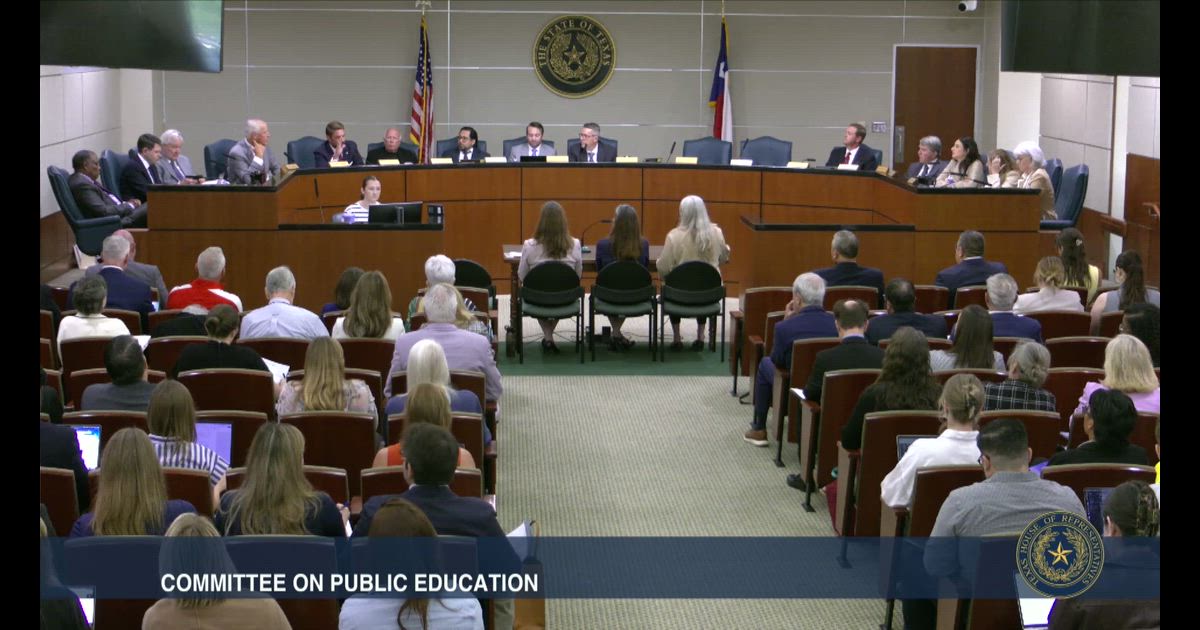
▶ Watch this moment · 0:52 on USLege
|
|
|
01 · School finance
The formula moved in May, and seven districts lost $28.6 million
Dallas ISD was told to expect $134 million in new money. The May revision left $4 million.
What happened. The House Public Education Committee's review of HB 2, last session's school-finance law, turned into an accounting of estimates that did not survive contact with real data. Texas Education Agency (TEA) Chief School Finance Officer Amy Copeland disclosed that a May formula correction removing duplicate hold-harmless funding cut seven districts by about $28.6 million, including $17.7 million from Houston ISD and $9.6 million from Spring Branch. Rep. John Bryant walked her through Dallas: budget-board runs promised about $70 million, a February summary of finances showed $134 million, and a May 11 revision left $4 million. Copeland offered a full analysis and noted attendance roughly 76,000 below projections cut about $650 million statewide. Vice Chair Diego Bernal argued HB 2 gives the commissioner authority, with budget-board and governor approval, to fix unanticipated losses; Rep. James Frank asked TEA for a district-level reconciliation within two weeks. Commissioner Mike Morath did not attend; Chair Brad Buckley acknowledged the committee had not asked him to.
|
“So how do you account for that kind of a radical drop, which has put my district now into the red for having to operate on reserve funds?”
Rep. John Bryant, to TEA's Amy Copeland. House Public Education, June 1.
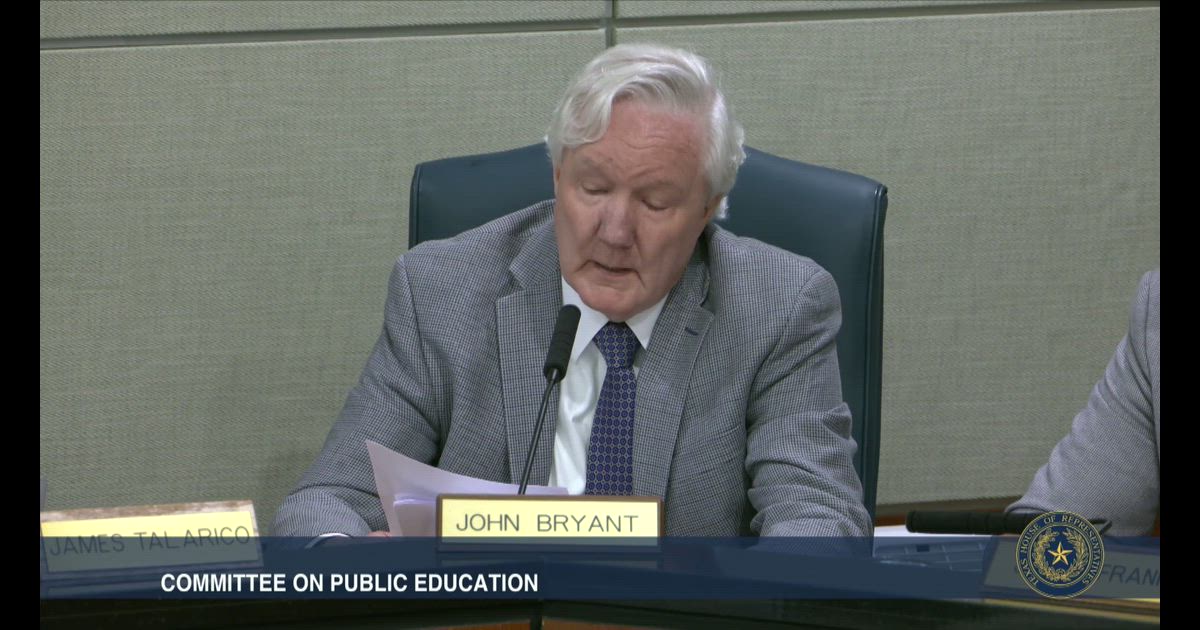
▶ Watch this moment · 0:35 on USLege
|
Why it matters. Districts wrote budgets against the February numbers and are now operating on reserves. The reconciliation Frank requested, and the commissioner-correction authority Bernal flagged, are the two levers to watch in the next two weeks; both determine whether this stays an accounting story or becomes a supplemental-funding fight.
Referenced
Interim charge: the Speaker's charge to House Public Education to monitor implementation of HB 2 (89R), the public school finance law.
|
|
02 · Special education
The special-education hole is $1.7 billion, or $2.5 billion, depending on who counts
TEA and disability advocates agree districts subsidize special education; they disagree by $800 million on how much.
What happened. TEA Deputy Commissioner Kristen Maguire confirmed districts spend at least $1.69 billion more on special education than state revenue provides; Disability Rights Texas put the gap at $2.5 billion. Enrollment has passed 903,000 students (16.6 percent of all students), while a federal Medicaid reimbursement stream is down $600 million. The new intensity-of-services funding model carries a hold-harmless only through the 2026-27 school year, and Maguire acknowledged some districts could get less after that. A second pressure surfaced: superintendent Brandon Enos of Gunter ISD testified that the state's new education savings account program made districts evaluation gatekeepers for non-enrolled students, with requests up as much as 125 percent in some districts and contract psychologists billing $180 an hour. Lubbock ISD said it stands to lose $5.1 million to the program while covering a $3.5 million special-education shortfall.
|
“I think we felt like we were really swinging the bat hard. And I'm not saying we didn't, but the ballpark is bigger than I think we even realized.”
Rep. Diego Bernal, Vice Chair, House Public Education, June 1.
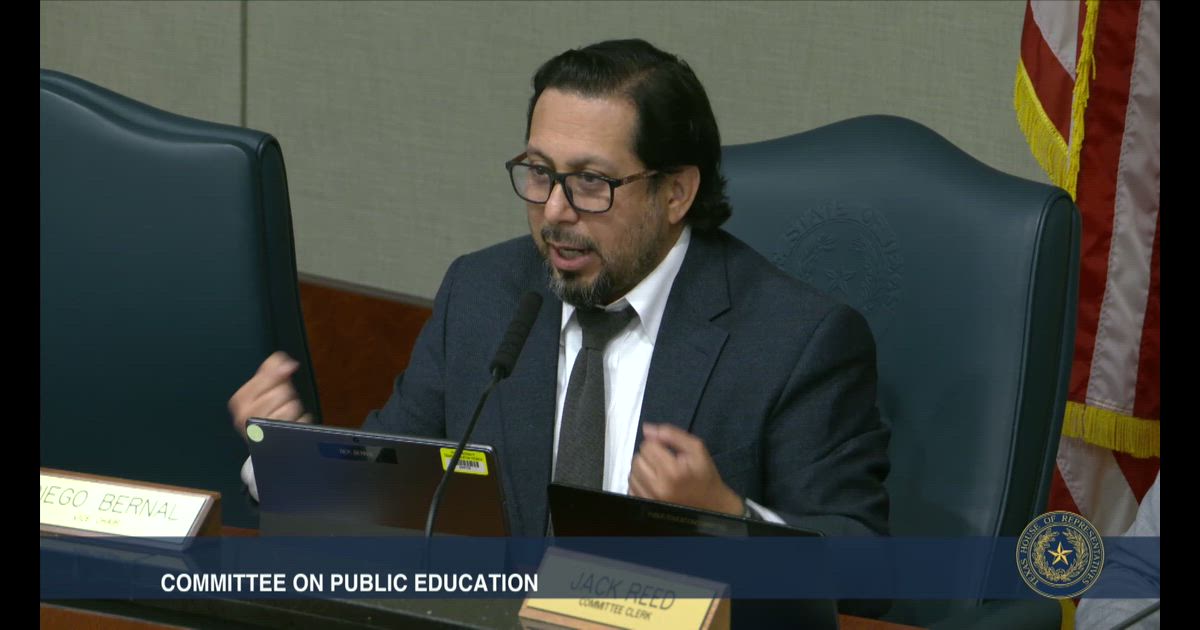
▶ Watch this moment · 0:35 on USLege
|
Why it matters. The tier-model transition data arrives in August, October, and December; those drops will settle whether districts face losses after the hold-harmless expires, and the evaluation-surge testimony gives the committee a concrete interim recommendation to write. The $800 million disagreement between TEA and advocates is the number the next budget fight will be argued over.
Referenced
Interim charge: the Speaker's Charge 6 to House Public Education, investment in special education. Also cited: SB 2 (89R), the education savings account law, in evaluation-surge testimony.
|
|
03 · Houston ISD
21,901: the takeover's turnover number lands on the record
Records-request data on Houston ISD departures entered testimony, alongside a defense of the takeover's academic results.
What happened. In public testimony, Houston Federation of Teachers organizer Jessie Hiner presented records-request data: 21,901 Houston ISD employees resigned or were terminated between June 2023 and January 2026, and 914 of roughly 2,000 hires this year are uncertified. A parent testified that thousands of special-education students are being moved without required meetings, now the subject of a federal civil-rights complaint. The committee heard the other side too: Rep. James Frank credited the takeover with "a year and a half of student improvement in six months." Earlier in the day, Texas Tech researcher Jacob Kirksey supplied the stakes for certification: a year with an uncertified teacher costs a child three to four months of learning, and uncertified teachers turn over at three times the rate of their peers.
|
“In total, 21,901 employees have resigned or been terminated from Houston ISD in the first two and a half years. That doesn't even include the last six months.”
Jessie Hiner, Houston Federation of Teachers. House Public Education, June 1.
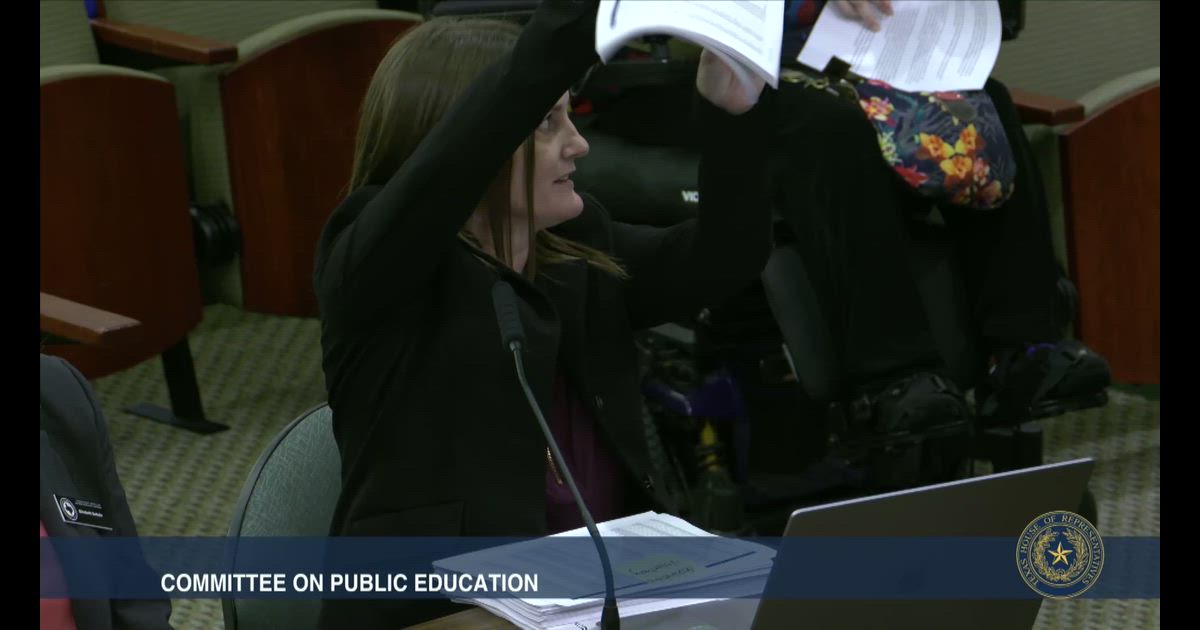
▶ Watch this moment · 0:37 on USLege
|
Why it matters. The takeover's exit timeline is a live question for next session, and this hearing put dueling metrics on the record: turnover and certification rates on one side, test-score improvement on the other. Whichever frame wins the interim report shapes the conditions for returning the district to elected control.
Referenced
Interim charge: the Speaker's Charge 5 to House Public Education, teacher recruitment and retention; heard alongside Houston ISD conservatorship oversight.
|
|
04 · Telehealth
Mail-order ketamine: 10 states ban it, Texas doesn't
Anesthesiologists asked the House for a law against subscription ketamine shipped to patients' homes.
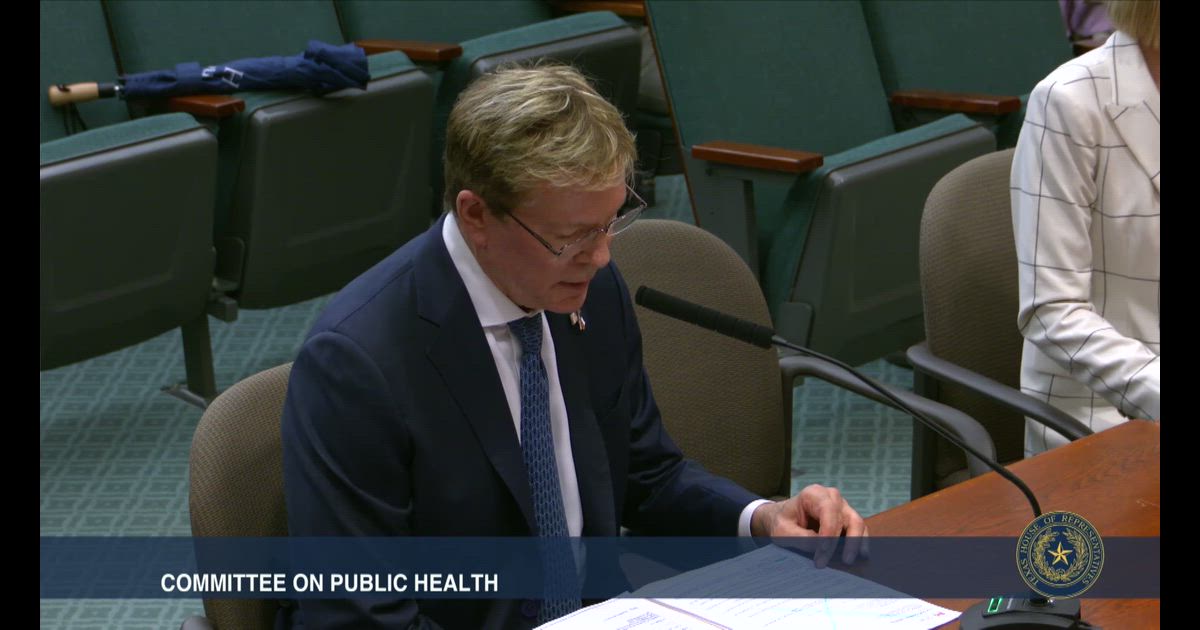
What happened. Inside the House Public Health Committee's 10-hour telehealth review, Dr. John Scott of the Texas Society of Anesthesiologists testified that online companies prescribe ketamine "on a subscription basis within minutes": a colleague was able to order thirty 60-milligram doses with no medical documentation, roughly the quantity a surgical team would spread across dozens of procedures, for a drug with no reversal agent. He cited 912 deaths nationally from 2019 to 2023 where ketamine was prescribed, 140 as a direct contributor, and noted 10 states have outlawed mail-in ketamine while Texas has not. Pressed by Rep. Mike Schofield on how mail-order suppliers source the drug, Scott conceded he did not know. Asked by the chair for a remedy, he asked for a Texas law mirroring the 10 states. The same charge produced telehealth's good news: Harris Health logged 200,000 virtual encounters in 12 months with 78 percent of patients avoiding an emergency-room visit.
|
“There are telehealth companies currently prescribing ketamine for supposedly therapeutic use and delivering it straight to the patient's home. This is a huge oversight and patient safety issue.”
Dr. John Scott, Texas Society of Anesthesiologists. House Public Health, June 4.
▶ Watch this moment · 0:38 on USLege
|
Why it matters. The committee is drafting telehealth recommendations that must hold the line between access wins like Harris Health's emergency-room avoidance and a controlled-substance loophole with a body count attached. A 10-state model law with a physician association behind it is the kind of bill that moves early next session.
Referenced
Interim charge: the Speaker's telehealth charge to House Public Health. No Texas bill yet addresses mail-order ketamine.
|
|
05 · Rural health
$1.4 billion for rural health, and applicants in tears at the deadline
The nation's largest rural-health award is moving, but the paperwork is frustrating the people it's meant to help.
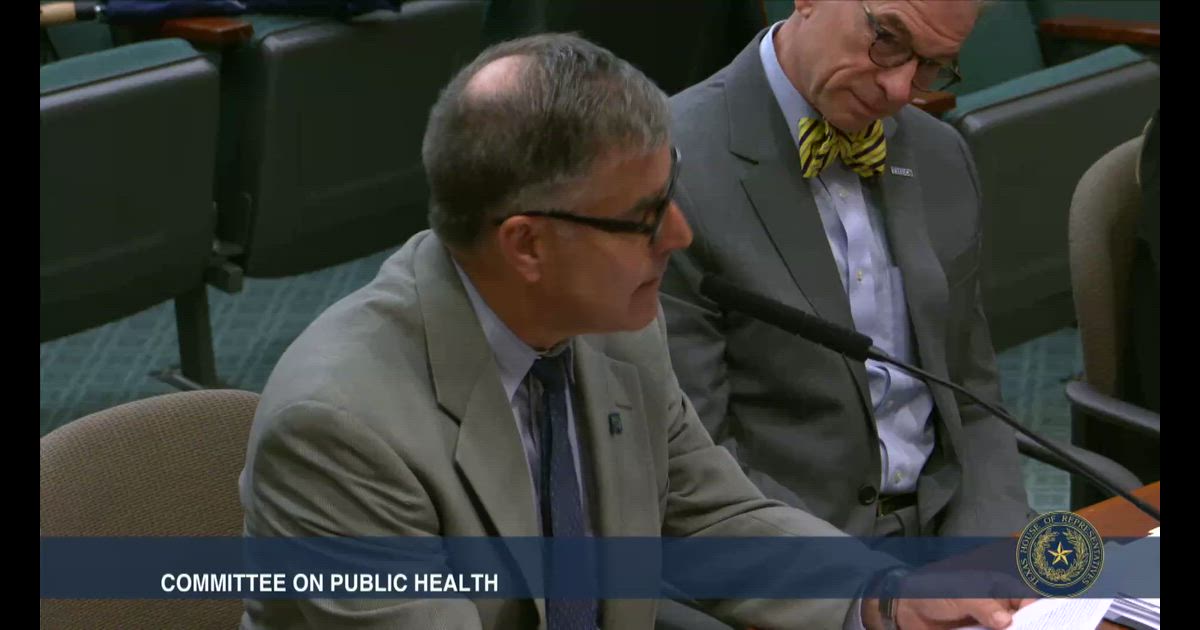
What happened. The Health and Human Services Commission (HHSC) walked Public Health members through Rural Texas Strong, the state's $1.4 billion federal Rural Health Transformation Program award, the largest in the nation. The counterweight came from hospital association TORCH's John Henderson: Texas got less per rural resident than any other state, hospitals are hiring grant writers to cope ("I actually kind of view that as a failure"), and his office took calls that morning from applicants in tears after missing a 10:30 a.m. deadline. Community health centers disclosed they were ineligible for the program's first initiative; Rep. James Frank offered to fix it. On a related rural front, the Comptroller's office reported HB 3000, the rural ambulance grant law, has approved 154 of 202 eligible counties for $65.45 million, while Seminole's EMS chief testified the rules disqualify an ambulance she ordered in 2023 and force two services in one county to compete; the Comptroller's witness defended the rules as an incentive for new ambulances, and the chair asked his office to reconsider.
|
“A rural zip code is a risk factor to one's life.”
Dr. Adrian Billings, family physician, Texas Medical Association. House Public Health, June 4.
▶ Watch this moment · 0:29 on USLege
|
Why it matters. The state has more rural health money in motion than ever, and the binding constraint is administrative capacity in the smallest places, grant writing, deadlines, and eligibility rules. For operators, the openings named in the room are concrete: initiative eligibility for health centers, deadline grace, and ambulance-rule fixes the chair has already flagged.
Referenced
Interim charge: the Speaker's implementation-review charge to House Public Health, covering HB 18 (89R), the rural health-care programs law, and HB 3000 (89R), rural ambulance grants; plus the federal Rural Health Transformation Program.
|
|
06 · Insurance
The "dirty dozen": House Insurance opens a mandate purge
The chair declared a mandate-light benefits bill will pass next session; the committee asked insurers to rank the 12 costliest mandates.
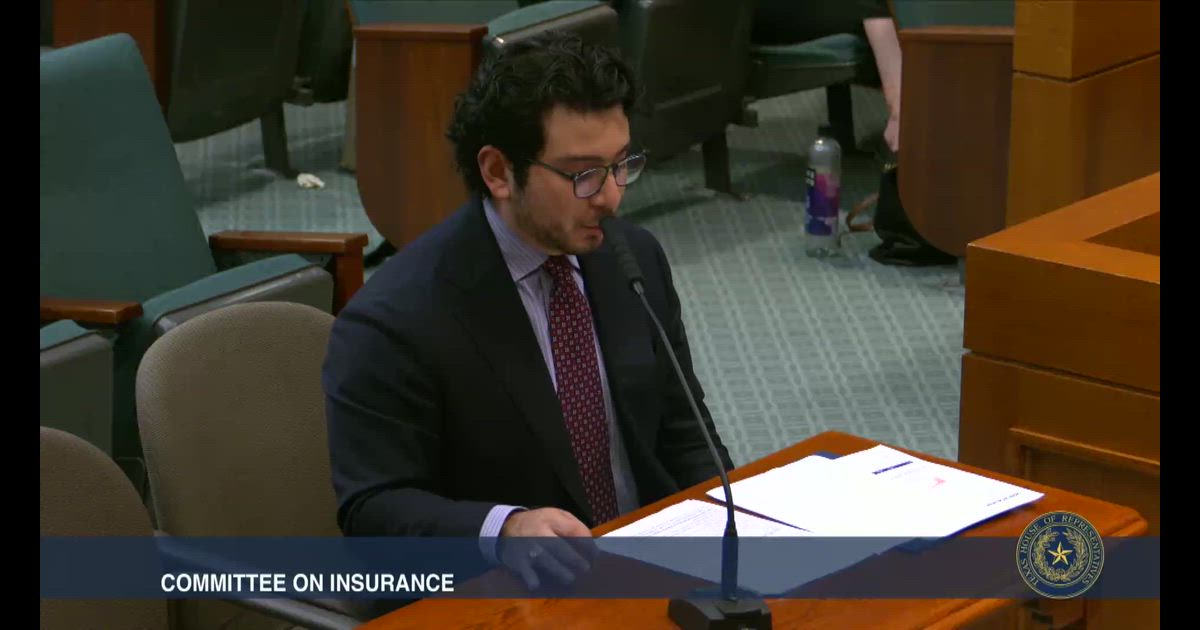
What happened. Chair Jay Dean opened the House Insurance Committee's small-employer health hearing by declaring last session's near-miss benefits bill "will get... across the finish line this go around," saying it would have insured 700,000 to 800,000 Texans. Rep. David Spiller asked witnesses for a ranked list of the costliest mandates: "Pick 12 and call it the dirty dozen, and we'll file it a bill under that name." The health-plan association obliged with 12, arguing mandates fall only on the roughly 3 million state-regulated lives while 12 million Texans sit in federally exempt employer plans, and that small-group premiums rose 15 to 20 percent in Texas against 11 percent nationally. The Texas Medical Association's Dr. Ezekiel Silva pushed back, reframing mandates as market guardrails. The facility-fee fight from last week's Senate hearing carried over: Texas 2036 proposed requiring site-specific billing identifiers on all claims, and the Texas Hospital Association's John Hawkins objected that existing billing modifiers already carry the data at lower cost.
|
“To illustrate, a Houston family had their type one routine diabetes visit for their child go from 90 to $600 simply because a hospital ownership change triggered a facility fee.”
Alec Mendoza, policy advisor, Texas 2036. House Insurance, June 4.
▶ Watch this moment · 0:46 on USLege
|
Why it matters. A named bill concept with a chair's public commitment is as close to a pre-filed bill as the interim gets. The mandate list, the guardrails counterargument, and the facility-fee billing-identifier proposal are now all on the record; health-plan, physician, and hospital lobbies are effectively drafting against each other five months early.
Referenced
Interim charge: the Speaker's charge to House Insurance on health benefits for small and mid-sized employers. Also: HB 139 (89R), last session's mandate-light benefits bill, cited by the chair as the template.
|
|
📊 By the numbers · Texas, this week
$134M → $4M Dallas ISD's promised new funding, February summary versus the May 11 revision.
21,901 Houston ISD employees gone since the takeover began, per records-request testimony.
$1.69B–$2.5B the annual special-education funding gap, TEA's floor versus advocates' estimate.
$1.4B Texas' federal Rural Health Transformation award, the largest in the nation.
912 deaths nationally, 2019 to 2023, where prescribed ketamine was present; 140 as a direct contributor.
31 hours of House interim hearings this week across four committees, all read in full for this issue.
|
|
The week in themes
|
Estimates vs. reality. School-finance runs, special-education models, and premium projections all moved against the people budgeting on them this week.
The state-local fight matures. Governmental Oversight heard a redesign of the Texas Regulatory Consistency Act's enforcement (attorney-general standing with an expedited appeal), while members called governmental-immunity caps unchanged since 1969, roughly $2.2 million in today's dollars against the current $250,000, "warped."
Telehealth's two faces. Emergency-room avoidance and stroke coverage on one side; a mail-order controlled-substance loophole on the other.
Rural capacity is the constraint. Money is arriving faster than small counties and hospitals can administer it.
Mandate economics. The next session's small-employer health fight was scoped in one afternoon, list, counterargument, and bill name.
AI is already inside. Five separate AI threads surfaced this week, none in a hearing with AI in the title; see From Laura's desk.
|
|
|
📅 The Docket · Week of June 9
No Texas legislative hearings were posted for the week of June 9 as of Monday evening. The capitol catches its breath after a 31-hour week. When notices post, they appear first on the committee schedule pages at capitol.texas.gov and in USLege calendars.
Also watching: TEA owes House Public Education a district-level funding reconciliation within roughly two weeks; special-education tier data lands in August, October, and December; House Public Health flagged a second interim hearing for late July; and Rural Texas Strong procurement awards are pending.
|
|
Invitation · The USLege Hackathon
Judge the features you asked us to build.
We’re inviting our gov-affairs subscribers to judge the USLege team build the features you’ve been asking for. RSVP through the invite below and tell us which demos you want to see live.
|
|
|
Was this email forwarded to you? Get the Texas Political Spotlight every Tuesday.
|
|
|
|
Methodology. Every quote in this issue is verified against the official video record; click any quote to watch the moment. Spot an error? Reply to this email and we will correct it.
The Spotlight is researched with USLege AI across the full week of Texas government video and reviewed by a human editor before send.
| |