|

01 · Criminal Justice Budget
TDCJ Tells Budget Writers a 3% Cut Would Cost 1,300 Jobs, as the Agency Seeks Its First New Prison Since 1997
The Texas Board of Pardons and Paroles and the Texas Department of Criminal Justice presented their 2028-29 legislative appropriations requests (LARs) at a Sept. 28 joint budget hearing run by staff of the Legislative Budget Board (LBB), the Governor's Office, Senate Finance and House Appropriations. Board Chair Marsha Moberley said a legislatively directed 3% general-revenue reduction, which both agencies were instructed to model alongside their base request, would cost the parole board about 12 full-time positions. Moberley said the board's seven appointed members reviewed 80,000 parole cases and nearly 20,000 parole-violation decisions last fiscal year — a committee staffer later put the broader case-review total at more than 90,000, a discrepancy the hearing did not resolve — which Moberley called the board's highest volume in a decade.
Texas Department of Criminal Justice (TDCJ) Executive Director Bobby Lumpkin told the panel the agency employs about 35,000 people, 83% of whom work directly with the state's 144,652 incarcerated people, a population TDCJ says is growing about 600 a month and that the LBB projects will reach 153,000 by 2030. The correctional-officer vacancy rate has fallen to 4,985 openings, down from a high of more than 8,000 in April 2022, which Lumpkin credited to a 10% officer pay raise last September and a 15% raise for parole officers. He said the agency's 3% reduction option would eliminate about 1,300 positions, with close to half of those correctional-officer jobs, and would cost roughly $287 million pulled mainly from correctional health care and major repair and restoration funding.
Lumpkin's exceptional-item requests, on top of the base budget, total more than $2.2 billion and 943 additional positions. The largest is $400.9 million toward $4.5 billion in deferred maintenance across TDCJ's 104 facilities, 11 of them more than a century old, including $298 million to add 16,428 air-conditioned beds; TDCJ said that request, combined with work already funded, would raise the share of air-conditioned beds from 58.3% to 69.8% if approved. A separate $20 million request would fund the preliminary design for a new prison, the state's first since 1997, a process Lumpkin estimated at roughly nine years from design to opening. Other items include $55.7 million and 176 positions for contraband interdiction — drone detection, parcel scanners, handheld narcotics-detection equipment and additional canine teams — which Lumpkin tied to a rise in smuggled contraband, including attempts to fly drugs and phones over perimeter fences. A separate $491 million request would maintain current correctional managed health care operations, the partnership with UT Medical Branch and Texas Tech that provides inmate medical, mental health and dental care.
Three people testified in public comment. Luis Sobran of Texas 2036 urged the committee to fully fund TDCJ's air-conditioning request, pointing to federal disaster-recovery funds the governor's office has said Texas received ($7.5 billion from the U.S. Department of Homeland Security, with an additional $3 billion sought from the Department of Justice) as a one-time source for the capital cost. Maria Jose Angeli of the Texas Council on Family Violence asked lawmakers to add $6.5 million over the biennium for battery intervention programs, the court-ordered counseling programs for domestic-violence offenders, citing a University of Texas at Dallas study she said found program completion lowers re-arrest rates by 28%. Elke Gonzalez of the Texas Public Employees Association asked the committee to fund the 3% restoration in full, arguing pay increases need to continue session over session rather than being treated as a one-time fix.
“We would see somewhere around 12 FTEs impacted from that. I feel like with as many positions as we try to fill and that continual cycle, that 12 FTEs can impact our production, our ability to maintain pace with that prison population.”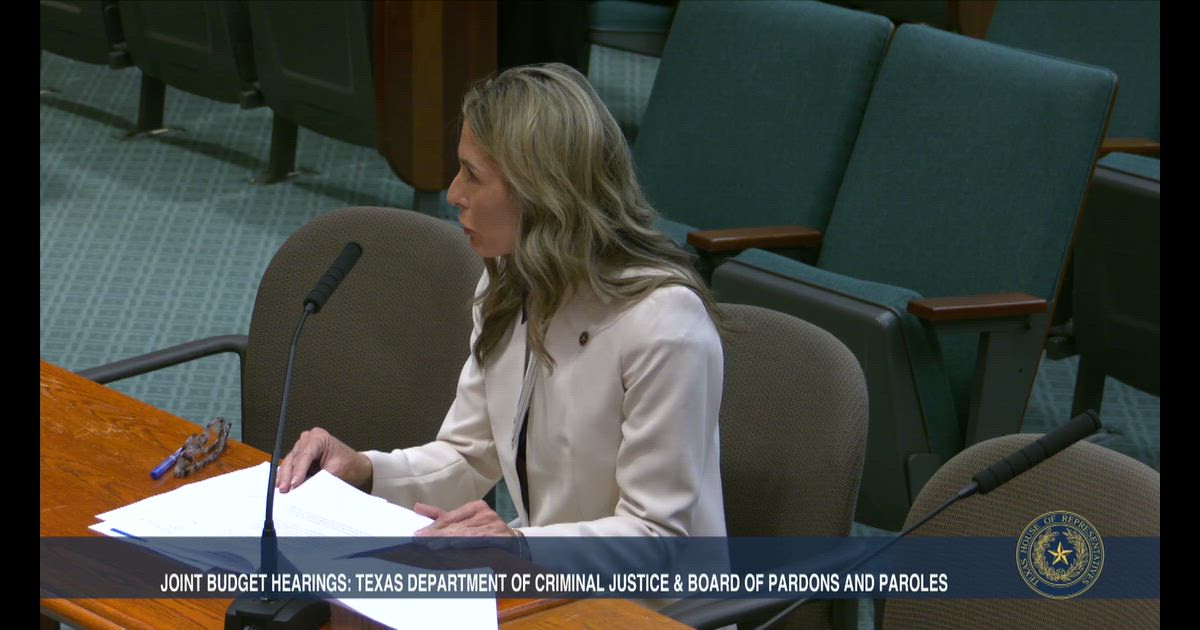
Marsha Moberley, Chair, Texas Board of Pardons and Paroles, on the effect of a 3% general-revenue cut, Sept. 28.
▶ Watch this moment on USLege
“Texas cannot run safe correctional systems on the back of understaffed and underpaid employees.”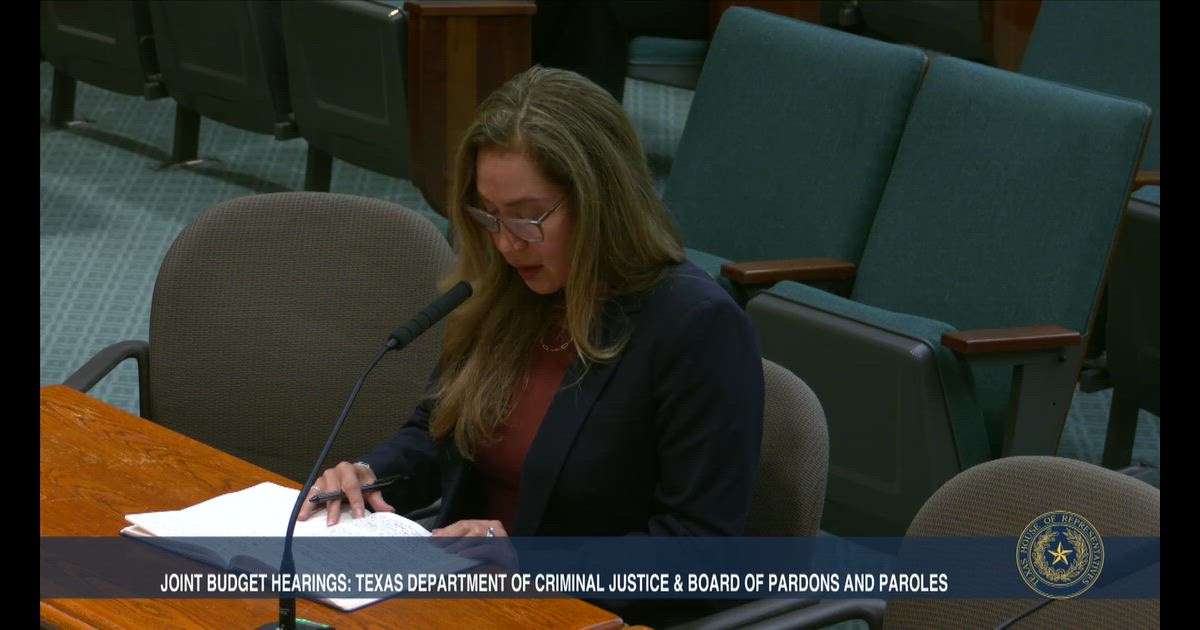
Elke Gonzalez, Executive Director, Texas Public Employees Association, Sept. 28.
▶ Watch this moment on USLege
Why it matters: TDCJ's and the parole board's requests are their opening position for 2028-29, and the hearing put a 1,300-job reduction scenario, a new-prison design request and the air-conditioning timeline on the record before the 2027 session. The panel was made up of legislative and executive branch staff; no sitting legislator questioned the agencies, and the request now goes to the Legislature, which decides. Both agencies' full base and exceptional-item requests, along with the 3% reduction scenario, are now public record and will be revised as the Legislative Budget Board drafts its initial 2027 base bill, the starting document both chambers amend once the regular session convenes in January.
02 · Grid & Transmission
Senate Business & Commerce Hears Erath County Landowners Challenge the Cost of a New 765kV Transmission Line
The Senate Committee on Business & Commerce, chaired by Sen. Charles Schwertner (R-Georgetown), held its fourth interim hearing on electricity affordability and consumer protection on Sept. 30, taking invited testimony from the Public Utility Commission (PUC), the Office of Public Utility Counsel (OPUC) and the Electric Reliability Council of Texas (ERCOT) before more than two hours of public comment on transmission costs. A PUC deputy executive director, Barksdale English, walked the panel through how the commission sets utility rates, describing a three-part test — whether a cost is an expense, a capital investment or a return on capital — and the standard the PUC applies to each: whether the spending was reasonable and useful to the public.
Public testimony then turned to specific landowner disputes over new extra-high-voltage lines approved under the state's large-load and reliability buildout. Joanna Freebel, who said she lives in Erath County, urged the committee to prioritize “reconducting” — restringing higher-capacity wire on existing transmission towers — over new lines, citing a U.S. Department of Energy “Spark Plan” she said would add about 23 gigawatts of capacity nationally through reconducting for roughly $5.3 billion, against a separate three-line Permian Basin buildout she put at roughly $11 billion for a 6-to-7-gigawatt gain, and said reconducting does not require the certificate-of-convenience approvals or new rights-of-way new lines do. Cyrus Reed of the Lone Star Chapter of the Sierra Club told the committee residential costs are rising mainly because of transmission charges and recommended several changes, including a minimum demand charge in the PUC's cost-allocation rulemaking (Project 58000) and a specific utility tariff for large computational loads such as data centers.
Several landowners from Erath County testified about the PUC-approved “Dinosaur to Longshore” 765-kilovolt transmission line. Heather Kincannon said the line will cross her family's Great Southern Ranch, a 2,650-acre, multi-generation cattle operation recently added to the Texas Department of Agriculture's Family Land Heritage Registry, for 2.88 miles. She cited the transmission utility's own filed estimate of about $1.1 million per mile for right-of-way acquisition — roughly $3.17 million for her property alone — and said that figure does not capture lost grazing and hay production during construction or the advocacy group American Stewardship Liberty's estimate of more than $10 billion in uncompensated property-value loss across the full 765kV buildout for landowners whose land is crossed but not taken. Bonnie Terrell, also from Erath County, cited the transmission utility's own year-end securities filing acknowledging cost uncertainty on some projects and asked the committee to “prove the need” for new lines before landowners and ratepayers bear the cost. Sheila Hemphill of Texas Right to Know told the committee she believes the state is in what she called a “constitutional crisis” over notice to property owners facing condemnation, a characterization that is her own and was not adopted by any committee member.
Glen Lyons, a retired ExxonMobil electricity-policy executive who said he served three years on the ERCOT board, proposed an alternative he called “Bring Your Own Power” (BYOP), under which new large loads would build or contract for their own generation outside ERCOT's transmission system rather than drawing on it, avoiding eminent domain entirely; he said New Hampshire, Ohio and Utah have passed versions of the idea. No representative of Oncor or another transmission utility addressed the landowner testimony during the public-comment period USLege reviewed, and the committee took no vote; Schwertner said the testimony would inform the committee's interim report ahead of the 2027 session. The hearing's second charge, on preventing unfair online ticket sales, drew separate testimony afterward from venue and music-industry witnesses on secondary-market pricing transparency.
“The PUC-approved Dinosaur to Longshore 765kV transmission line will cross our ranch for 2.88 miles. I just want to talk about the true cost of this project, not just what it costs to build it, but what it costs the Texas families who have to live with it.”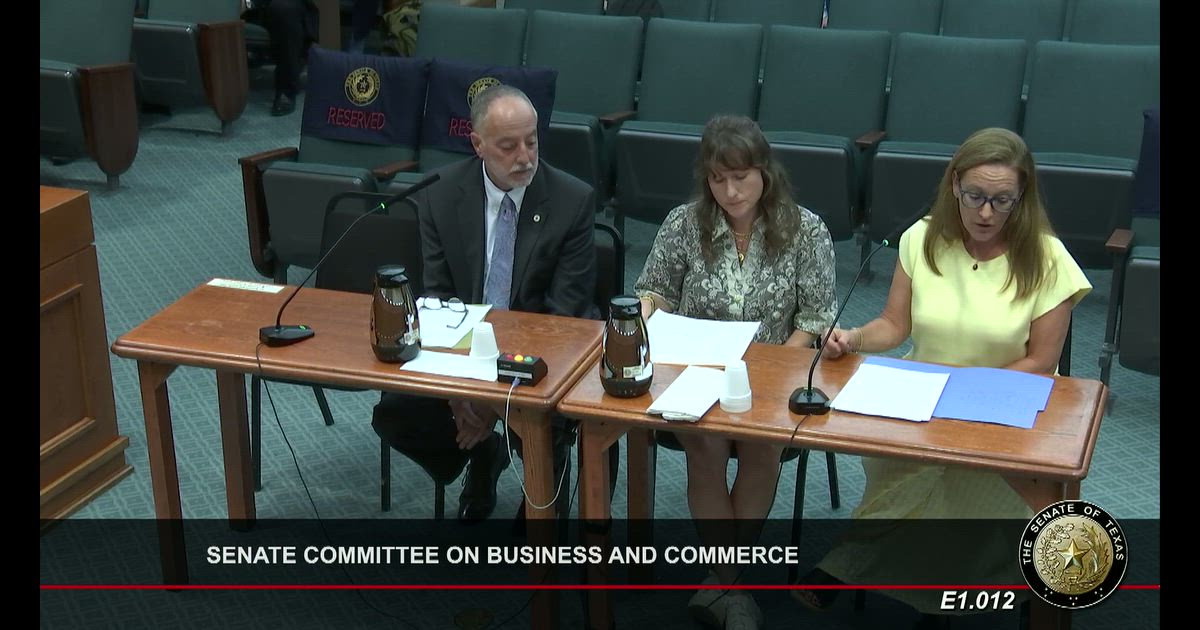
Heather Kincannon, Great Southern Ranch, Erath County, Sept. 30.
▶ Watch this moment on USLege
“BYOP relies on voluntary agreements, not eminent domain. … It gives Texas a parallel path for growth with private customers securing their own power.”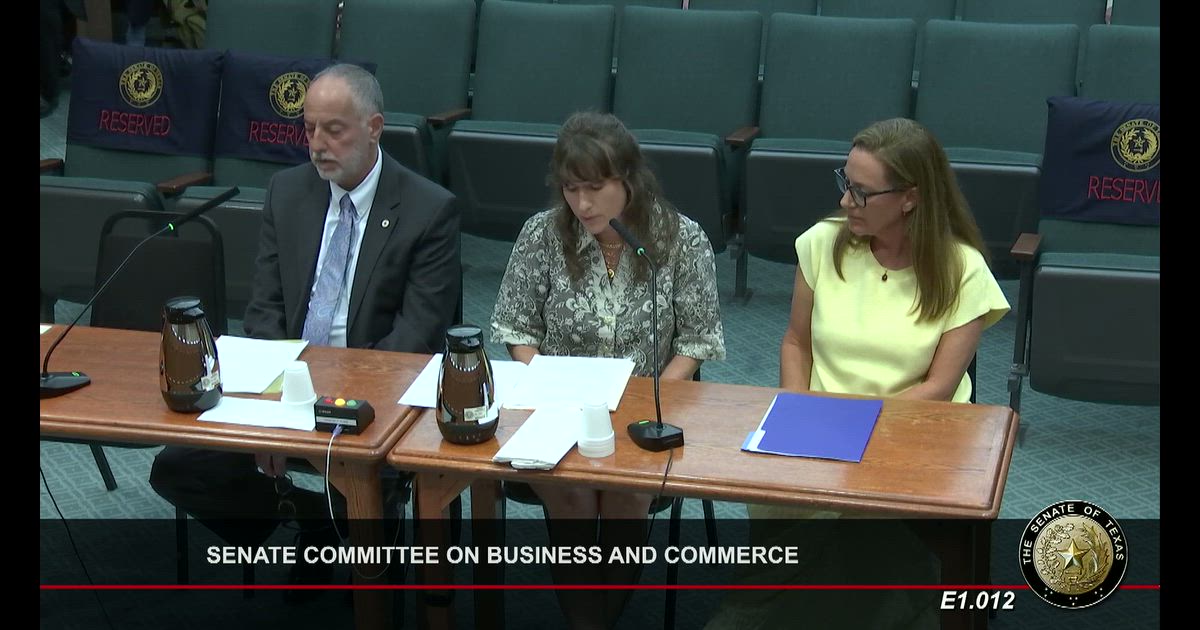
Glen Lyons, retired ExxonMobil electricity-policy executive and former ERCOT board member, Sept. 30.
▶ Watch this moment on USLege
Why it matters: This was the committee's fourth interim hearing on electricity affordability, and it is the first to put named landowners' specific cost estimates for a PUC-approved 765kV line on the record alongside the commission's own rate-setting standard. No bill or rule changed this week; the committee's eventual interim report, not this hearing, will determine whether any of the proposals discussed — reconducting, a minimum demand charge, or Bring Your Own Power — become 2027 legislation. The PUC's own rate-setting standard, laid out earlier in the same hearing, is the yardstick any such legislation would have to satisfy before a utility could recover the cost of a new line from ratepayers.
03 · Governmental Oversight
A House Oversight Panel Presses the Travis County DA’s Office on Outside Advocacy Groups — and on Why DA Garza Didn’t Show
The House Select Committee on Governmental Oversight, chaired by Rep. Cody Vasut (R-Angleton), took up the influence of outside advocacy groups and donors on local prosecutors' charging policies at a Sept. 30 hearing. The committee had invited Travis County District Attorney José Garza to attend; he did not appear. In his place, the office's legislative liaison (the hearing's audio record renders her name as Stephanie Garakanean) delivered a five-page written letter from Garza and answered questions for more than two hours. The letter, which the liaison said was not written that morning, said Garza would welcome meeting individually with members and directed questions about specific prosecutions to the liaison; it did not address why Garza would not attend in person. Rep. Troxler asked directly whether Garza had been invited and whether he was present; told he was not. Later in the hearing, Rep. Lauterbach cited the letter’s written-testimony figures, drawn from Department of Public Safety data on crime trends in Austin, stating that annual murders rose from 33 in the 2017-2020 period, before Garza took office, to 60 in 2021-2025 — a figure the liaison said she could not confirm on the record but would follow up on.
Sean Kennedy, policy director of the Law Enforcement Legal Defense Fund, testified about a report his organization published, based on what he said was 50,000 pages obtained through open-records requests in 22 states, that describes a consultant named Jessica Brand and a firm called the Wren Collective advising five Texas district attorneys — in Dallas, Bexar, Harris, Nueces and Travis counties — on bail, marijuana and charging policy. Kennedy said Brand's consulting work has been funded by donors including George Soros's Open Society Policy Center through intermediary political committees, and he displayed what he said was a 2022 non-disclosure agreement between the Wren Collective and the Travis County DA's office, signed by First Assistant District Attorney Gertrude “Trudy” Strassburger. Under questioning, the Travis County liaison said she had communicated with Brand in the past but could not recall discussing policy adoption with her, said she had not seen the non-disclosure agreement Kennedy displayed, and said she was not able to speak in detail to the office's relationship with the Wren Collective but would relay the committee's document requests to the office.
Monty Bennett, publisher of the Dallas Express, cited Dallas County's own public crime dashboard, saying that in a county where Black and Hispanic residents make up 65% of the population, 83% of this year's crime-against-persons victims and 90.5% of murder victims were Black or Hispanic, and argued that policies he said reduce prosecution fall hardest on those same communities. A woman identified as Ms. Byington, testifying as the first cousin of murder victim Anita Byington, told the committee the DA's office declined to notify her of parole-related proceedings because Anita's closer relatives (her parents) were deceased, and that a distant cousin who she said barely knew Anita was later treated as the family's representative and supported the defendant's release. “They get to pick and choose who's the advocate,” she said, calling for the relevant victim-notification statute to be amended to include next of kin when closer relatives are unavailable.
Several members pressed the liaison to reconcile the office's letter, which described a record of securing convictions, with hours of testimony from other witnesses describing declined prosecutions and lenient bond conditions. The liaison repeatedly said the office would provide additional information outside the hearing and had not understood its invitation as a request to testify, only to attend; several members said they considered that distinction evasive. Of the witnesses who testified in person, none spoke in support of the Travis County DA's charging approach; the office's defense came only through its written letter and its liaison's answers under questioning, and the committee did not call, nor did any outside criminal-justice-reform group register to testify in the portion of the hearing USLege reviewed. The committee took no vote and discussed scheduling a follow-up meeting with Garza directly; neither the committee nor Garza's office had announced a date as of this writing. The same hearing also took up two other charges that day, on municipal budget transparency and on a separate interstate boundary question, neither of which is covered in this issue.
“I believe that they had this orchestrated plan to exonerate this man. … They get to pick and choose who's the advocate, and that is so wrong.”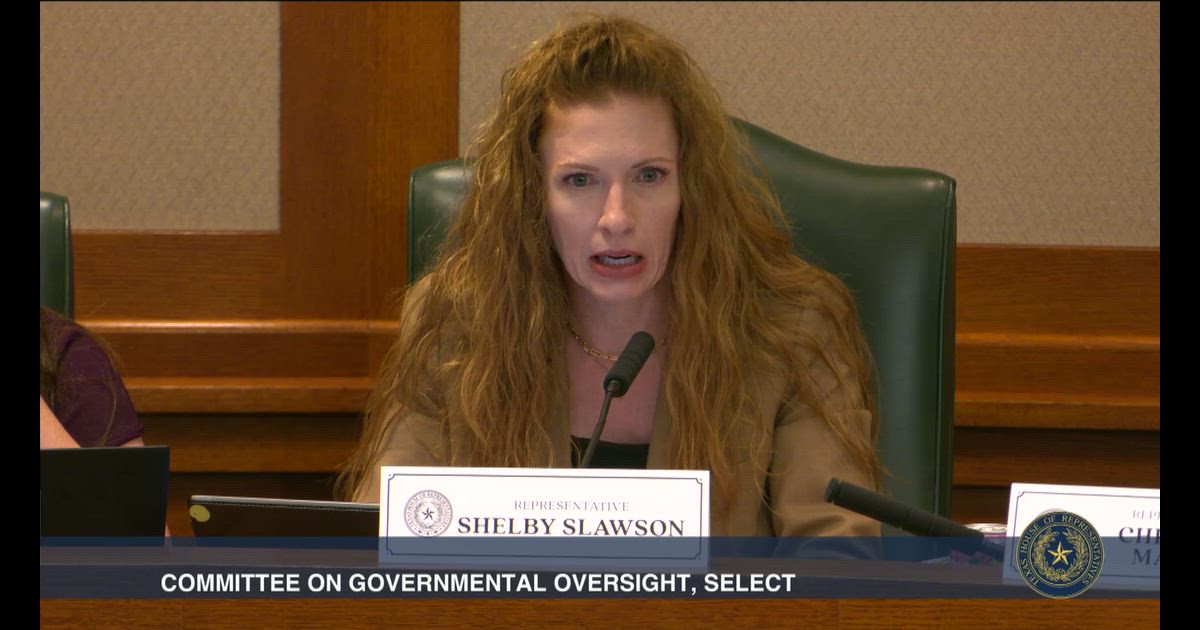
Ms. Byington, testifying as the first cousin of murder victim Anita Byington, Sept. 30.
▶ Watch this moment on USLege
“That woman is named Jessica Brand. … I'm the principal author of … How Donors and Activists Control Progressive Prosecutors and Corrupt the Justice System.”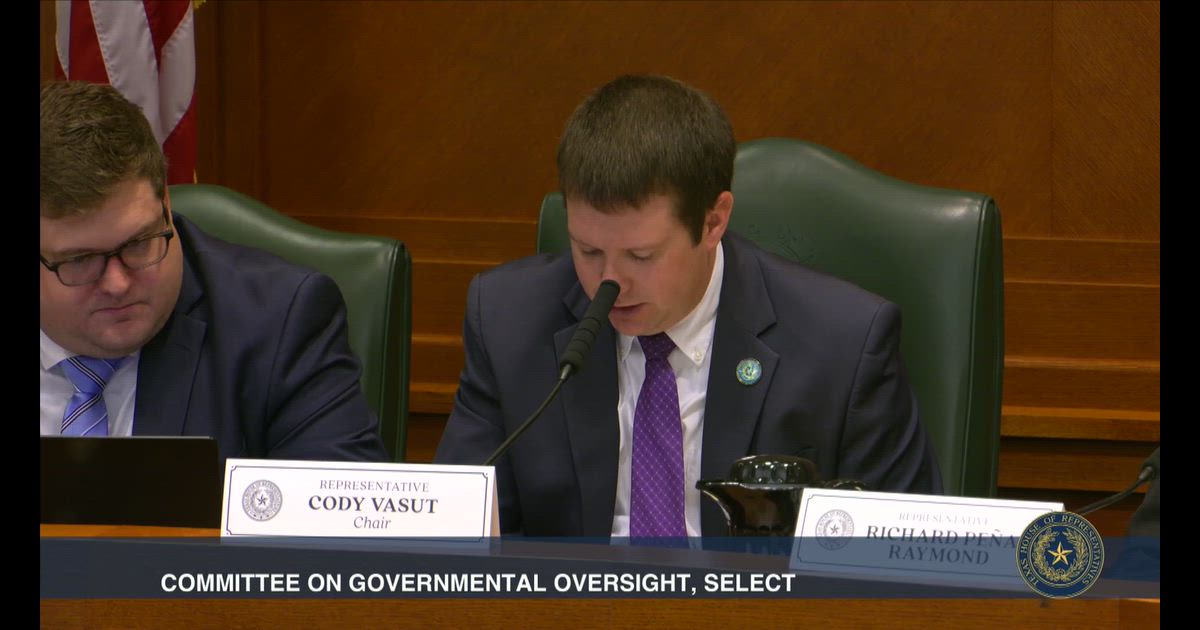
Sean Kennedy, Policy Director, Law Enforcement Legal Defense Fund, Sept. 30.
▶ Watch this moment on USLege
Why it matters: The committee has oversight authority over district attorney offices under state law, and this hearing put a specific non-disclosure agreement, a donor-funded advisory relationship and a disputed crime-trend figure on the public record for the first time. DA Garza’s letter is also part of that record: it disputes the premise that his office is lenient, cites his own crime-trend data, and offers to meet members individually — an offer the committee says it intends to take up. No legislation resulted from this hearing; it was an interim oversight proceeding, and any statutory change would require action in the 2027 session. The same authority could, in theory, extend to formal removal proceedings against a district attorney, though none were discussed or threatened at this hearing.
04 · Agriculture
Agriculture Committee Gets a Day-121 Update on New World Screwworm, Weighs a Bounty Program for Feral Hogs
The House Committee on Agriculture & Livestock, chaired by Rep. Ryan Guillen (D-Rio Grande City), took up its interim charge on invasive species — naming the New World screwworm, rice delphacids, cotton jassids, cattle fever ticks and feral hogs — at an Oct. 2 hearing. Dr. Lewis Dinges, Executive Director of the Texas Animal Health Commission (TAHC), told the committee the state marked day 121 of its New World screwworm response: since the first Texas case was confirmed in Zavala County on June 3, the agency has recorded 49 cases on 41 premises across 19 counties, leading to 21 designated infested zones. Seven of those zones have since met the criteria for release and two more have been reduced in size, which Dinges credited to a zone-based strategy that targets surveillance, inspections, movement controls and sterile-fly releases to the areas where cases have actually appeared.
Alan Cain, Wildlife Division Director at Texas Parks and Wildlife (TPWD), said the department is supporting TAHC and the U.S. Department of Agriculture (USDA) through its network of roughly 12,000 landowner and private-land-manager contacts covering more than 32 million acres statewide; as of Oct. 1, TPWD said it had directly contacted more than 7,600 cooperating landowners and helped secure 420 fly-trap sites and 22 ground-release chambers for USDA's sterile-fly program. Cain said the department has evaluated 15,832 animals statewide for signs of screwworm infestation, with 58 flagged as animals of interest, and that no case has been confirmed in wildlife to date. Philip Kaufman, who chairs Texas A&M AgriLife's internal screwworm task force, told the committee that of 41 federal research proposals submitted nationally for emergency screwworm funding, 14 came from Texas A&M researchers, including work to replace cobalt-based sterilization of lab-raised flies with electron-beam sterilization and to develop a male-only sterile fly. He said a separate study on ivermectin-treated feed as a preventive for white-tailed deer has produced data now under review by the U.S. Food and Drug Administration, though no treatment is yet approved for use in deer.
A separate panel took up feral hogs under the same invasive-species charge. A bounty-contractor witness described a model used in Florida in which a private contractor manages hog removal under a fixed-cost state contract, which he said cut the state's annual cost from about $5 million to roughly $1 million; Rep. Stan Kitzman questioned the comparison to historic buffalo-hide bounty programs and pressed the witness on cost estimates for a Texas version, which the witness put at $4.5 million to $5 million a year to start. No funding request or bill was before the committee; the panel was informational, part of the committee's interim-charge study ahead of the 2027 session. Kaufman separately told the committee the task force is also tracking pasture mealybug, a newer agricultural pest, which one witness said may prove harder to manage than screwworm itself.
“Out of the 41 proposals that were submitted, 14 of them came to Texas A&M. … That just does not happen.”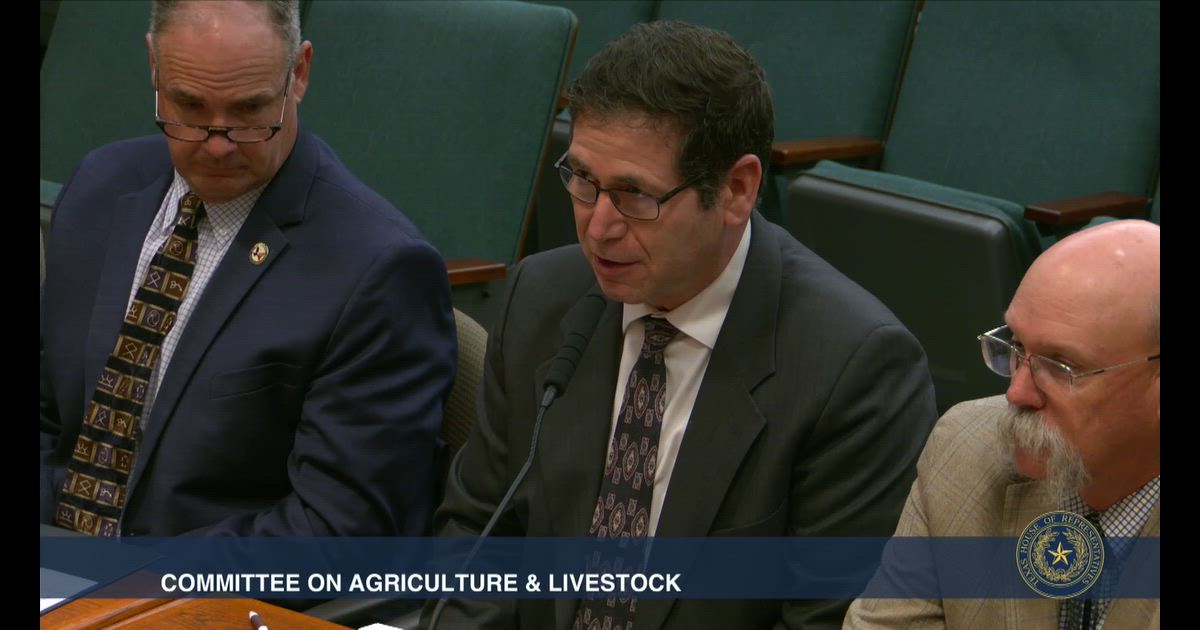
Philip Kaufman, Chair, Texas A&M AgriLife New World Screwworm Task Force, Oct. 2.
▶ Watch this moment on USLege
“Today marks day 121 of the New World screwworm response in Texas. … Seven infested zones have now met the criteria for release, and two additional zones have been reduced in size.”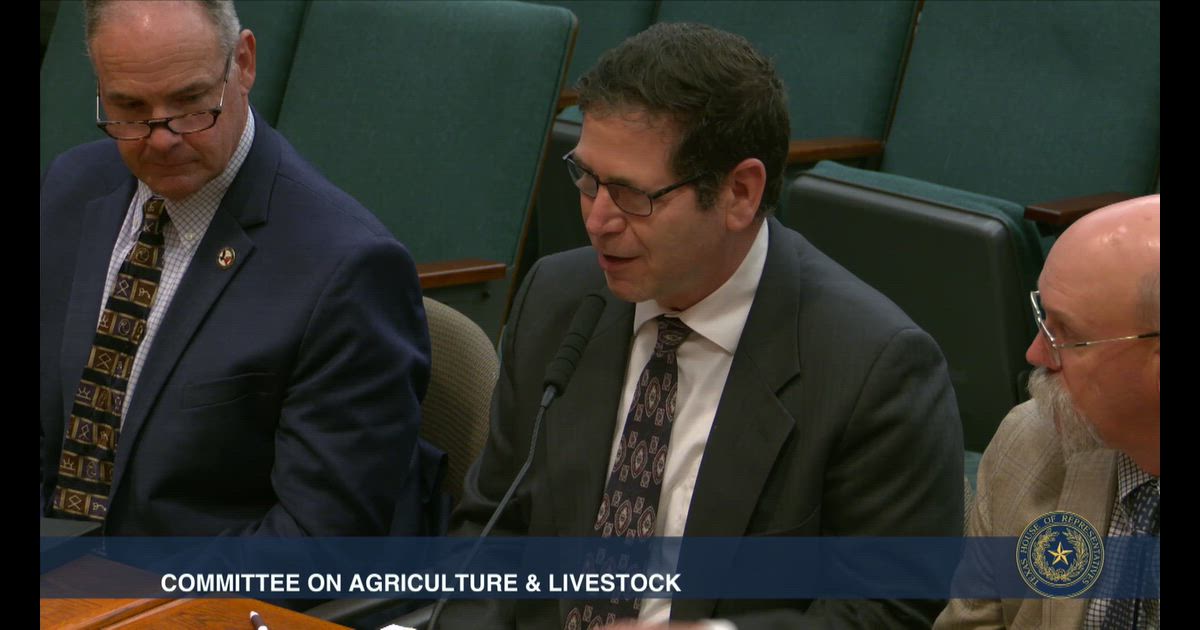
Dr. Lewis Dinges, Executive Director, Texas Animal Health Commission, Oct. 2.
▶ Watch this moment on USLege
Why it matters: The screwworm response is ongoing and the count of infested zones can still move in either direction; the committee’s interest is in whether current state and federal funding and landowner cooperation can hold the zone-based strategy together through the 2027 session. No vote or funding decision was before the committee; TDA and TPWD say a supplemental and exceptional-item funding request for screwworm response will come through the regular budget process. Both agencies say the current funding has covered response costs so far without an emergency supplemental appropriation.
Also moving this week More budget hearings, a bill-display fight, and a hemp ruling • General Land Office: At a Sept. 28 budget hearing, GLO requested about $153.2 million in exceptional items, including $100.4 million for four Texas Coastal Project sites and $23 million for a new Bexar County veterans home. • Higher ed, TEA, TWC, Culture/Rec/Tourism: Four more Sept. 28–30 hearings covered higher-ed budgets, the Texas Education Agency, the Workforce Commission, and HB 1397 (89R) implementation; full video at 126396, 126601, 126583 and 126774. |
What we are watching • Whether the TDCJ/parole board 3% cut survives into the Legislature’s 2027 base bill. • Whether DA Garza and the House Oversight Committee schedule their discussed follow-up meeting. • Whether any of the seven released screwworm zones see a new case. |
What we are tracking A biosecurity response and a grid-cost fight both run on the same question: who pays, and how fast The screwworm response and the transmission fight both turn on the same question: who absorbs the upfront cost of a slow-moving problem, and who ultimately pays. USLege indexes both, from committee hearings to budget presentations, in one searchable place. |
Join us live Upcoming webinars: next week and into October Tue, Oct 6 · 1:00 PM ET AI summaries and impact analysis so you can understand a bill fast. Save my seat → Register anyway for the recording.
|
Coming up See every hearing, filing deadline, and floor session, live USLege’s legislative calendar tracks hearings, floor sessions, and filing deadlines across every jurisdiction we cover.
|
Get your state’s weekly read Texas, DC, Alabama, Utah, Georgia, Indiana, Kansas, Montana, Oregon, Kentucky, Wyoming, Arizona, Tennessee, Arkansas, North Carolina, and more editions rolling out every week.
|
| Open in USLege → | Book a Demo → |
Texas Political Spotlight · Strictly nonpartisan
uslege.ai · About · Book a demo · Talk to your AM · Join a webinar · See the legislative calendar · Forward
© 2026 USLege, Inc. · Reply to [email protected]
Vote counts, bill text, and agency filings are drawn from that official record directly; quotes and claims made in testimony or public comment are attributed to the speaker and are not independently verified by USLege unless flagged.