|
|
Issue · Tuesday, August 11, 2026 · Week of August 3 to August 10 · Strictly nonpartisan
|
|
A windstorm insurer's board debated cutting the pay of the agents who sell its policies.
|
|
This week, in one line
The windstorm insurer's board debated cutting agent commissions the same day it reported a swing to a $20 million surplus; a state advisory panel heard rural hospitals describe Medicaid clawbacks large enough to risk their cash position; the House Elections Committee heard the state's voter registration system is still glitching 92 days before the midterms; and a Texas congressman introduced a federal bill to tax AI companies to fund a new jobs program.
|
|
01 · Insurance
TWIA Board Debates Cutting Agent Commissions as the Windstorm Insurer Swings to a $20 Million Surplus
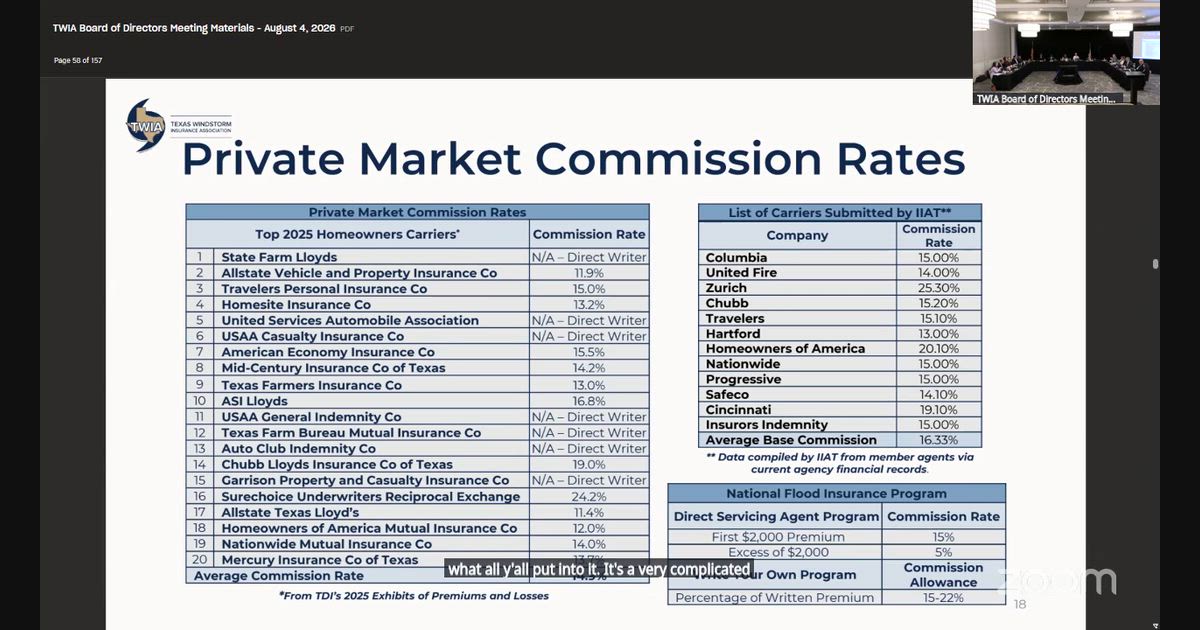
The Texas Windstorm Insurance Association (TWIA) board spent much of its August 4 meeting on an unresolved fight over its 16% agent commission rate, which the Sunset Advisory Commission has flagged as above the private-market average. Board members compared TWIA's rate to a roughly 14% weighted average among its three largest private competitors; agent representatives on the board countered that TWIA agents carry catastrophic-claims exposure and legal risk that contracted private-market agents do not, since TWIA has no formal agency contract with them. No vote was taken. The board asked staff to research three specific items, including agent errors-and-omissions cost differences and what state statute requires of TWIA that isn't required of private carriers, ahead of TWIA's next mandatory Sunset Advisory Commission review in 2031.
“TWIA is catastrophic insurance. It's in the catastrophic area. That means we're prone to having devastation happen at any moment, at any time.”
Carolyn, TWIA board member representing independent insurance agents, Aug. 4.
▶ Watch this moment on USLege
Separately, the board's treasurer reported TWIA's six-month financial statement: net income of $199.1 million (versus $170.97 million a year earlier), moving the association from a $17 million deficit to a $20.175 million surplus after a $166.6 million payment into its catastrophe reserve trust fund. Staff credited part of the swing to the 89th Legislature's repeal of TWIA's maintenance tax and to lower-than-budgeted reinsurance costs. You can watch the full TWIA board meeting on USLege.
Why it matters
TWIA is the coverage of last resort for wind and hail losses along the Texas coast. Its commission structure affects the agents who sell its policies and the policyholders whose premiums fund the association, and the debate is not settled ahead of the 2031 Sunset review.
|
|
02 · Rural health
Rural Hospitals Tell State Advisory Panel That Medicaid Clawbacks Are Pushing Them Toward a Cash Crunch
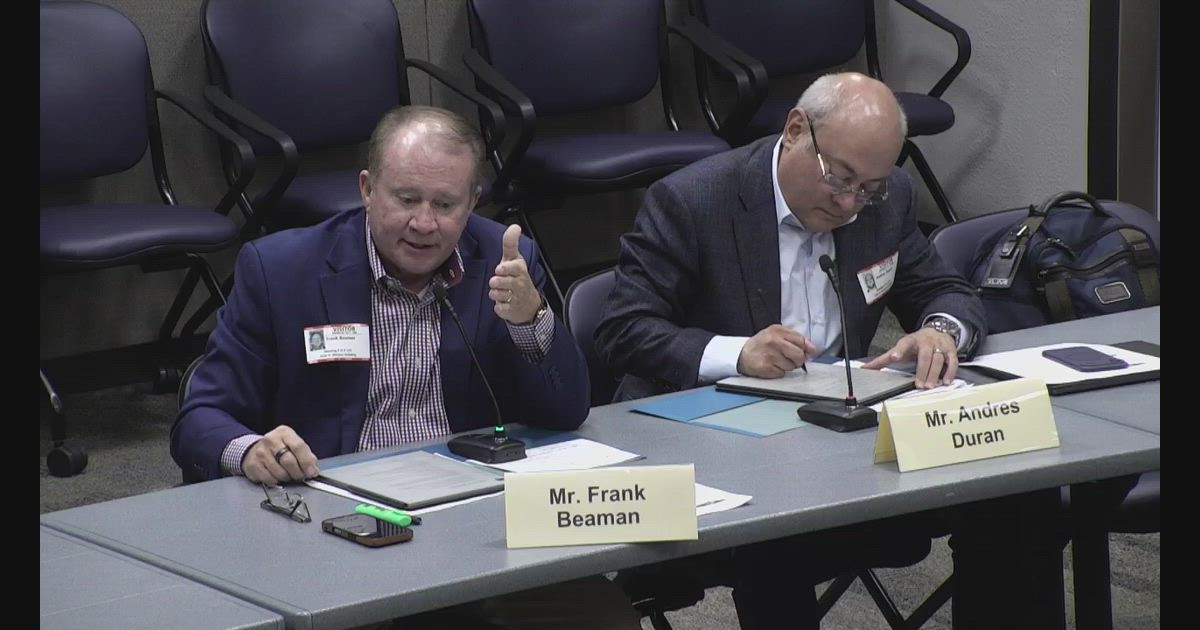
At the August 6 meeting of the Rural Hospital Advisory Committee, a statutory advisory body to the Texas Health and Human Services Commission (HHSC), committee chair Frank Beaman described his own hospital system's exposure: seven of nine facilities are state-designated "OB deserts," about 70% of births there are covered by Medicaid, and he is now facing more than $300,000 a month in combined Disproportionate Share Hospital (DSH) and uncompensated-care recoupments, clawbacks that occur when HHSC reconciles preliminary advance payments against final, audited data, sometimes years later. Committee member Todd Scroggins traced part of the shift to a 2020 change in how Medicare calculates hospitals' uncompensated bad debt, and noted hospitals have had to repay both the federal and state share of overpayments since roughly 2024, where previously only the federal share was clawed back.
“Those are the things we have to address, or you're going to see hospitals run out of cash.”
Frank Beaman, chair, Rural Hospital Advisory Committee, Aug. 6.
▶ Watch this moment on USLege
HHSC's Megan Wolf acknowledged her office does not have full clarity on what changed methodologically and committed to follow up; she said the agency is weighing options raised at a prior advisory meeting, including ending advance payments in favor of final, reconciled-only payments. No policy change was adopted; the committee asked to keep the recoupment issue on every future agenda and to explore legislative options, including statutory repayment caps, for the 2027 session. Watch the full Rural Hospital Advisory Committee meeting on USLege.
Why it matters
Committee members said Texas leads the nation in critical-access hospital closures. Rural hospitals with high Medicaid and OB-desert exposure are the most vulnerable to unpredictable, multi-year clawbacks, and the fight over how to fix the recoupment timeline is headed into the 2027 legislative session unresolved.
|
|
03 · Elections
House Elections Panel Hears the State's Voter-Roll System Is Still Glitching 92 Days Before the Midterms
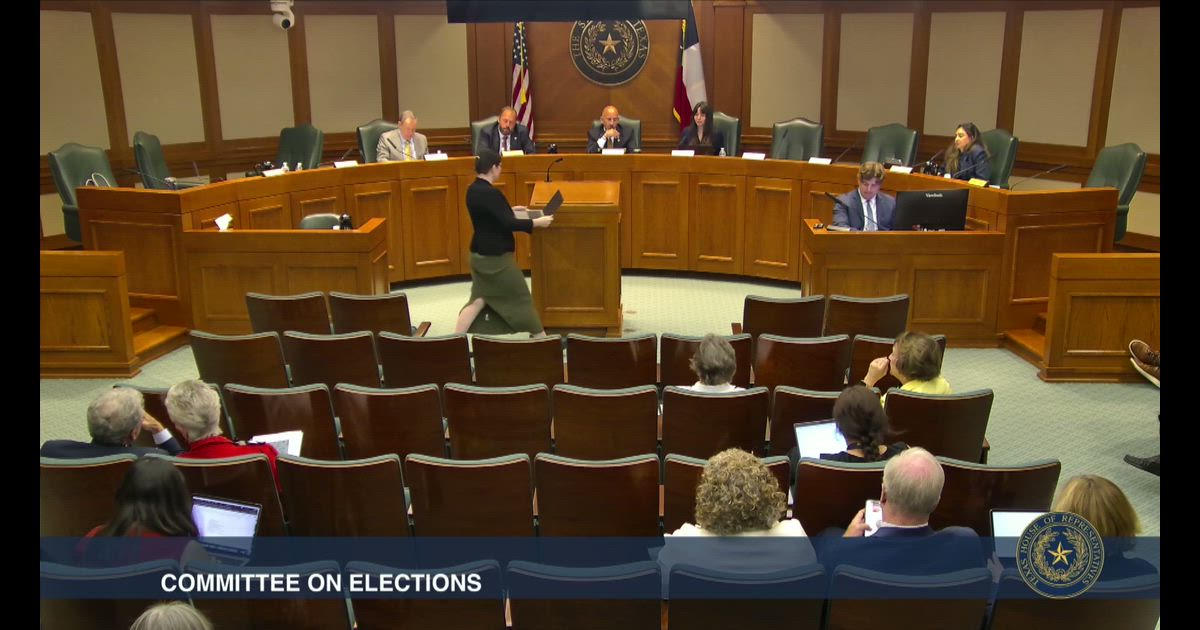
The House Elections Committee's August 3 interim hearing on voter registration systems surfaced ongoing problems with the Texas Election Administration Management System (TEAM), the state's mandatory voter-registration database that replaced prior vendor Votek after its abrupt exit roughly a year ago. The Secretary of State's office confirmed TEAM, built by vendor Civics, went live July 11, 2025. Jennifer Doinov, representing the Texas Association of County Election Officials, told the committee TEAM "continues to have persistent functional issues," including delayed registration processing and trouble producing legally required election reports, and recommended the Secretary of State's office give counties a dated fix timeline ahead of November.
“We are ninety-two days away from the midterm elections and sixty-three days away from the voter registration deadline.”
Jenny Lemcher, Harris County resident testifying for the Texas Civil Rights Project, Aug. 3.
▶ Watch this moment on USLege
Lemcher described specific incidents: monthslong delays updating registrations online in Dallas, Travis, and Bexar Counties, a voter whose registration and voting history vanished between the March primary and May election (forcing a provisional ballot with no confirmation it counted), and mail-ballot delays reported by elderly and disabled voters. This was a fact-finding interim hearing; no committee vote occurred, and per the chair's opening statement all testimony was registered as neutral since no legislation is pending in interim. Watch the full House Elections Committee hearing on USLege.
Why it matters
Texas's statewide voter-registration database underpins every county's ability to register voters and maintain rolls ahead of the 2026 midterms, roughly 90 days out at hearing time.
|
|
Texas in Washington
A Texas Congressman Wants to Tax AI Companies to Fund a New Federal Jobs Program
Rep. Greg Casar (D-TX), with Reps. Valerie Foushee (D-NC) and Sara Jacobs (D-CA), introduced the AI Tax and Work Protection Act (H.R. 10044, 119th Congress) on August 7. The bill would tax large AI companies on the higher of their "token" sales value or AI-product revenue, funding a new Work Protection Administration that would grant money to states, cities, tribes, unions, and nonprofits for job creation; the tax rate would rise if national unemployment rises. This is a bill introduction, not a hearing or vote.
|
|
|
Also moving this week
Gov. Abbott announced $5.6 million in Nursing Innovation Grant Program awards to eight Texas colleges and universities.
Gov. Abbott announced a new slate of state board appointments, including to the Credit Union Commission.
Gov. Abbott signed a proclamation declaring August 7 Purple Heart Day in Texas.
|
|
|
What we are tracking
Data centers meet their standards deadline, and one project walks away
The Governor's office announced this week that data-center operators Skybox, Digital Realty, and Mara have committed to comply with the standards his office directed the Public Utility Commission of Texas (PUCT) and the Electric Reliability Council of Texas (ERCOT) to enforce: paying for their own electric infrastructure, reusing their own water, disclosing taxpayer-funded incentives, and detailing plans to reduce reliance on the ERCOT grid. One company, Diode, withdrew a proposed East Texas data center after acknowledging it fell short of the standards. Separately, a Texas Higher Education Coordinating Board advisory committee spent its August 7 meeting on AI's effect on academic integrity, noting research-article retractions are at an elevated level tied to AI misuse, without arriving at a policy recommendation. Neither Texas nor the federal government currently requires data centers to disclose their water use publicly by default; the Governor's directive is an executive-branch standard enforced through PUCT/ERCOT project review, not a statute.
|
|
|
Join us live
This week's webinar guest: Jim Templeton, Deloitte
Every week, USLege runs a live session for government affairs professionals. This week, Jim Templeton of Deloitte joins the platform walkthrough, new features, and open Q&A. Register to save your seat.
|
|
|
Get your state's weekly read
Texas, DC, New York, California, and more editions rolling out every week.
|
|
|
|
|
|
|