
|
|
Tuesday, August 4, 2026 · Week of July 27 to August 3 · Strictly nonpartisan
|
|
An interim week where agencies, not the Legislature, made the calls that matter.
|
|
The grid absorbed a 3,000-megawatt data center trip and posted its first Batch Zero interconnection numbers; the Texas Department of Licensing and Regulation sent back its first sexually oriented business license revocation case; a House committee heard that a Chinese fintech holds a Texas money transmitter license despite a Pentagon designation; the Veterans Land Board sold land tracts and flagged a therapy billing risk; and community colleges saw their performance based funding prorated after outpacing the state's own formula.
|
|
01 · Grid & Energy
|
|
ERCOT's Grid Absorbs a 3,000-Megawatt Data Center Trip as Batch Zero Numbers Land
|
|
Texas has spent the interim writing the rules for a data center building boom, and this week two rooms, the Public Utility Commission of Texas (PUCT) open meeting held July 30 and the Electric Reliability Council of Texas (ERCOT) Technical Advisory Committee (TAC) meeting held July 29, put hard numbers behind the risk. At the PUCT meeting, commissioners heard that a transmission line fault tripped more than 3,000 megawatts of data center load offline in "Data Center Alley," an event Texas Reliability Entity, ERCOT's independent regional reliability monitor, called more than double the size of any prior event of its kind.
|
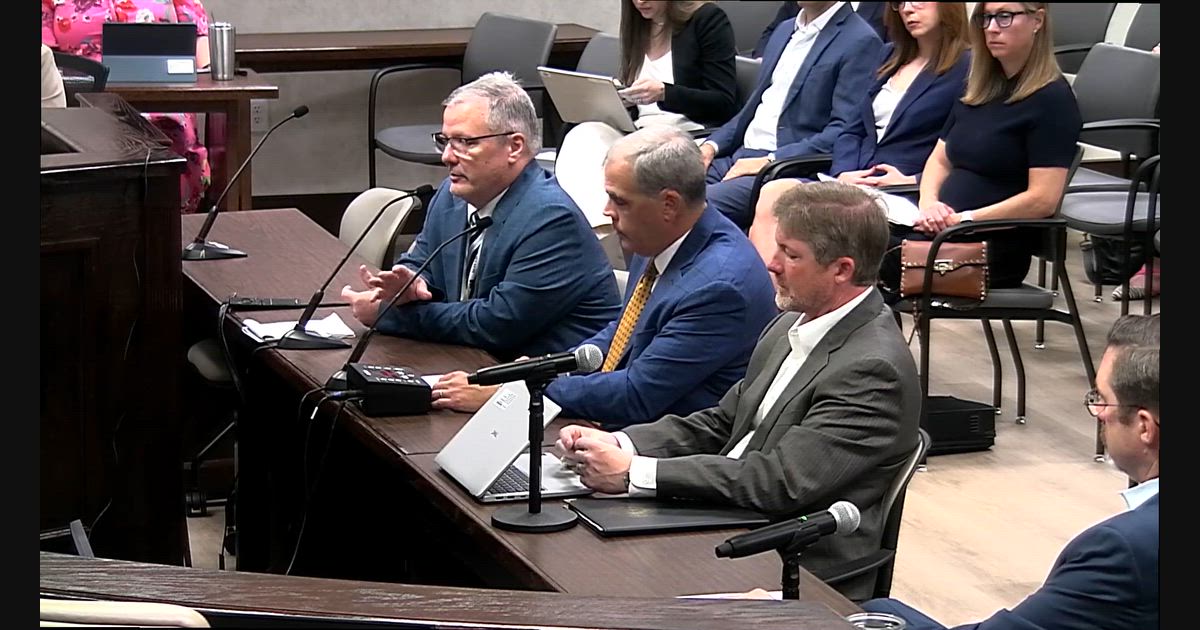
“The commission is probably aware of a very large event that had occurred just last week in Data Center Alley. There was a two thirty kV line fault that tripped off 3,000 plus megawatts of data center load in that area. That event was more than double the size of those previous events.”
David Penney, Director of Reliability Services, Texas Reliability Entity, July 30.
▶ Watch this moment on USLege
|
|
Texas Reliability Entity's director added that the underlying concern extends beyond voltage ride through: artificial intelligence loads can ramp demand quickly enough to create frequency disturbances, and ERCOT has set an operational contingency limit of roughly 3,200 megawatts on load that can be dropped in a single event, meaning the July trip came close to that ceiling.
Later in the meeting, PUCT staff presented, for publication, a new curtailment service required by Senate Bill 6 (the "Large Load Demand Management Service"), which lets ERCOT curtail qualifying large loads during extreme weather emergencies, with a proposed annual budget of $54 million and offer prices capped at $5,000 per megawatt hour. Commissioners voted unanimously to send the proposal out for stakeholder comment. The same meeting produced two other actions: adoption, with modifications, of El Paso Electric's system resiliency plan, and rejection of a transmission line certificate application from Wind Energy Transmission Texas, which commissioners remanded to the State Office of Administrative Hearings (SOAH) for lack of quantitative cost comparison evidence.
One day earlier, ERCOT staff released the first detailed tally from "Batch Zero," the large-load interconnection process that took effect July 11 under Planning Guide Requirement (PGRR) 145, a rule that determines how new high-demand customers, chiefly data centers, get in line for grid connection. ERCOT's Jeff Billow reported: "we currently have 65 gigawatts that are eligible for baseload status... There is another 114 gigawatts that is eligible as studied load... 25 gigawatts... in between... another 20 gigawatts that had met the study requirements but did not submit a dynamic model... and then another 274 gigawatts that did not meet the study requirements." Staff cautioned the numbers are a ceiling only; none yet reflect whether applicants have posted required financial security or site control documentation.
Key dates: classification by August 7, 2026, a dispute and cure window through the end of August, and the formal planning study process beginning September 2, 2026, with final results filed in PUCT Docket No. 59772.
|
|
Why it matters
For an operator with a large-load interconnection request, a data center site in Texas, or exposure to ERCOT market rules, this week put concrete numbers behind a risk that had mostly been discussed in the abstract. The Data Center Alley event and the Batch Zero tally point the same direction: demand growth is arriving faster and larger than the grid's existing rules were built to classify. The August 7 and September 2 deadlines are the next checkpoints for how much of that demand actually clears.
|
|
|
02 · Licensing & Enforcement
|
|
TDLR Sends Back Its First Sexually Oriented Business License Revocation Case
|
|
A license revocation case against a foot massage establishment, brought under the agency's new enforcement theory, a sexually oriented business (SOB) notice of alleged basis (NOAB) that the agency has now used to seek roughly 70 license revocations of massage businesses over the past year and a half, according to agency enforcement staff, went before the Texas Department of Licensing and Regulation (TDLR) at its July 28 commission meeting.
An administrative law judge (ALJ) had already reviewed the state's evidence, including a single unopened condom, bedding, locked interior doors, and food storage, and found it insufficient to prove the business's primary purpose was commercial sex rather than massage. Defense counsel argued the commission should adopt the judge's findings as written.
|
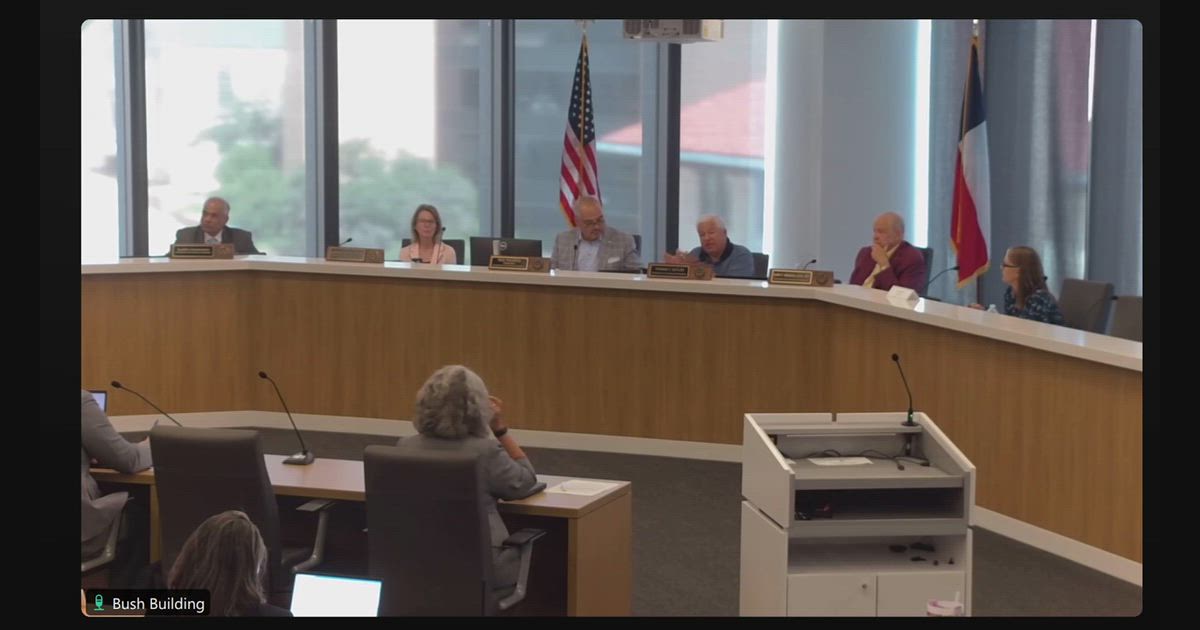
“This case did proceed under the department's newly implemented SOB NOAB process... we've closed somewhere in the neighborhood of 70 massage illicit massage parlors when we found some sort of evidence of sexual activity. And generally, they have maybe five to 10 women working there... three fifty to 700 women that may be involved in... human trafficking, sex trafficking.”
TDLR Enforcement Division Counsel, July 28.
▶ Watch this moment on USLege
|
|
Commissioners pressed on whether the judge had weighed the totality of the evidence, including items such as a bedroom, a bathroom, and food found on the premises, against the business's stated purpose as a massage establishment. Rather than adopt or reject the judge's recommendation outright, the presiding commissioner moved to remand the case to the State Office of Administrative Hearings (SOAH), directing the judge to explain, considering the evidence as a whole, why it was insufficient to prove the business's primary purpose, and to clarify what "primary business" means under this framework. The motion passed on a voice vote with no recorded dissent.
The same meeting included several other enforcement and rulemaking items: license revocations or denials in four unrelated cases; rule amendments implementing SB 2044 and SB 2443 allowing electronic delivery of contested case notices; adoption of the 2026 National Electrical Code with a continued exception for outdoor HVAC GFCI requirements; rules implementing SB 968 for the podiatric medicine program; and updated construction code references for air conditioning and refrigeration contractors.
|
|
Why it matters
This is the first case decided under TDLR's SOB NOAB theory, so the commission's choice to send it back rather than resolve it outright sets an early marker for how much circumstantial evidence, condoms, bedding, locked doors, and food, is enough to prove a business's primary purpose is commercial sex. The outcome will shape how the agency's roughly 70 other revocations under similar enforcement theories are argued going forward. The remand also surfaces a tension between due process for license holders and the agency's public safety and anti-trafficking rationale.
|
|
|
03 · Financial Regulation
|
|
House Panel Told a Chinese Fintech Holds a Texas Money Transmitter License Despite Pentagon Sanctions
|
|
Jesse Salcillo, deputy commissioner of non-depository supervision at the Texas Department of Banking, told a legislative committee that the state currently licenses about 20 currency exchangers and roughly 175 money services businesses (MSBs), the category that includes money transmitters, with combined annualized transaction volume of about $440 billion. The testimony came before the House Homeland Security, Public Safety and Veterans' Affairs Committee, which convened July 30 for an interim charge (a study assignment given to legislative committees between regular sessions) on countering foreign financial influence in illicit networks.
A committee witness, Michael Lucci, founder of the Austin nonprofit State Armor, testified that an entity affiliated with Alipay holds an active Texas money transmitter license (MTL). Under committee questioning, Lucci testified that a Pentagon designation of Alibaba as a Chinese military company, made roughly two months before the hearing, has not affected that license.
|
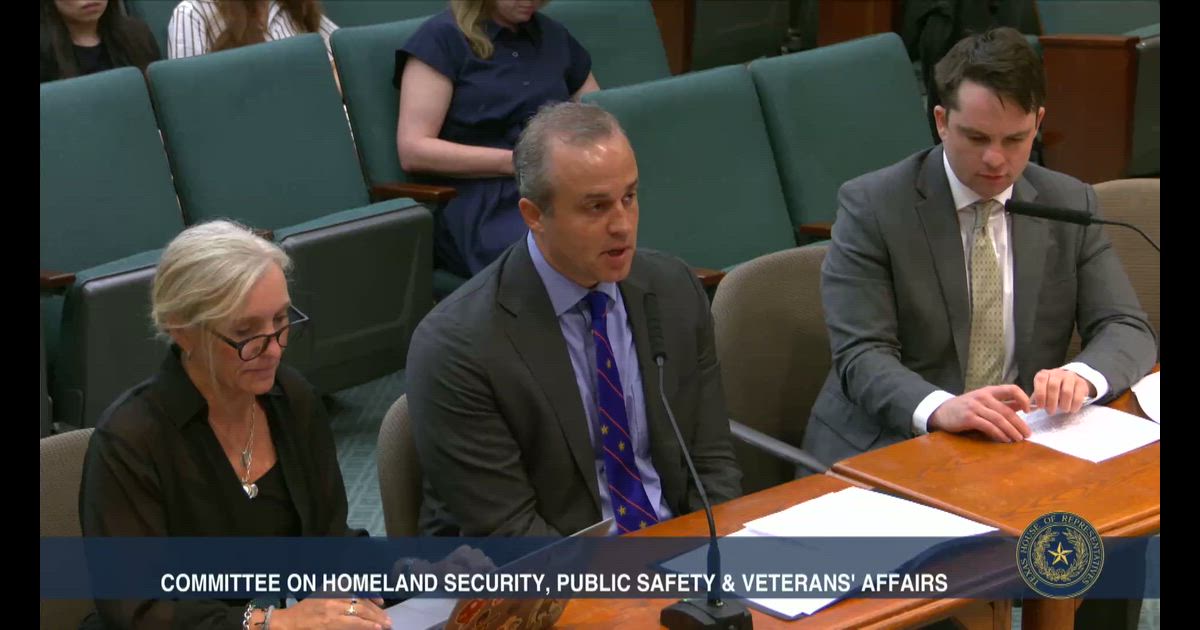
“Alibaba was sanctioned by the Pentagon just almost two months ago as a Chinese military company operating in The United States... the Alibaba Alipay and other Alibaba entities are unaffected within the state of Texas. They currently hold a money transmitter license despite all of these activities they seem to be involved in.”
Michael Lucci, Founder, State Armor, witness testimony, July 30.
▶ Watch this moment on USLege
|
|
This claim, that a Pentagon Chinese military company listing has had no effect on the entity's Texas license, is witness testimony reported here as testimony, not as independently verified fact; it is queued for verification against the federal register and the Department of Defense's designation list. Lucci separately alleged, without independent corroboration presented at the hearing, that a White House memo described Alibaba using American financial data to assist China's People's Liberation Army; that claim has likewise not been independently verified and is not treated here as established fact. A second witness, Ambassador Kelly Curry, described a pattern of Chinese transnational criminal organizations she said operate crypto kiosks and payment networks used to launder proceeds from scam operations.
Asked what states can do, Lucci pointed to Nebraska, testifying that the state enacted legislation barring "foreign adversary principals" from holding a money transmitter license there, a model Texas lawmakers could consider before the 90th Legislature convenes in January 2027. A sheriff on the committee panel separately told regulators that local police departments typically lack the resources to investigate cross-border or online financial fraud below the dollar threshold that draws federal attention.
|
|
Why it matters
Texas licenses about 175 money transmitters moving a combined $440 billion a year. A committee witness testified that a federal Chinese military company designation has not affected an affiliated entity's ability to hold its Texas money transmitter license, testimony that has not been independently verified. Lawmakers were pointed to Nebraska's approach barring foreign adversary principals from holding a license outright as a model to consider before the 90th Legislature convenes.
|
|
|
04 · Land & Veterans Services
|
|
Veterans Land Board Sells Tracts, Flags a $1.7 Million Therapy Billing Risk
|
|
The General Land Office's (GLO) Veterans Land Board (VLB), which manages land and home loans, nine state veterans homes, and multiple state veterans cemeteries for Texas veterans, approved the results of its online forfeited land bidding period at its July 28 meeting. Of eight tracts offered, seven sold for a combined $742,003; the eighth, in Walker County, drew no bids and will be re-offered.
VLB staff also disclosed, for the first time, an estimated $1.7 million a year improper payment risk in therapy billing for veterans home residents rated 70% or more service connected disabled, an estimate built by applying a national Centers for Medicare and Medicaid Services (CMS) improper payment benchmark of 17.9% to VLB's therapy claims.
|
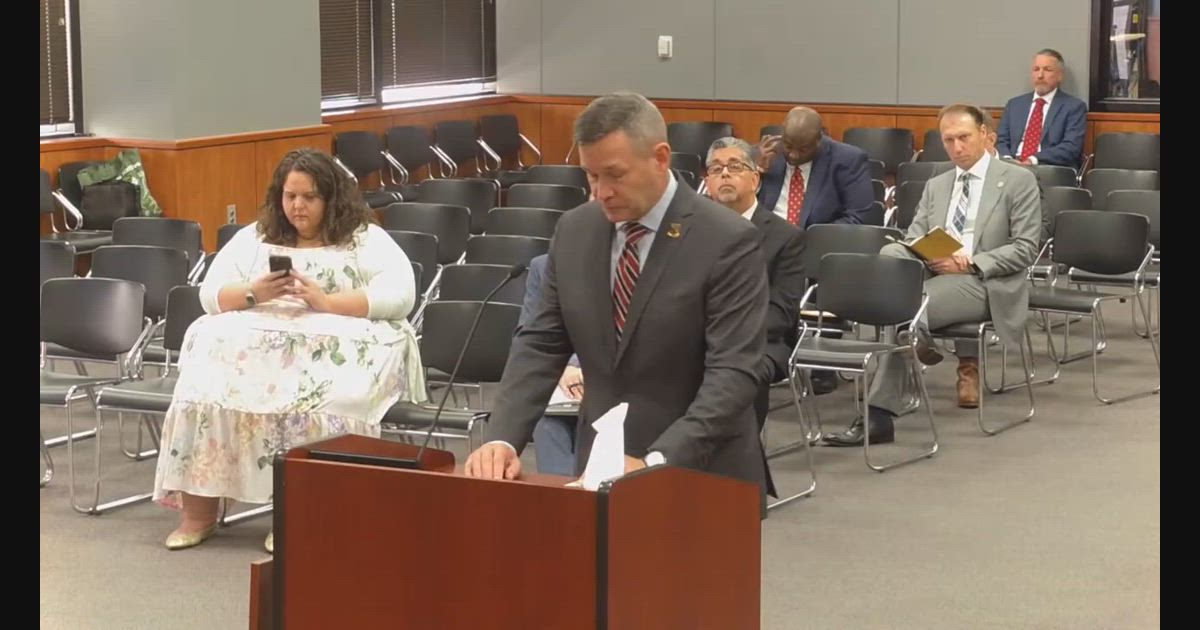
“The Center for Medicaid and Medicare Services notes national data shows a 17.9% improper payment rate for such therapy claims, largely stemming from insufficient documentation in the billing process. If we applied that percentage rate to the amount of therapy claims we pay, that's a potential $1,700,000 a year in improper payments.”
Darren Fitzgerald, Assistant Executive Secretary, Veterans Land Board, July 28.
▶ Watch this moment on USLege
|
|
Staff outlined a three part remediation plan: a third party contractor to review documentation and billing compliance, a newly approved full time therapy services compliance specialist, and an ongoing review program modeled on VLB's existing pharmacy audit program. No board vote was required for this informational item.
Separately, the board's attorney requested, and the board approved, emergency authority for the VLB's executive secretary to replace the operator of the William R. Courtney Texas State Veterans Home in Temple on short notice if unspecified "ongoing concerns" about contract compliance escalate. Staff said a standard, multi-year procurement process would follow for any permanent replacement. The exact nature of the concern was not disclosed on the record.
The board also voted to discontinue the Veterans Home Improvement Program (VHIP), a decades old home improvement loan program whose $25,000 cap has not changed since 1992; increased its National Cemetery Administration construction grant request for an East Texas veterans cemetery from $16.3 million to $20.8 million; and renewed cemetery operations contracts with the City of Killeen and Nueces County.
|
|
Why it matters
The therapy billing disclosure and the Temple veterans home authority are both preemptive, taken before either problem was confirmed to require action, but both carry real dollar and service continuity stakes for a board that serves veterans statewide. The compliance specialist hire and third party review should show up in VLB's next budget and audit cycle. The Temple contract question, and the therapy billing remediation, are worth watching for a follow-through update.
|
|
|
05 · Higher Education & Budget
|
|
Community Colleges Outperformed the State's Own Formula, So Texas Prorated Their Payments
|
|
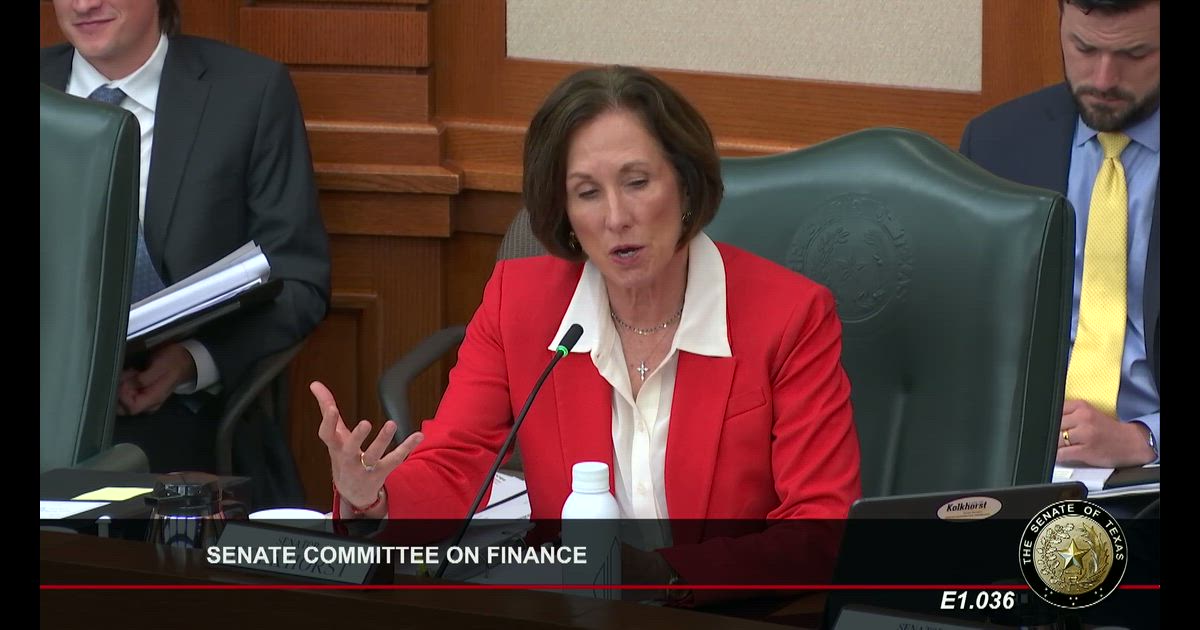
Andy McLaurin, assistant commissioner for funding and financial aid at the Texas Higher Education Coordinating Board (THECB), confirmed under questioning from Sen. Lois Kolkhorst that the agency prorated community college performance based funding payments this interim because college performance outcomes exceeded the amount the Legislature appropriated for that tier, at the July 28 Senate Finance Committee hearing addressing interim charges on higher education financial transparency and fraud, waste, and abuse prevention.
|
“We did prorate this interim. That is correct. That community college performance outcomes did exceed appropriations and we have no authority to go beyond appropriations. And so we were in a situation where we had to prorate. We will be bringing forward those amounts next session as a supplemental appropriation so you guys can consider those amounts.”
Andy McLaurin, Assistant Commissioner for Funding and Financial Aid, Texas Higher Education Coordinating Board, July 28.
▶ Watch this moment on USLege
|
|
McLaurin placed responsibility for the shortfall with his own agency rather than the Legislative Budget Board (LBB) or the House and Senate budget committees, saying growth in the new performance tier program vastly exceeded even the agency's own significant growth expectations. He said THECB will request a supplemental appropriation next session to cover the difference.
The exchange also clarified that Texas State Technical College (TSTC) operates under a separate "return value" formula tied to graduates' salary differential over a multi-year lookback period rather than a projected appropriation, so it was not subject to this interim's proration, an LBB analyst confirmed on the record.
In the same hearing segment, Sen. Royce West, Sen. Kolkhorst, and Chair Joan Huffman questioned the State Auditor's Office and THECB about why prior financial control failures at Texas Southern University (TSU), including a 2006 embezzlement case and a 2020 incident involving cash found on campus, never triggered a full discretionary state audit despite the Legislature appropriating many millions of dollars to the institution over the interim. Sen. West called the pattern a breach of fiduciary duty by TSU's governor appointed, Senate confirmed board of regents.
McLaurin also confirmed that, under Education Code Chapter 130, community colleges must self-certify annual compliance by August 1, and under Chapter 61 the commissioner must file a list of compliant, funding eligible colleges with the Comptroller and State Auditor by September 1, with non-certifying colleges cut off from state funds entirely. Sen. Paul Bettencourt noted Collin County had, according to committee discussion, not submitted required compliance information, and asked whether general academic and health related institutions face the same funding clawback; McLaurin said they do not, which Bettencourt called a double standard in oversight rigor.
|
|
Why it matters
Community colleges that hit the new performance formula's targets faster than the state predicted are, for now, being paid less than the formula's own output because the Legislature's appropriation for that tier was exceeded. THECB says it will ask for a supplemental appropriation next session to true this up, so community college administrators and trustees should expect a specific, one time budget request in the 90th Legislature. The same hearing's TSU oversight questions show the Legislature is watching THECB's broader financial monitoring function closely heading into that session.
|
|
|
Also moving this week
Don Huffines Sworn In as Texas Comptroller
Don Huffines, a former state senator, was sworn in as Texas Comptroller on August 1, pledging to root out wasteful spending, safeguard state tax dollars, and deliver property tax relief, and stating he will not draw a salary. The Comptroller certifies the state's revenue estimate, a figure that shapes budget writing heading into the 90th Legislature. Source: Texas Comptroller of Public Accounts press release, August 1, 2026.
|
|
|
What we are watching
ERCOT's Batch Zero classification deadline lands August 7, 2026, with a dispute and cure window through the end of August and the formal planning study process beginning September 2, 2026. TDLR's SOAH remand in the sexually oriented business revocation case is worth watching: how the administrative law judge answers the commission's threshold questions could set the standard for roughly 70 pending cases. And whether the House Homeland Security Committee's interim charge on foreign financial influence turns into a filed bill modeled on Nebraska's ban on foreign adversary principals holding a money transmitter license, ahead of the 90th Legislature convening in January 2027.
|
|
What we are tracking
Finding the Decision Inside the Transcript
This week's record was made almost entirely by agencies and interim committees rather than the Legislature: a docket number, a licensing tally, a dollar figure disclosed in passing. USLege's video and transcript indexing is built to surface exactly this kind of material, the gigawatt tally inside a technical advisory committee meeting, the improper payment estimate inside a board briefing, as soon as it is said on the record, so subscribers do not have to wait for a press release or a news story to catch up.
|
|
|
Learn more
Join a Webinar
See USLege in action and learn more about what we do.
|
|
|
Still under contract?
Switch to USLege. Don’t Pay for Both.
If you’re mid-contract with another bill-tracking tool, USLege covers the overlap: full access starts now, and your first invoice doesn’t arrive until your old contract ends. You never pay two vendors at once.
|
|
|
Get Your State's Weekly Read
Texas, DC, New York, and California editions are live now, with more states rolling out.
|
|
|
|
|
Texas Political Spotlight · Strictly nonpartisan
|
|
uslege.ai · About · Book a demo · Talk to your AM · Join a webinar · Forward
|
|
© 2026 USLege, Inc. · Reply to [email protected]
|
|